How Much Caffeine Is in Decaf Coffee vs. Tea?
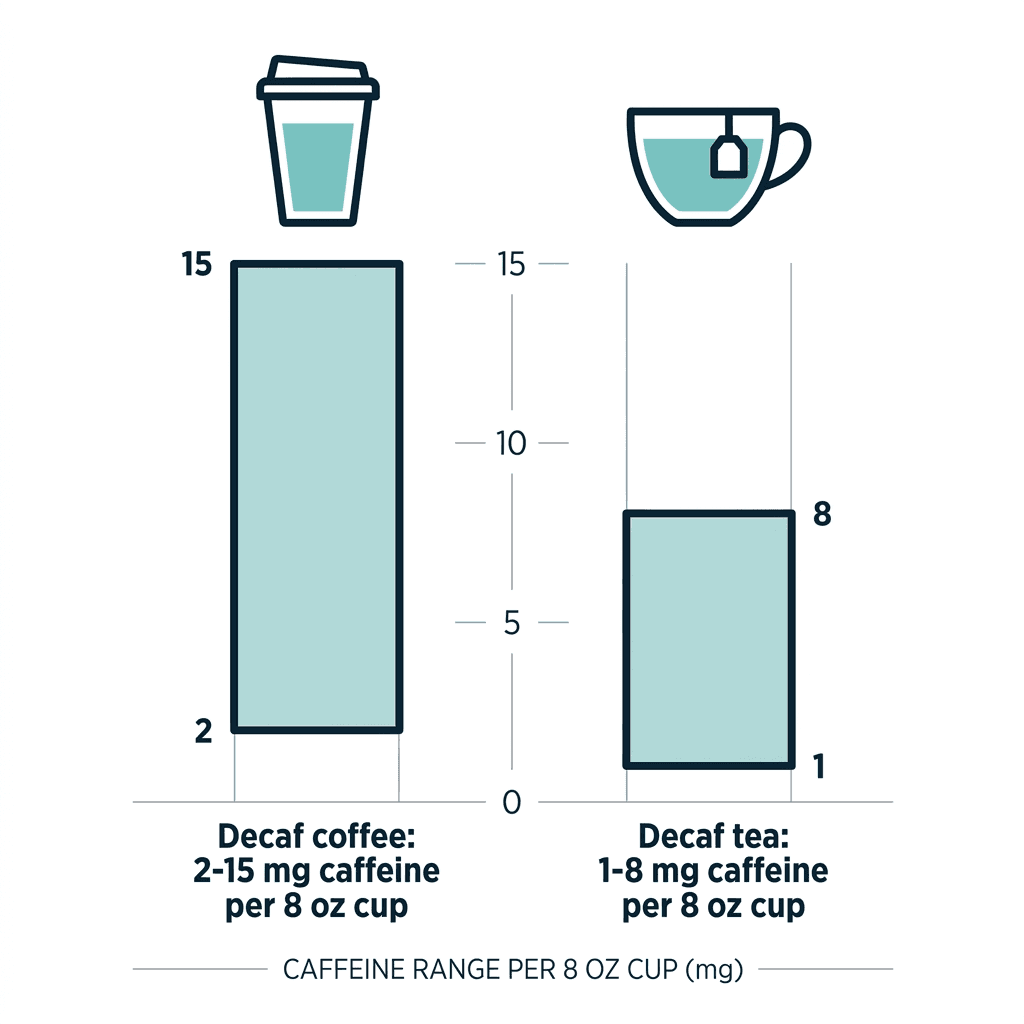
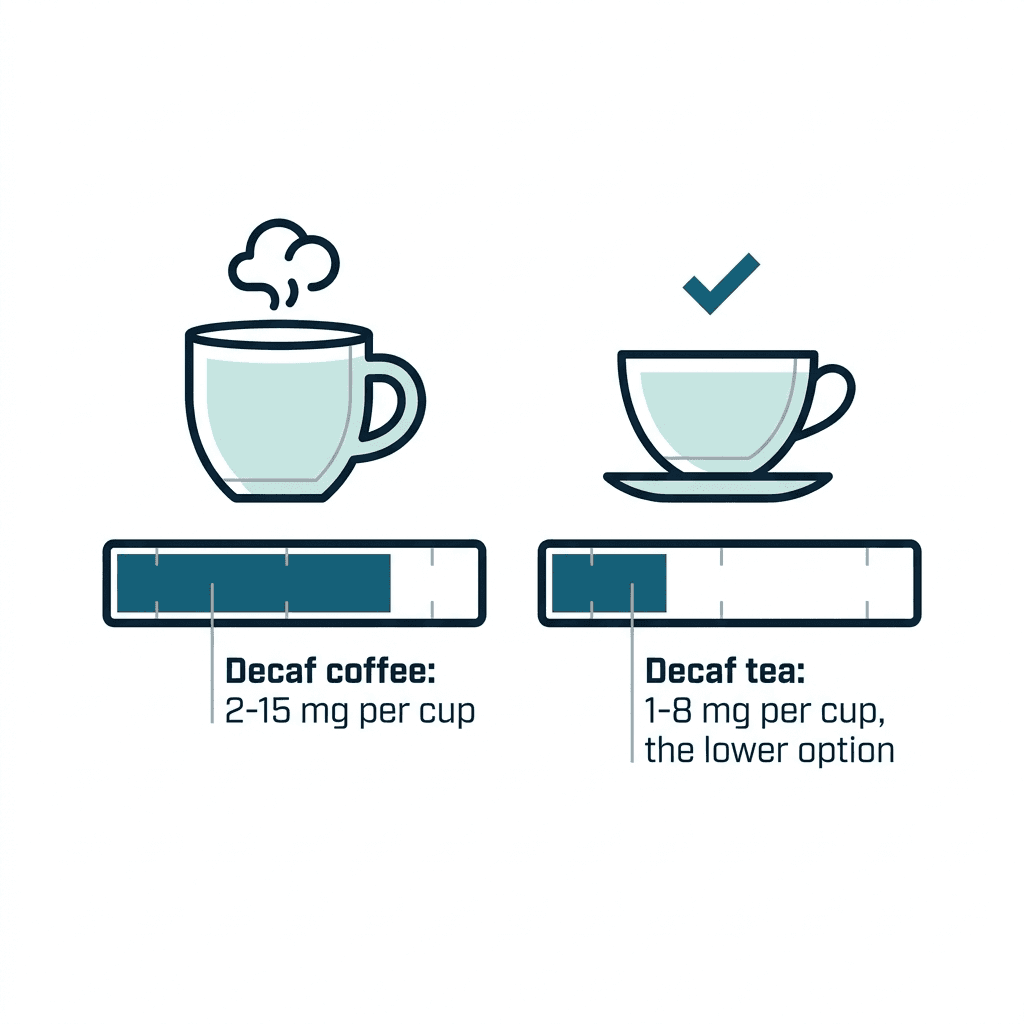
Decaf coffee contains roughly 2-15 milligrams (mg) of caffeine per 8 ounces (oz) cup, while decaf tea contains less, typically 1-8 mg per 8 oz cup. Neither drink gets stripped of all its caffeine, since no coffee or tea regulation sets a zero-caffeine standard, only a percentage-removal or residual-weight threshold. That gap matters most for caffeine-sensitive drinkers weighing the two against each other, and for anyone comparing decaf tea against truly caffeine-free herbal blends.
What Does "Decaf" Mean for Caffeine Content?
Decaf means most of a drink's original caffeine has been removed, not all of it. No Food and Drug Administration (FDA) rule sets a percentage-removal threshold for the word "decaf" itself. The widely repeated "97% removed" figure is the National Coffee Association's (NCA's) own description of common commercial practice, not a legal requirement, and tea decaffeination follows a similar informal benchmark, commonly cited at under 2.5% of the original caffeine level.
Regulation and method both differ by drink. Decaf coffee's real regulatory limit comes from the FDA, which caps methylene chloride residue at 10 parts per million (ppm) for beans processed with that solvent. Health Canada separately caps roasted decaf coffee at 0.1% residual caffeine by weight (0.3% for instant), and the European Union (EU) sets the same 0.1% limit under Directive 1999/4/EC.
Decaf tea, by contrast, is defined less by a single regulatory number and more by which of three commercial methods was used: methylene chloride, ethyl acetate, or CO2 (carbon dioxide) processing. CO2 processing is widely regarded as the cleanest method because it preserves flavor best, while methylene chloride raises more health concerns and ethyl acetate can leave a faint chemical aftertaste.
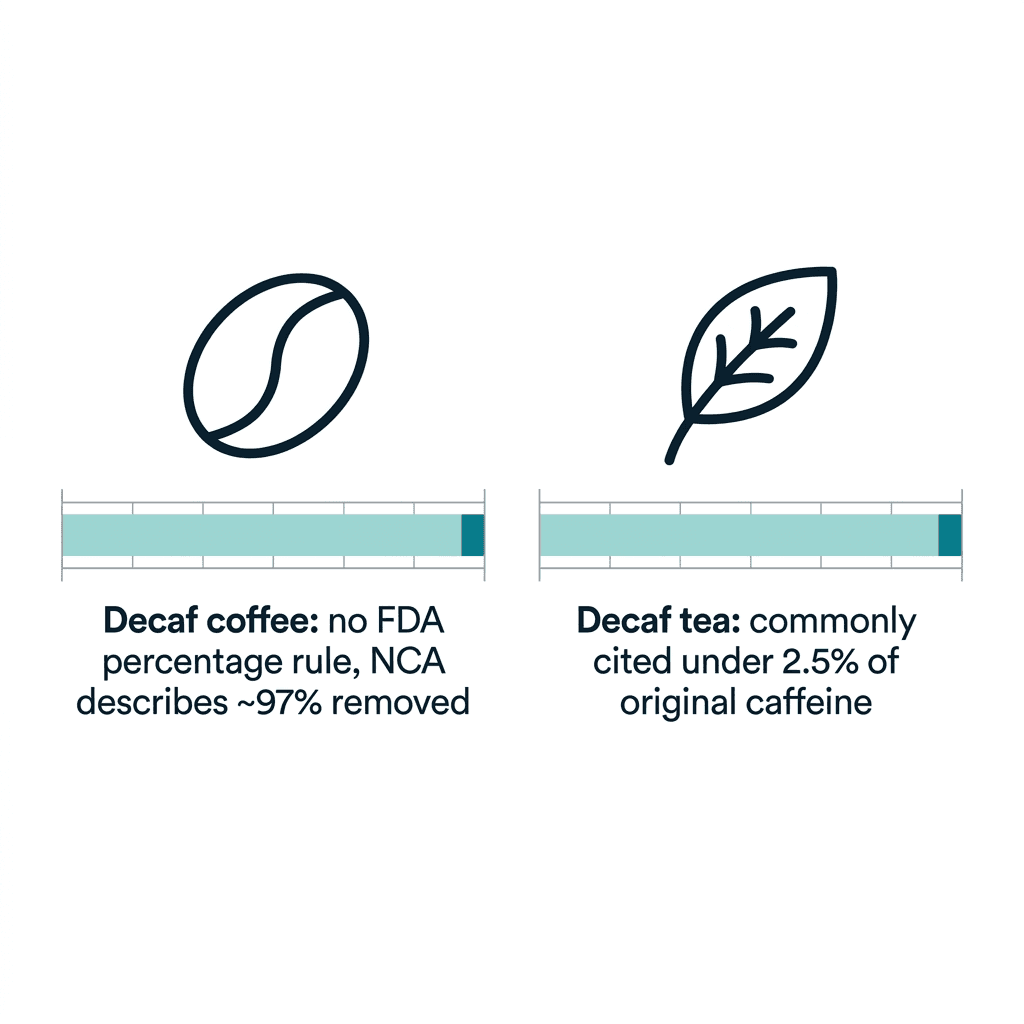
How Much Caffeine Is in Decaf Coffee vs. Decaf Tea?
Decaf coffee contains roughly 2-15 mg of caffeine per 8 oz cup. Decaf tea contains about 1-8 mg per 8 oz cup. An average serving of decaf tea contains less caffeine than an average serving of decaf coffee.
In general, it's estimated that decaffeination removes about 97% of caffeine, though some sources report different numbers. According to British Heart Foundation senior dietitian Tracy Parker, decaf coffee contains about 93% less caffeine than regular coffee, with roughly 7 mg per 200 ml cup compared with 100 mg. Decaf tea, on the other hand, contains about 96% less caffeine than regular tea, with roughly 2 mg per 200 ml cup compared with 50 mg.
A 2008 study by Chin, Merves, Goldberger, Sampson-Cone, and Cone, published in the Journal of Analytical Toxicology, found less than 12 mg of caffeine per 6-oz serving of decaffeinated tea. The average caffeine content was 5.1 mg per serving. A separate University of Florida College of Medicine study led by McCusker measured decaf coffee from 10 different establishments at 0-13.9 mg per 16-oz serving.
Why Doesn't Decaffeination Remove All the Caffeine?
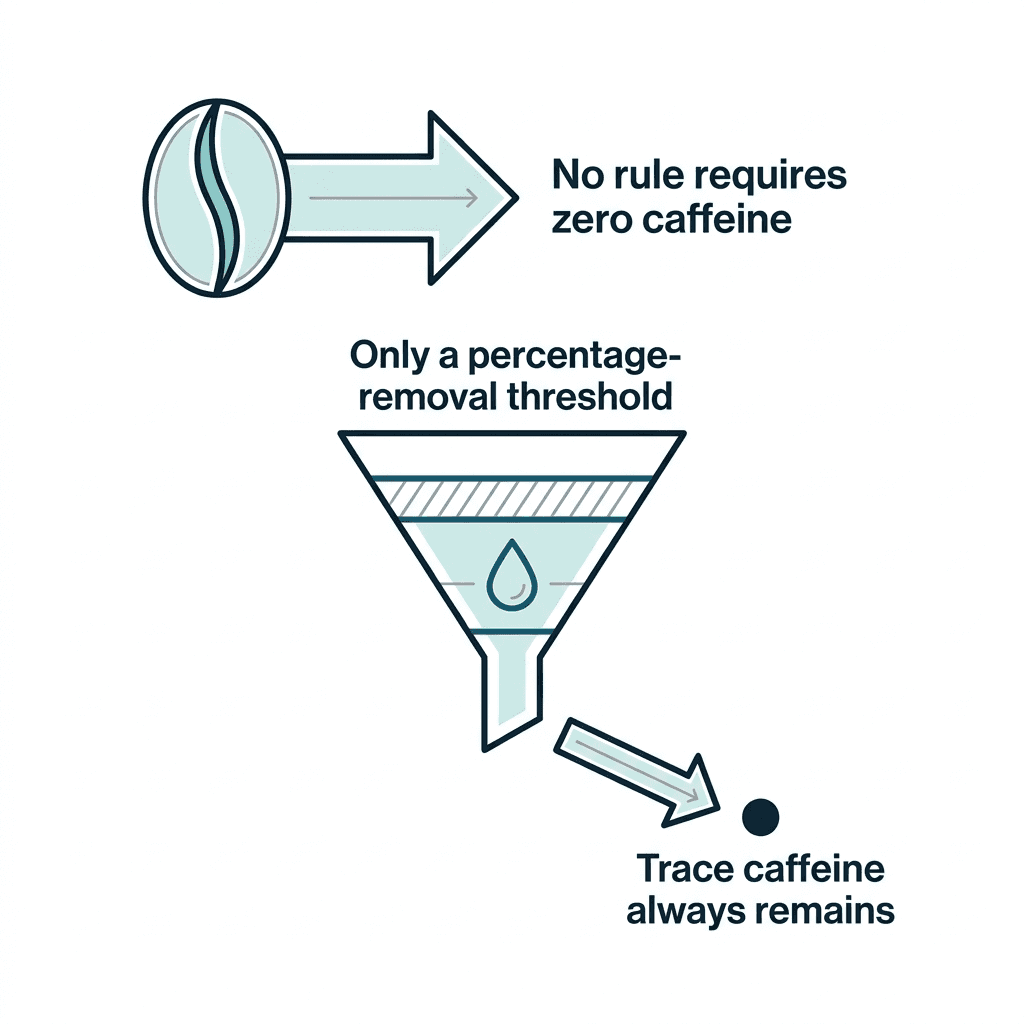
No regulation requires complete caffeine removal from decaf coffee or decaf tea. Every rule governing the word "decaf" sets a percentage-removal or residual-weight threshold instead of a zero target, so trace caffeine always survives processing.
Decaf tea's residual caffeine measures 1-8 mg per cup even after processing, per the same 2008 Journal of Analytical Toxicology study cited above. The decaffeination method itself also affects how much caffeine remains behind. The Swiss Water process, which uses water rather than chemical solvents, tends to retain slightly more residual caffeine than solvent-based decaffeination methods do.
Does Caffeine-Free Tea Have Less Caffeine Than Decaf Tea?
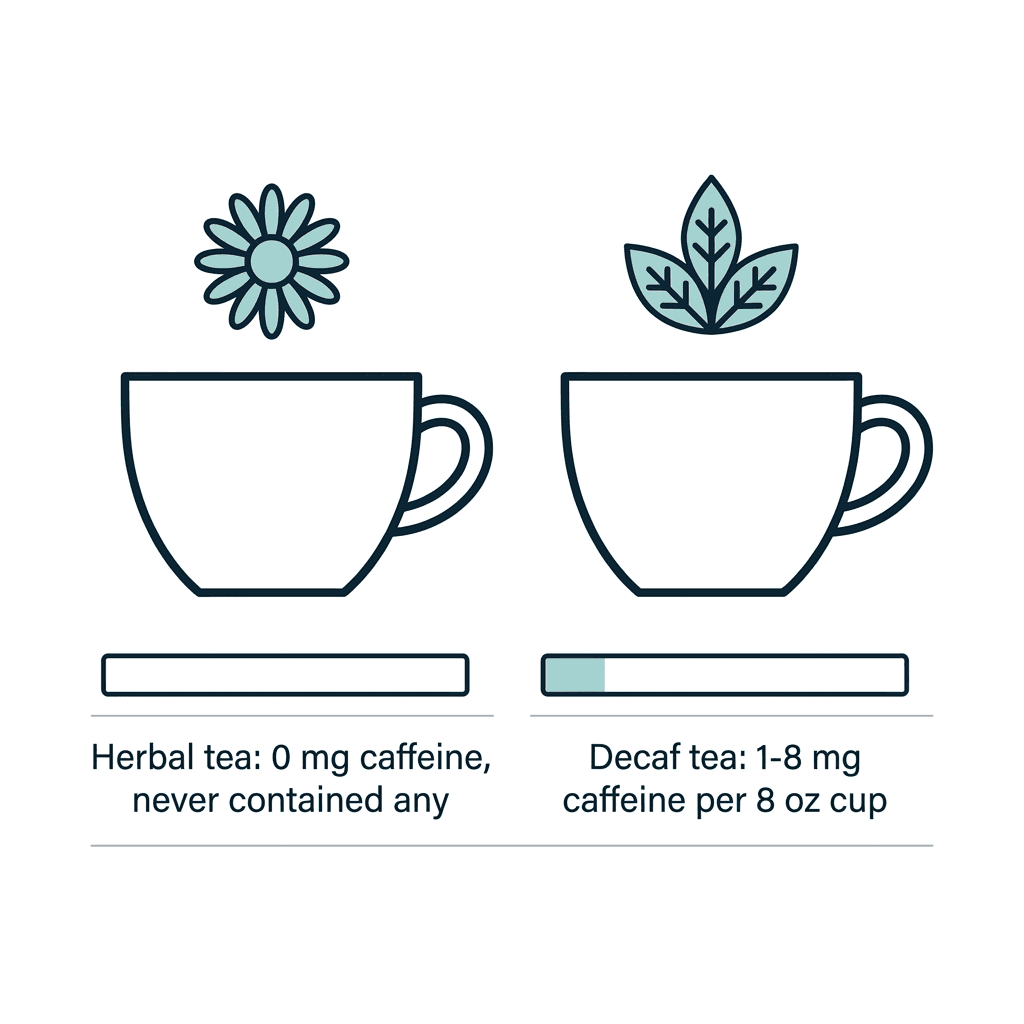
Caffeine-free tea has less caffeine than decaf tea because caffeine-free tea never contained caffeine to begin with. Herbal blends like chamomile, peppermint, and rooibos come from plants other than Camellia sinensis, the tea plant, so no decaffeination step is needed or possible.
Decaf tea starts as real Camellia sinensis leaves that undergo processing to remove most of their naturally occurring caffeine, leaving 1-8 mg per 8 oz cup behind. Herbal tea contains 0 mg of caffeine at every stage, since its ingredients are flowers, herbs, and fruit rather than tea leaves. That distinction makes herbal tea the only truly caffeine-free hot-drink option, while decaf tea remains a reduced-caffeine option rather than a caffeine-free one.
Is Decaf Coffee or Tea Better for Caffeine-Sensitive People?
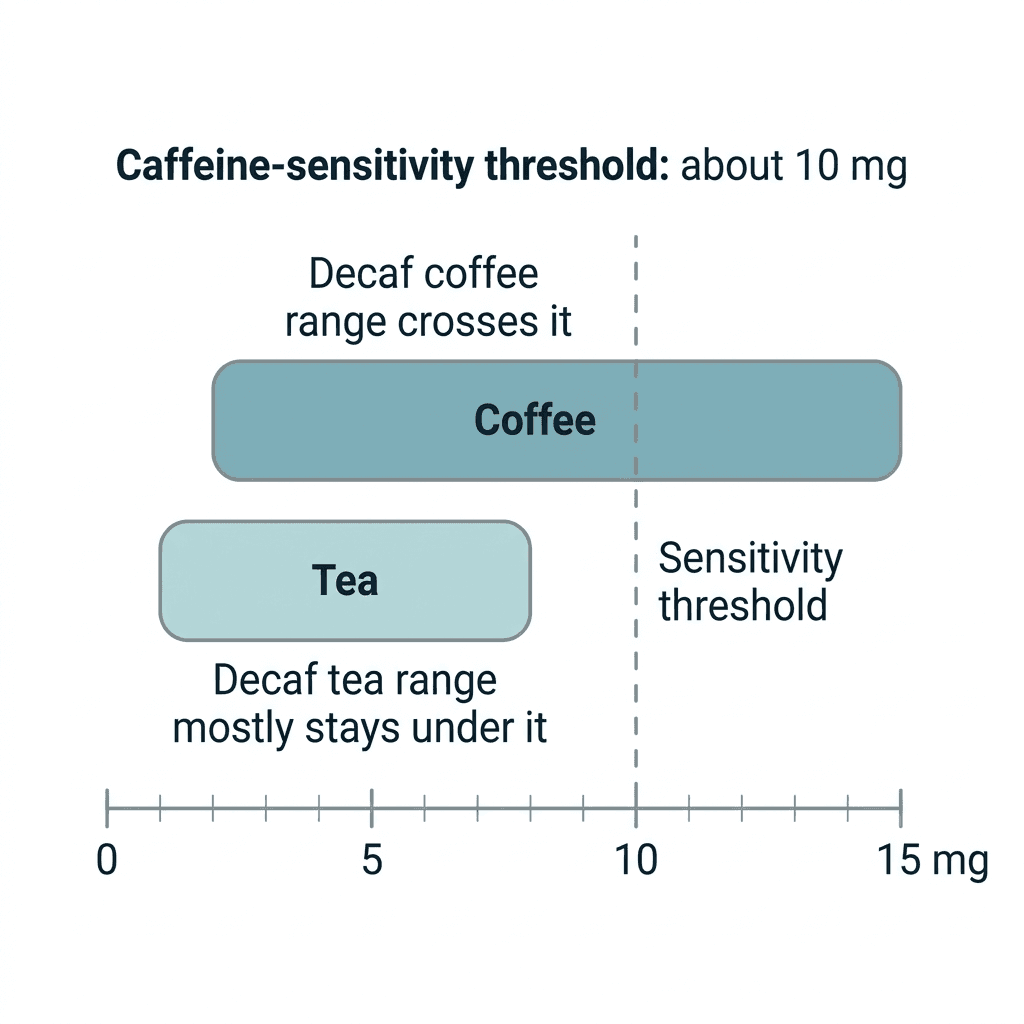
Decaf tea suits caffeine-sensitive people slightly better than decaf coffee, since its typical 1-8 mg range stays below decaf coffee's 2-15 mg range. Neither drink guarantees zero effect, though, since caffeine-sensitive people can react to doses smaller than either range's low end.
Roland Griffiths, a researcher at Johns Hopkins University School of Medicine, has found that caffeine doses as low as about 10 mg can produce reliable subjective and behavioral effects in sensitive individuals, a threshold some decaf coffee servings can reach or exceed. Tea offers another advantage beyond its lower caffeine content. Tea contains L-theanine, an amino acid that can moderate caffeine's stimulating effects. The combination of L-theanine and caffeine can produce a different subjective effect than caffeine alone. Both decaf coffee and decaf tea have almost no diuretic effect, unlike their fully caffeinated counterparts, since that effect depends on caffeine dose.
Which Is Better for Cutting Caffeine, Decaf Coffee or Decaf Tea?
Decaf tea is the better choice for cutting caffeine as far as possible, since its 1-8 mg range typically undercuts decaf coffee's 2-15 mg range. Either option still beats staying on regular coffee or regular tea, which contain 30-200 mg per cup depending on the drink and preparation.
Someone choosing between the two should weigh flavor preference alongside the caffeine gap, since the difference between decaf coffee's and decaf tea's typical ranges is real but small in absolute terms. Anyone especially sensitive to caffeine gets the most benefit from favoring whichever option lands at the low end of its own range, since brewing method and brand both shift the final number within each range.
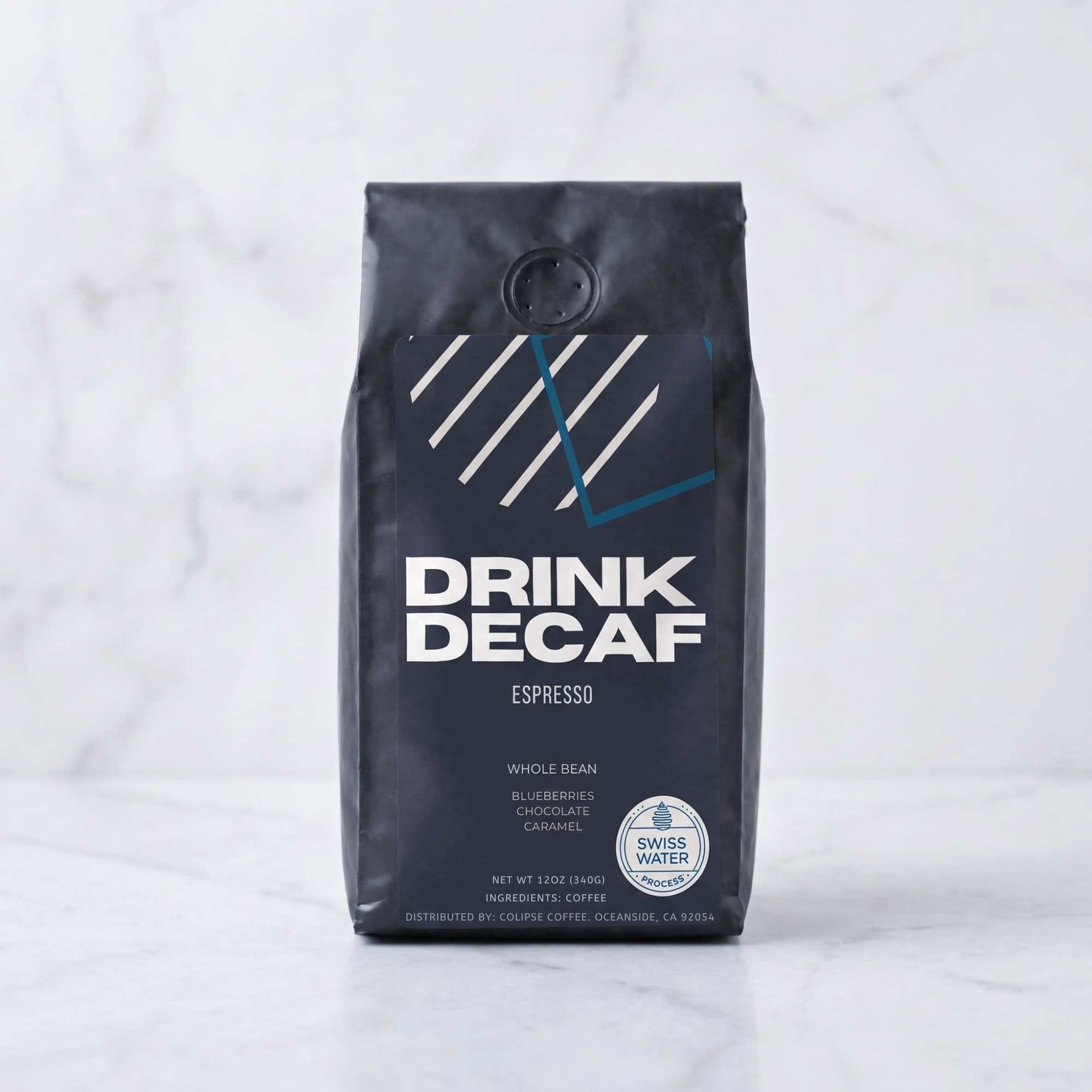
12 oz · Whole bean
Drink Decaf EspressoSpecialty grade. Swiss Water Process® decaffeinated. Roasted to order at our California roastery. Blueberry, chocolate, caramel.
Free shipping in the US