Check Your Decaf is a consumer resource that lets coffee drinkers search decaf brands and review how their coffee was decaffeinated. It helps identify products associated with chemical solvents such as methylene chloride and provides consumers with more information about decaffeination methods when product labels do not clearly disclose them.
Check Your Decaf was originally associated with the Clean Label Project, a U.S. nonprofit consumer advocacy organization. CheckYourDecaf.org served as a consumer database for identifying decaf coffee brands associated with methylene chloride processing. Clean Label Project focuses on product testing, ingredient transparency, and reducing consumer exposure to contaminants. Check Your Decaf now appears on Drink Decaf, at drinkdecafcoffee.com, as a searchable tool for checking how specific decaf coffee brands are processed.
Check Your Decaf means checking how a specific decaf coffee product was decaffeinated. The term refers to a consumer online lookup resource that identifies processing methods, including Swiss Water Process®, water processing, or solvent-based methods using methylene chloride. Check Your Decaf helps decaf coffee drinkers determine which decaffeination process a brand or product uses.
Check Your Decaf is a search tool for finding how caffeine is removed from different decaf coffee brands. The Check Your Decaf tool shows a coffee product's decaffeination method, product image, price, roast, tasting notes, and size. It also indicates when a brand has not disclosed its decaffeination method. The tool is available through the Drink Decaf website at drinkdecafcoffee.com/check-your-decaf.
Check Your Decaf works by letting you type a coffee brand into its search tool and choose from over 3,000 brands. The tool then shows which of the methods used to decaffeinate coffee that brand's own decaf was made with. Check Your Decaf is free to use on the Drink Decaf website.
Check Your Decaf is for decaf coffee drinkers who want to know how their coffee is decaffeinated. The tool is especially useful for people avoiding methylene chloride, shoppers seeking water-processed or Swiss Water Process® coffee, health-conscious consumers, pregnant people limiting caffeine, and anyone comparing decaf products before buying.
Check Your Decaf was originally created as a consumer resource associated with the Clean Label Project, a U.S. nonprofit focused on product transparency. Drink Decaf, operated by Powerbean Coffee LLC, now hosts an expanded version that lets users search coffee brands worldwide to identify how their decaf is decaffeinated.
Several decaf coffee brands use the Swiss Water Process, but not every brand that calls itself water-processed uses that exact company. Peet's and Starbucks each use it for part of their lineup, and Colipse Coffee uses it for its full decaf line. Big Island Coffee Roasters, Folgers, and Illy are not confirmed either way from published brand pages.
Brand-by-brand status varies by product line, not by company alone. Starbucks uses the Swiss Water Process for only two products. Peet's sources several water-process decaffeinators, of which Swiss Water is one. Checking a specific product's own label remains the most reliable way to confirm its method.
Peet's is a specialty coffee roaster that decaffeinates its coffee using the water process method. Peet's does not rely on a single water-process company. Swiss Water is one of several water-process decaffeinators Peet's uses, so not every Peet's decaf carries the Swiss Water name specifically.
Peet's roasts every decaf batch from the same high-quality beans used in its regular coffee, rather than buying pre-decaffeinated stock. The company states plainly that its own water-process method uses no chemical solvents.
Seattle's Best Coffee is a coffee brand owned by Starbucks Corporation and sold through Nestlé's at-home coffee licensing. Seattle's Best's own product, FAQ, and retail pages do not state which decaffeination method it uses.
No competitor page scraped for this article named a specific process for Seattle's Best decaf. A shopper who wants a confirmed chemical-free coffee cannot verify Seattle's Best against that standard from published brand information alone.
Starbucks is a global coffee chain that decaffeinates most of its coffee with the Direct Contact Method, a solvent-based process. Two Starbucks products use the Swiss Water Process instead: the decaf Komodo Dragon Blend and the VIA Instant Decaf Italian Roast.
Starbucks confirmed this method split directly to a licensed nutritionist who inquired on customers' behalf. The Direct Contact Method remains Starbucks' primary process for the rest of its decaf lineup. That lineup includes its standard decaf Pike Place Roast.
Colipse Coffee is a specialty coffee brand that decaffeinates its coffee using the Swiss Water Process.
Colipse Coffee sources the same high-quality, single-origin beans for its decaf as it does for its regular coffee, rather than buying pre-decaffeinated stock. The brand states plainly that its own Swiss Water Process method uses no chemical solvents.
Big Island Coffee Roasters is a Hawaii-based coffee company. No source scraped for this article confirms which decaffeination method Big Island Coffee Roasters uses for its decaf coffee.
The absence of a confirmed method here reflects a gap in this build's own competitor research, not a claim that Big Island Coffee Roasters avoids the Swiss Water Process. Checking the brand's own current packaging remains the most reliable way to confirm its method.
Folgers is one of the largest mass-market coffee brands in the United States. No source scraped for this article confirms which decaffeination method Folgers uses for its decaf coffee.
As with Big Island Coffee Roasters, this is a gap in available published sourcing, not evidence against Swiss Water use. A current Folgers decaf package or brand page is the more reliable next check.
Illy is an Italian espresso brand known for its single-blend approach to coffee. No source scraped for this article confirms which decaffeination method Illy uses for its decaf coffee.
This gap matches the pattern for Big Island Coffee Roasters and Folgers: absent from this build's own research, not confirmed negative. Illy's own packaging or customer service channels would settle the question directly.
Your decaf coffee is processed with the Swiss Water Method only if its label or brand page names that specific company. The Swiss Water Process removes about 99.9% of caffeine using only hot water, heat, and time, with no chemical solvent touching the bean.
The mechanism works through a Green Coffee Extract that already holds every water-soluble coffee compound except caffeine. Green beans soak in that extract. Caffeine molecules then move out of the beans and into the extract through osmosis. An activated carbon filter traps that caffeine so the extract can be reused. Swiss Water itself is one branded company offering this method, so a coffee decaffeinated by water process is not automatically a Swiss Water product.
Starbucks decaffeinates its coffee mainly through the Direct Contact Method, a process that washes steamed green beans in methylene chloride. That solvent selectively binds to caffeine and removes up to 97% of it while the coffee's flavor compounds stay in the bean.
After the solvent bath, Starbucks washes the beans, steams them again above 400 degrees Fahrenheit, and roasts them. Starbucks states that step removes all detectable methylene chloride before the coffee reaches a cup. A full breakdown of how Starbucks decaf coffee is processed covers both methods, including which two products skip methylene chloride entirely. The Direct Contact Method is Starbucks' primary process for its decaf lineup overall.
You can tell if your decaf was processed with methylene chloride mainly by the absence of a chemical-free claim, since US law does not require the process itself to appear on the label. Brands that skip methylene chloride typically volunteer a label like solvent-free, chemical-free, or naturally decaffeinated.
Swiss Water Process is the one branded label that reliably signals a chemical-free method by name rather than by a generic claim. When methylene chloride is used, Food and Drug Administration (FDA) rules cap the residue left in roasted beans at 10 parts per million (ppm). Any trace that remains in the finished coffee sits within that regulated limit rather than an unregulated one.
You can tell if your decaf coffee is chemical-free by looking for a named method on the label rather than the word decaf alone. A named claim such as Swiss Water Process, another named water-process brand, or a carbon dioxide (CO2) or Natural Decaffeination Process claim indicates no solvent was used.
An unlabeled decaf claim by itself confirms nothing about method, since US manufacturers are not required to state which process they used. Checking the brand's own packaging or website for one of these three named process categories remains the most direct way to confirm a chemical-free method.
Starbucks decaf coffee is safe to drink by current food-safety standards. The Direct Contact Method leaves no detectable methylene chloride in the finished cup, per Starbucks' own account. Any residual methylene chloride from that process falls under the FDA's 10 parts per million limit for the solvent. The Swiss Water Process, used for Starbucks' two named exceptions, avoids the solvent question entirely since no chemical touches the bean.
If you're ready to try genuinely great decaf, Drink Decaf's single-origin decaf espresso is roasted to order in Oceanside, California and ships free across the United States. Shop the current batch of fresh roasted decaf coffee at drinkdecafcoffee.com/products/decaf-espresso.
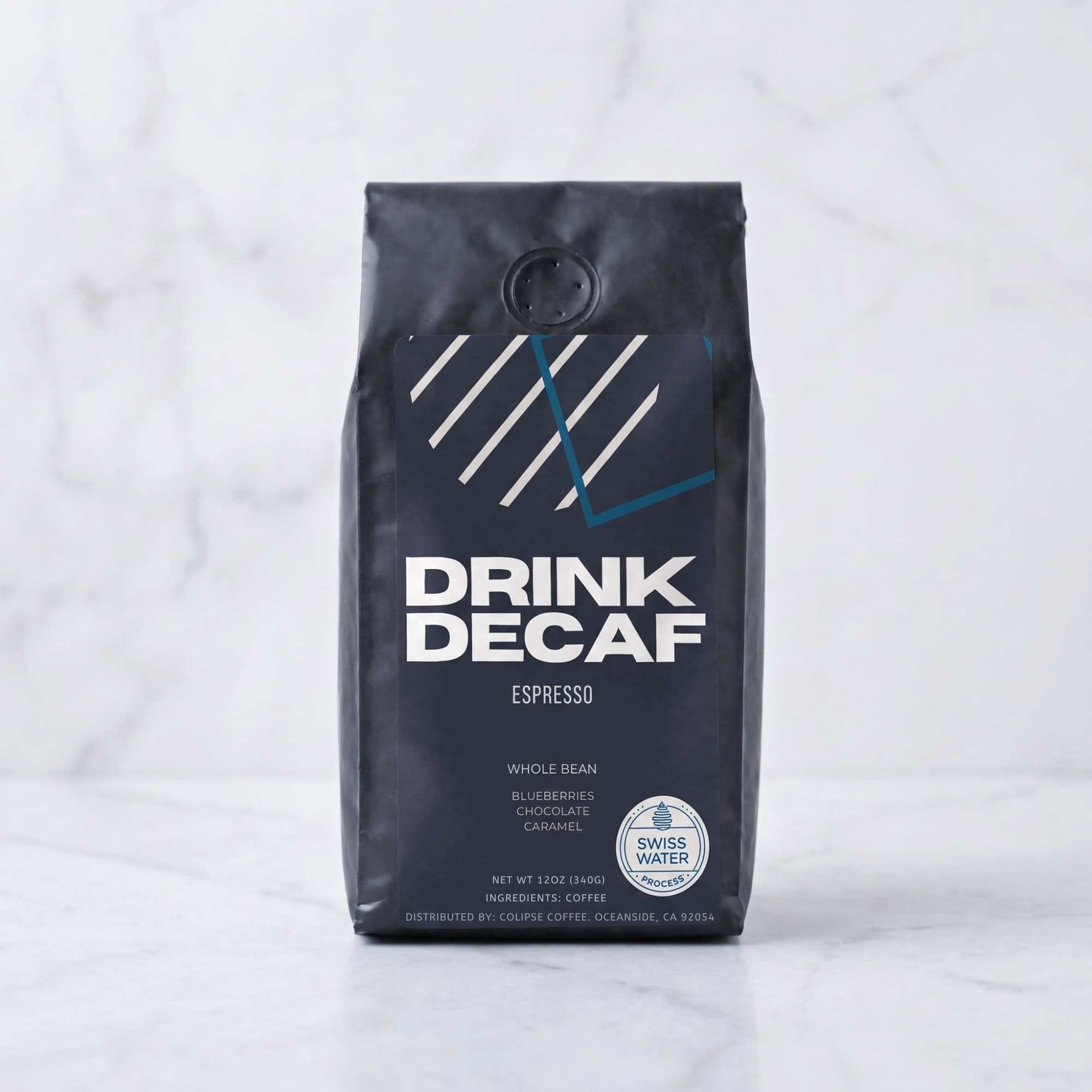
12 oz · Whole bean
Drink Decaf EspressoSpecialty grade. Swiss Water Process® decaffeinated. Roasted to order at our California roastery. Blueberry, chocolate, caramel.
Free shipping in the US