How Is Decaf Coffee Made?
Decaf coffee is made by removing caffeine from green, unroasted coffee beans before they ever reach a roaster. Coffee earns the "decaf" label once producers remove at least 97% of its natural caffeine, an industry benchmark from the National Coffee Association rather than a rule set by the U.S. Food and Drug Administration (FDA). Producers choose among five named methods: solvent-based processes like methylene chloride and ethyl acetate, and water- or CO2 (carbon dioxide)-based processes like the Swiss Water and Mountain Water methods. Each method strikes a different balance between cost, safety, and how much of the bean's original flavor survives. You can check how your own decaf was made using Drink Decaf's free online tool, Check Your Decaf.
What Makes Coffee "Decaf"?
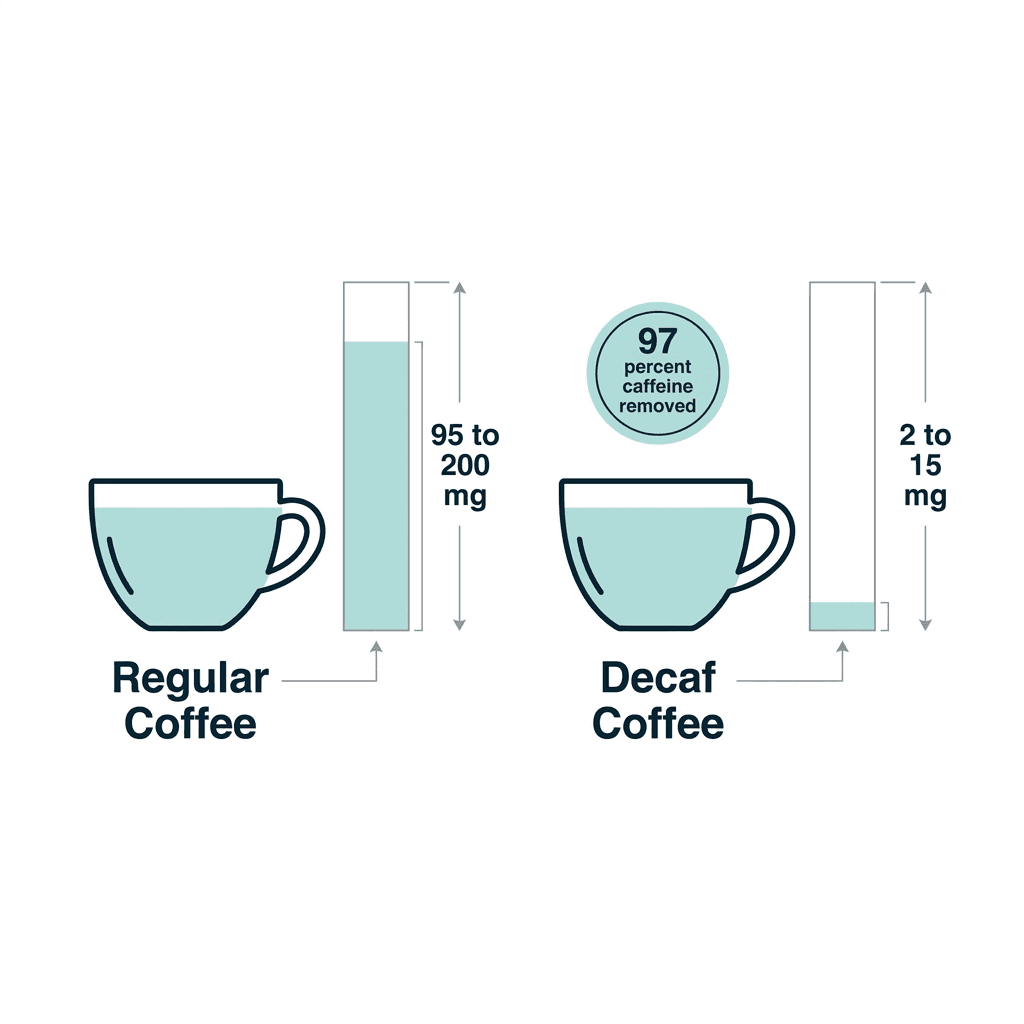
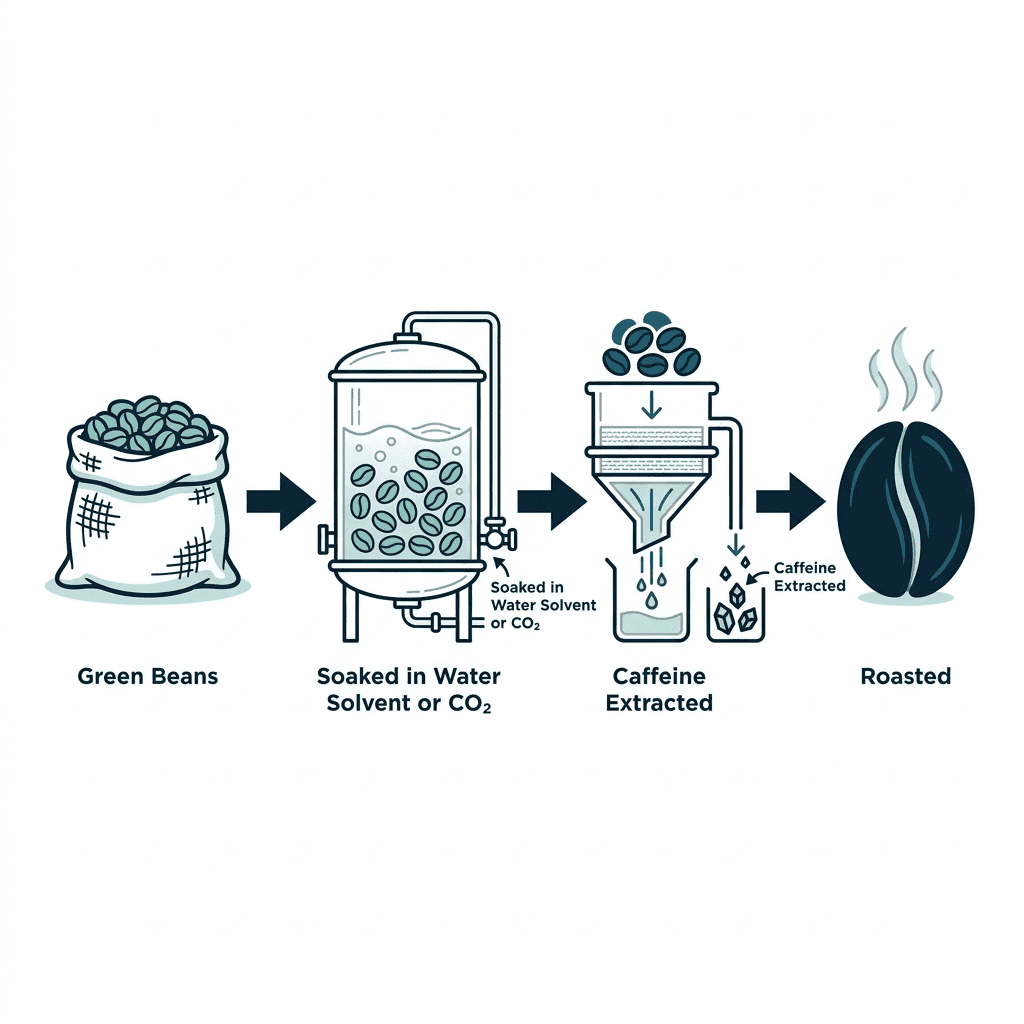
Coffee becomes "decaf" once producers remove at least 97% of its natural caffeine before roasting, an industry benchmark rather than an FDA-set threshold. Manufacturers extract that caffeine from the green, unroasted bean using water, a chemical solvent, or carbon dioxide, then roast the treated beans the same way as regular coffee.
Decaf coffee still contains a small amount of caffeine after processing. An 8-ounce (oz) cup typically holds about 2 to 15 mg (milligrams), compared with roughly 95 to 200 milligrams in a regular 8-ounce cup of coffee.
Who Invented Decaffeinated Coffee?
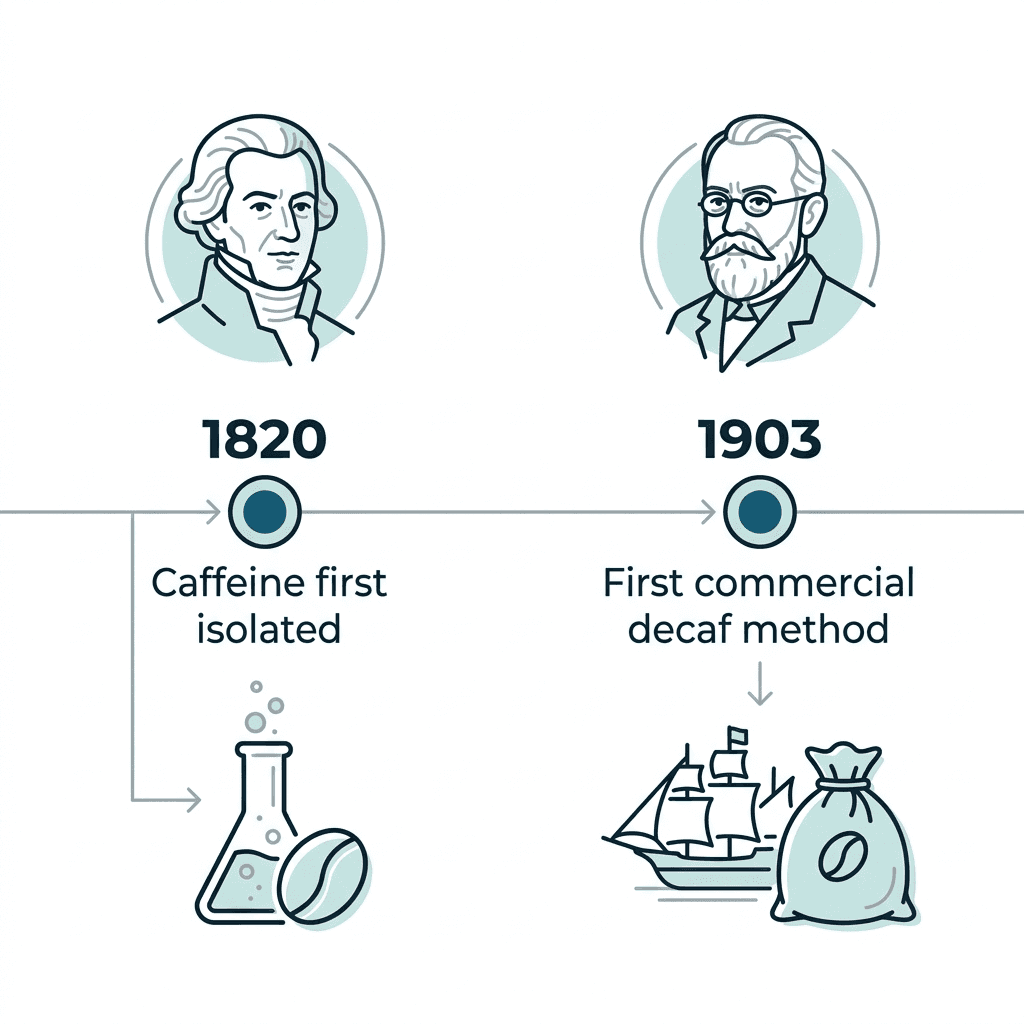
Ludwig Roselius invented the first commercial method for decaffeinating coffee. The German merchant, who ran the coffee company Kaffee HAG, patented the process in 1906 after noticing that a coffee shipment soaked in seawater during transit had lost caffeine while keeping its flavor.
Roselius built his method on earlier work by German chemist Friedlieb Ferdinand Runge, who first isolated caffeine from coffee beans in 1820 at the request of the poet Goethe. Roselius steamed green beans with acids and then washed them in the solvent benzene to draw out the caffeine. Benzene was later identified as a carcinogen, and coffee producers abandoned it in favor of the water- and solvent-based methods used today, according to BBC Future's account of the British Coffee Association's history of the process.
How Is Decaf Coffee Made?
Decaf coffee is made by removing caffeine from green, unroasted coffee beans before they ever reach a roaster. Producers warm or steam the beans, then soak them in a liquid, either water, a chemical solvent, or carbon dioxide, that selectively pulls caffeine out while leaving most flavor compounds behind.
Decaffeination methods fall into two broad groups. Solvent-based methods, direct and indirect, use a chemical solvent to bind to and remove caffeine. Non-solvent methods, the Swiss Water Process and the carbon dioxide method, rely on water or pressurized CO2 instead. Every method treats coffee at the green-bean stage, since decaffeinating already-roasted coffee damages its flavor beyond repair.
What Methods Are Used to Decaffeinate Coffee?
Coffee producers use five named methods to decaffeinate beans today, split between solvent-based and water- or CO2-based processes. Solvent-based methods together still account for roughly 70% of global decaffeination, even as water- and CO2-based methods gain ground for their chemical-free profile.
Ethyl Acetate Process
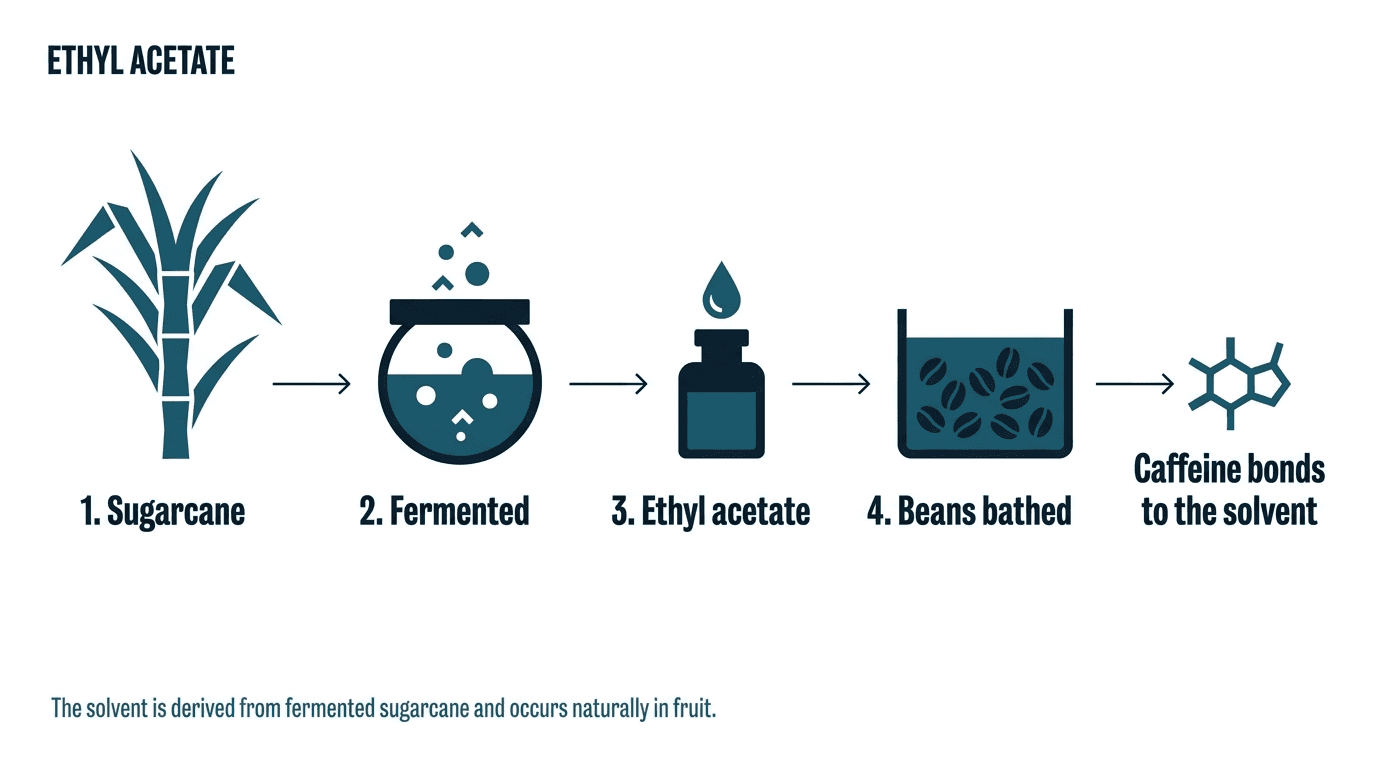
The ethyl acetate process decaffeinates coffee using ethyl acetate as its solvent. Producers steam green beans to open their pores, then spray them with ethyl acetate, which binds to caffeine molecules and draws them out during a final rinse and evaporation step.
A naturally derived version of ethyl acetate, sourced from sugarcane processing byproducts, is what earns ethyl acetate decaf its "Natural Decaffeination" or "Sugar Cane EA Decaf" packaging label. A synthetic, lab-made version of ethyl acetate is common too, since it costs less than the naturally derived form, though packaging rarely distinguishes between the two.
Methylene Chloride Process
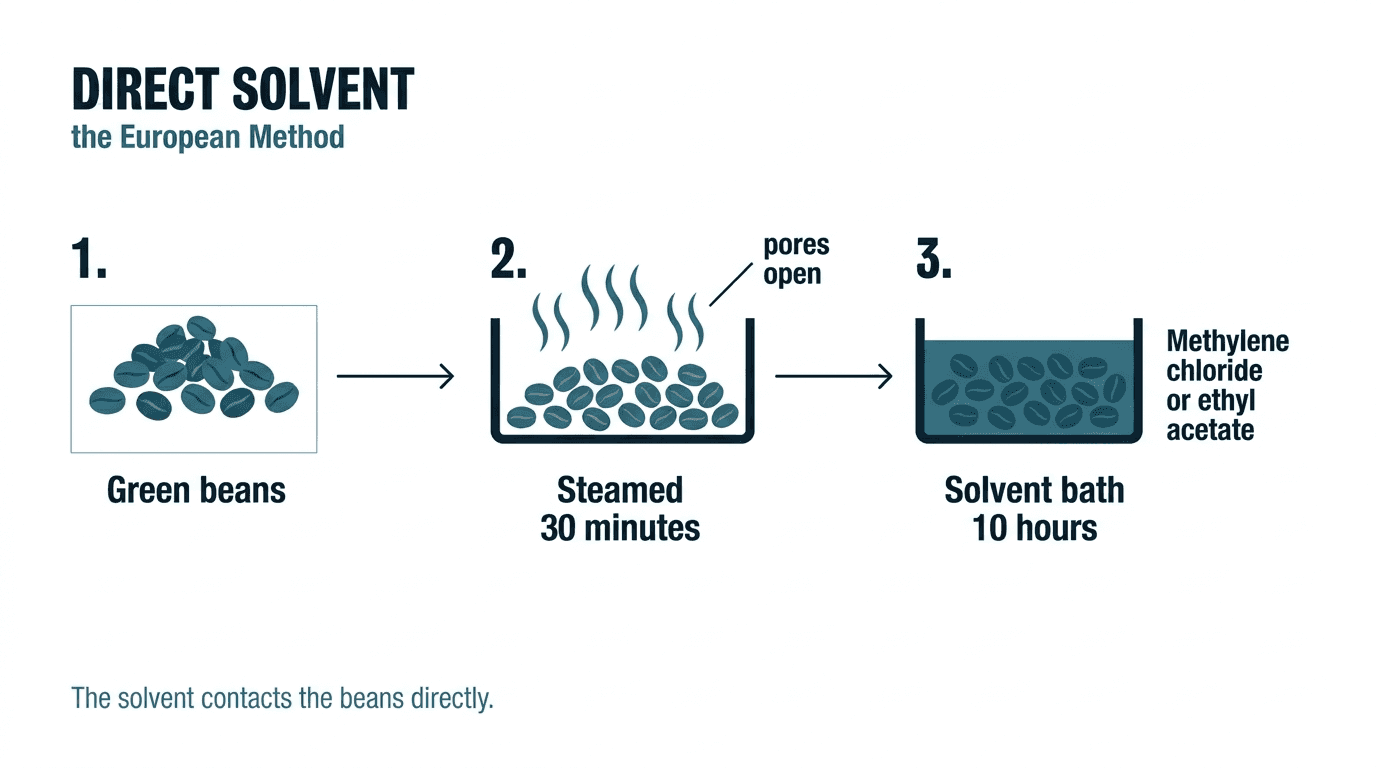
The methylene chloride process, also called the direct-solvent method, steams green coffee beans to open their pores, then repeatedly rinses them with methylene chloride. The solvent binds to caffeine molecules and draws them out of the bean, and a final steaming removes residual solvent before roasting.
Methylene chloride accounts for the majority of solvent-based decaffeination worldwide because it works quickly and costs less than alternative solvents. Producers who don't disclose which process they used on packaging most often used methylene chloride, since it's the least marketed by name of the methods in use today.
Swiss Water Process
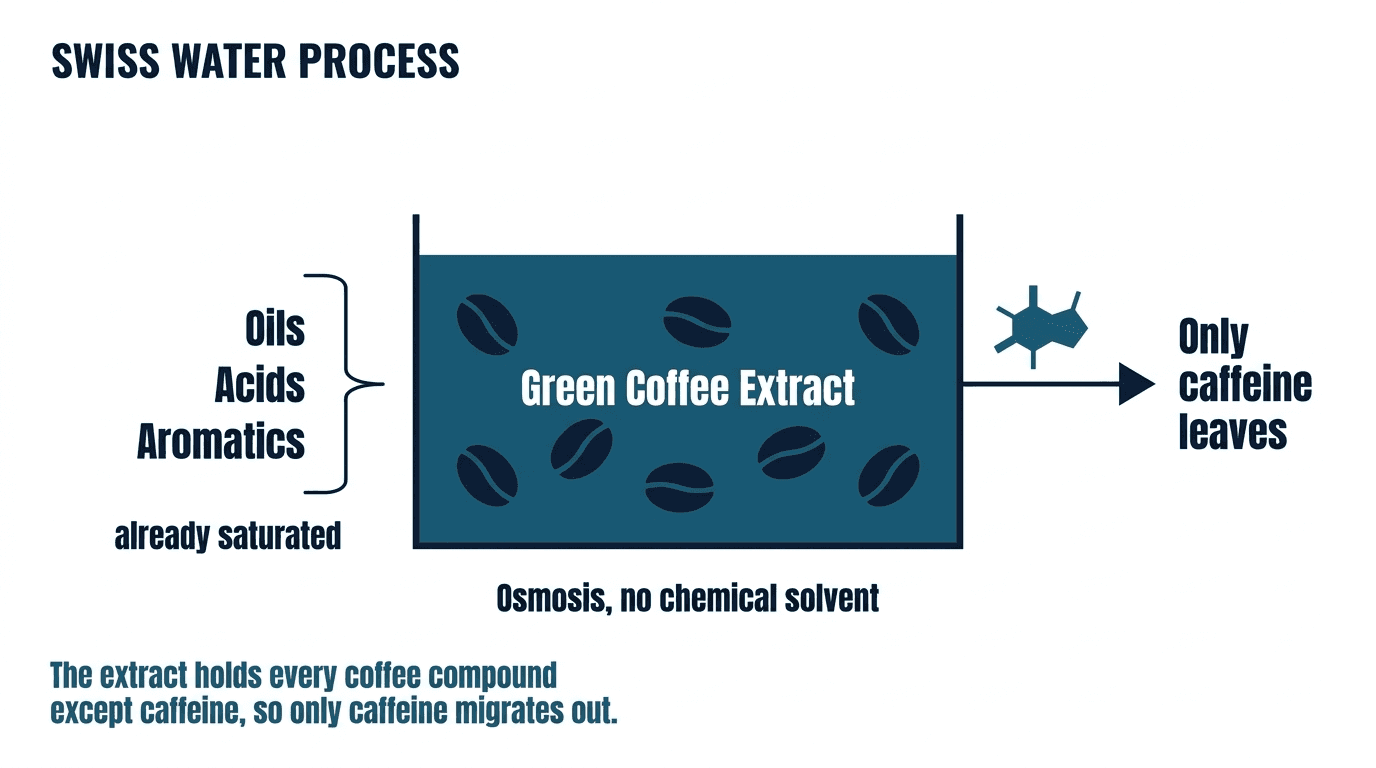
The Swiss Water Process removes caffeine from green coffee beans using only hot water and activated-charcoal filters, without any chemical solvent. Beans are soaked in hot water to create a caffeine- and flavor-rich Green Coffee Extract, which is then filtered to trap caffeine molecules while letting flavor molecules pass through.
The caffeine-free, flavor-saturated extract is reused to soak the next batch of green beans. That extract, already saturated with flavor compounds, draws out only caffeine from the new beans and leaves their flavor intact. The process uses no chemical solvent at any step. That distinction lets Swiss Water-processed decaf carry organic certification that solvent-based methods cannot. Swiss Water Decaffeinated Coffee Inc., based in Delta, British Columbia, owns the Swiss Water trademark and runs its own processing plant in Vancouver. The underlying water-based method traces back to a 1930s Swiss patent, and a US patent from the 1980s covers the commercialized version Swiss Water uses today.
Mountain Water Process
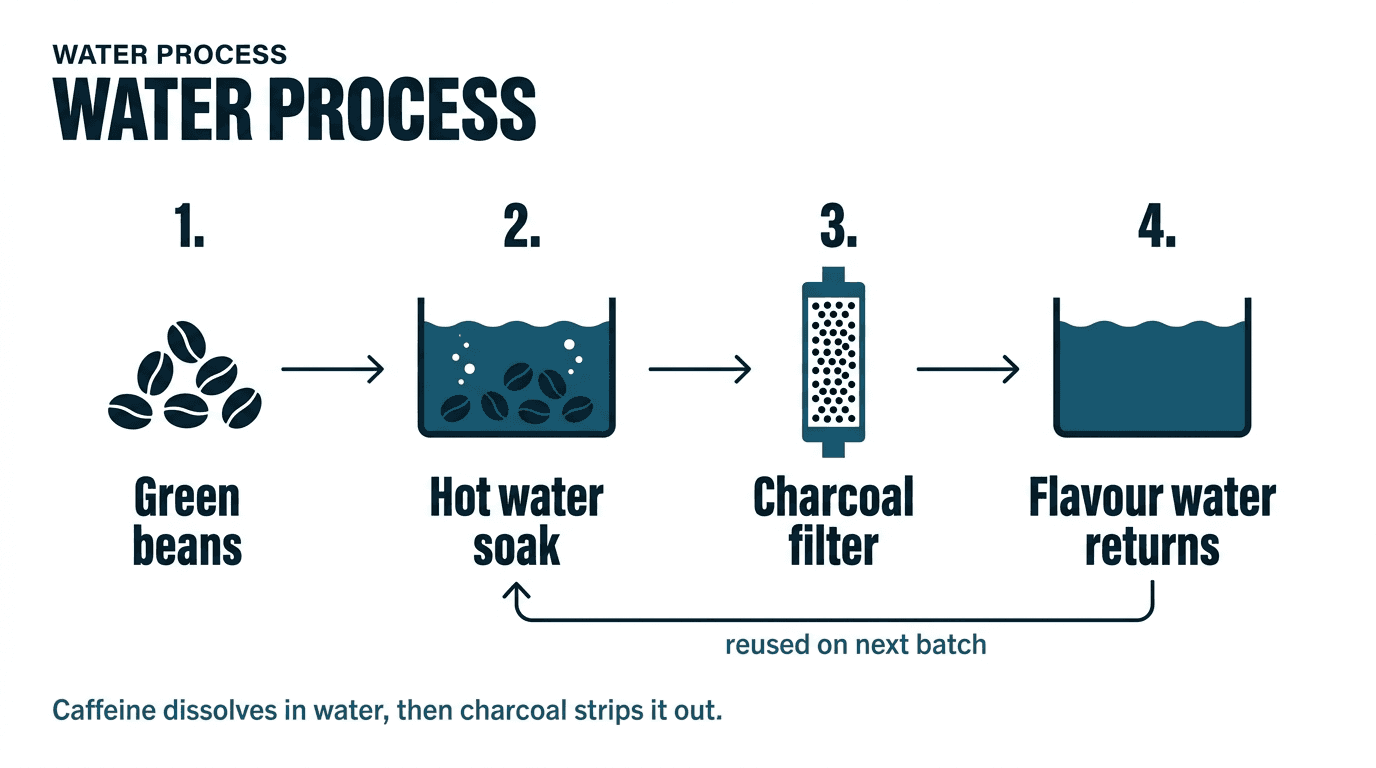
The Mountain Water Process decaffeinates coffee using the same water-based, solvent-free mechanism as the Swiss Water Process. Producers soak green beans in hot water, then filter the resulting extract through activated carbon to trap caffeine while preserving the beans' flavor compounds.
Mountain Water differs from Swiss Water mainly in name and licensing, not mechanism. Swiss Water is a trademarked process performed at a small number of licensed facilities worldwide. Mountain Water describes the same underlying chemical-free extraction sold under a different brand name. Descamex owns the Mountain Water Process and trademarks it as MW D'caff. Domingo Muguira founded Descamex in 1980 in Veracruz, Mexico. The company opened Latin America's first decaffeination plant and patented its water-extraction process in 1987.
Why Doesn't Decaffeination Remove All the Caffeine?
Decaffeination doesn't remove all the caffeine because no removal threshold reaches 100%. The FDA has no percentage-removal rule; industry practice targets at least 97% of original caffeine removed. The European Union (EU) does set a real regulatory threshold, requiring decaf to be 99.9% caffeine-free by mass, and no commercial method claims full removal.
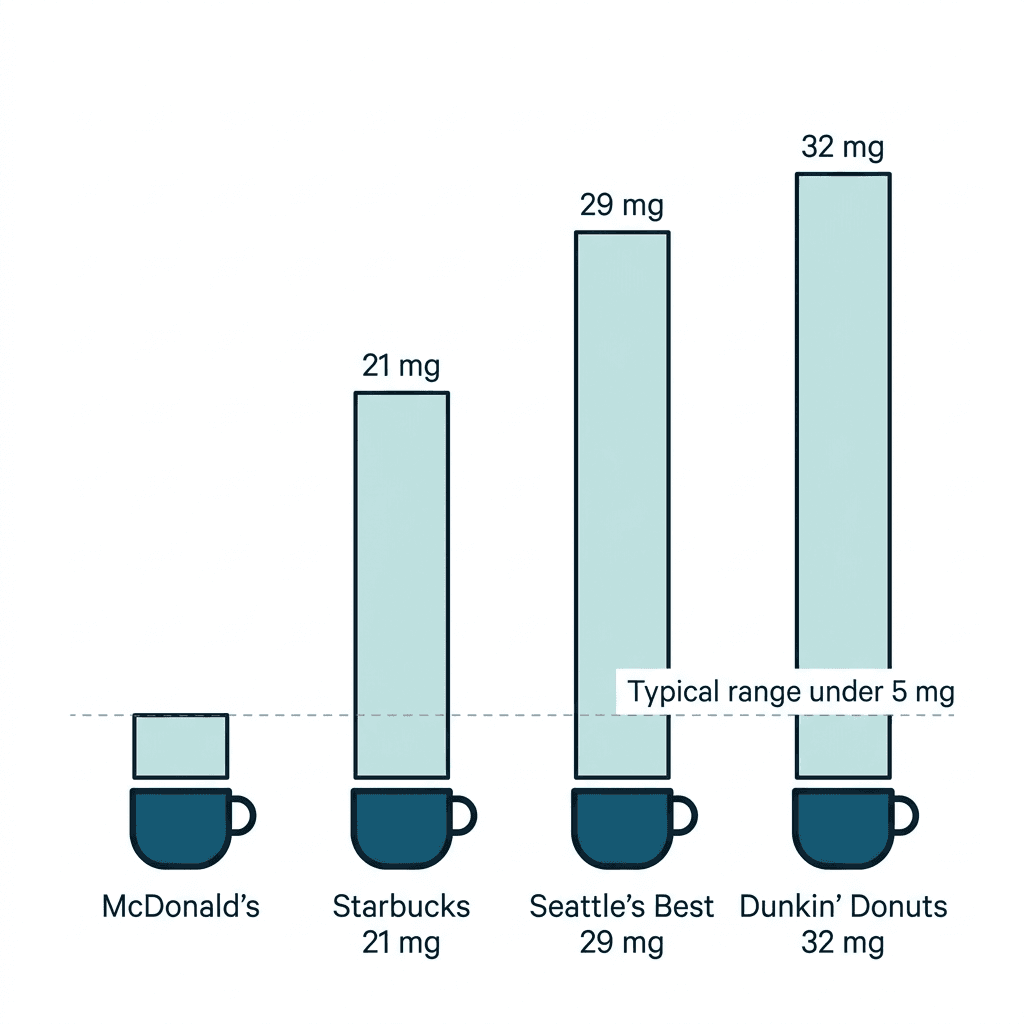
Consumer Reports tested that variance directly in 2007. The organization sampled 36 cups of decaf coffee across six national chains: Burger King, Dunkin' Donuts, McDonald's, Seattle's Best, 7-Eleven, and Starbucks. Most cups measured under 5 milligrams of caffeine, consistent with the typical range, but three chains ran well above it: Dunkin' Donuts at 32 milligrams, Seattle's Best at 29 milligrams, and Starbucks at 21 milligrams. McDonald's consistently measured the lowest of the six chains tested.
Does Decaffeination Change Coffee's Taste?
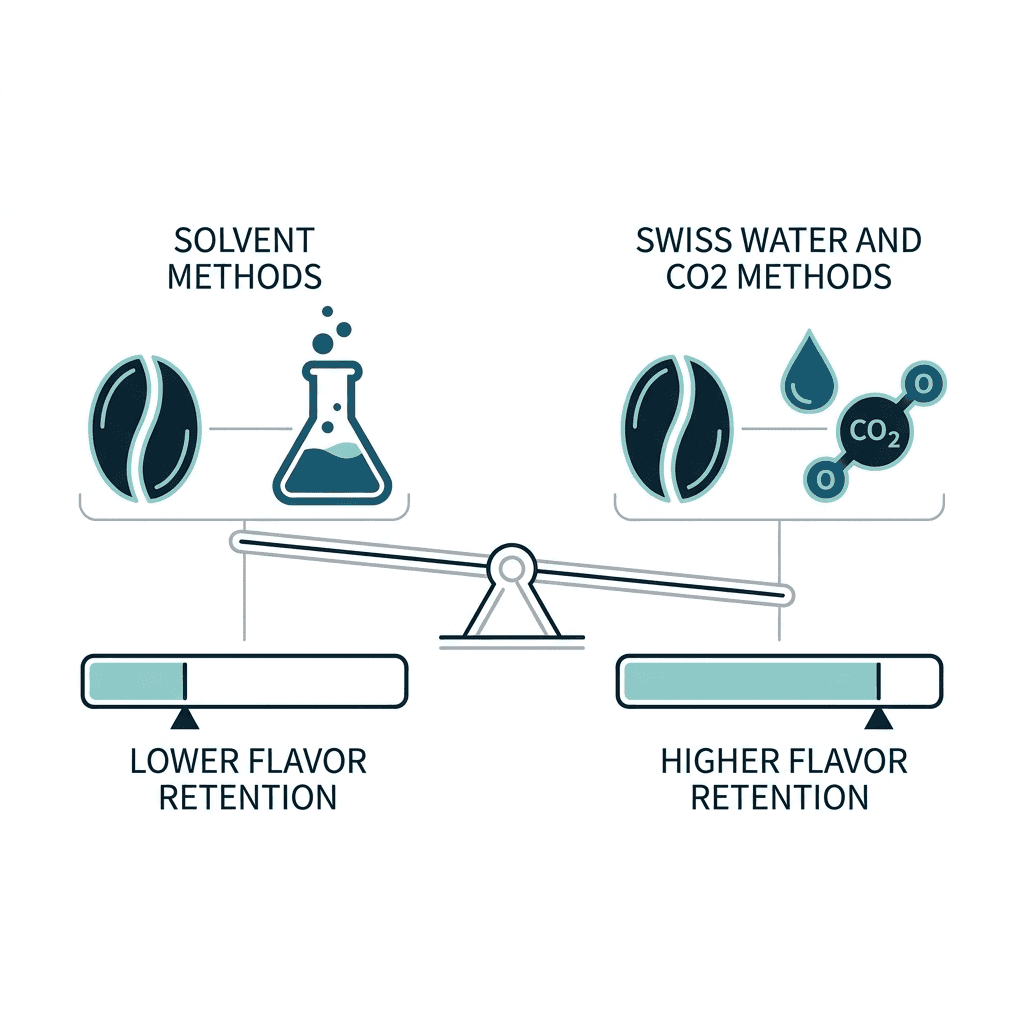
Yes, decaffeination can change coffee's taste because caffeine itself contributes to bitterness, so removing it also removes some of that bitterness. Solvent-based methods can additionally strip away aromatic compounds during the heat and solvent exposure involved in extraction.
Decaffeinated beans are also harder to roast evenly than caffeinated beans, since decaffeination alters their structure and makes them more prone to uneven roasting. The Swiss Water Process and the carbon dioxide method generally preserve more of coffee's original flavor than solvent-based methods, because neither brings a chemical solvent into direct contact with the bean. Swiss Water-processed decaf can still taste flat or muted on delicate specialty beans, even without solvent exposure.
Is the Decaffeination Process Safe?
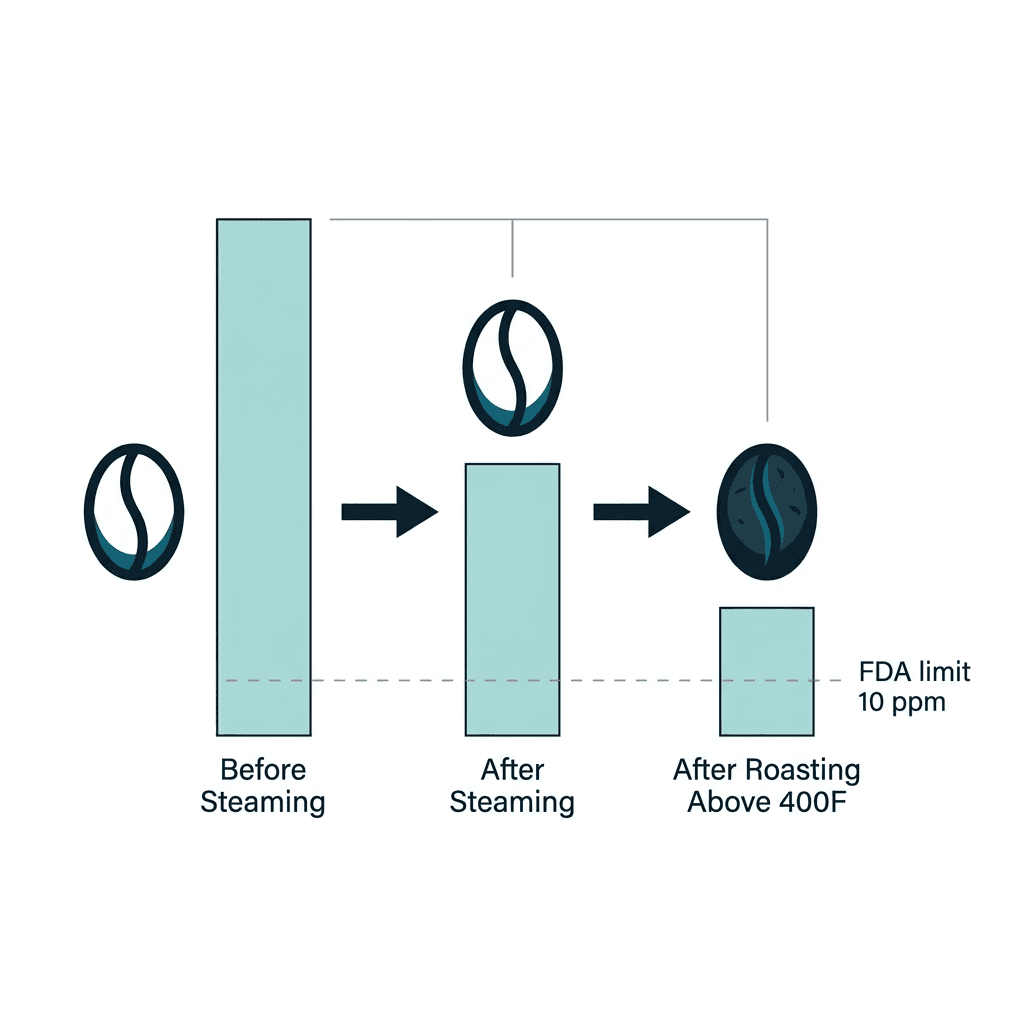
Yes, the decaffeination process is safe under current regulation. The FDA caps residual methylene chloride in decaf beans at 10 ppm (parts per million) under 21 CFR 173.255, and the agency has described the health risk from properly processed decaf as essentially non-existent.
Any solvent residue that remains after extraction evaporates further during the beans' post-extraction steaming and again during roasting at temperatures above 400°F (Fahrenheit). Specialist decaffeination companies, not the coffee roasters themselves, carry out the process at dedicated facilities concentrated in Europe, Canada, the United States (US), and South America. Swiss Water Decaffeinated Coffee Inc. runs its own water-only process from Canada, while Descafemex, Coffein Compagnie, and Delica AG operate as major processors in Mexico, Germany, and Switzerland. These facilities apply the same safety standards across solvent-based and water-based methods alike.
Check Your Decaf
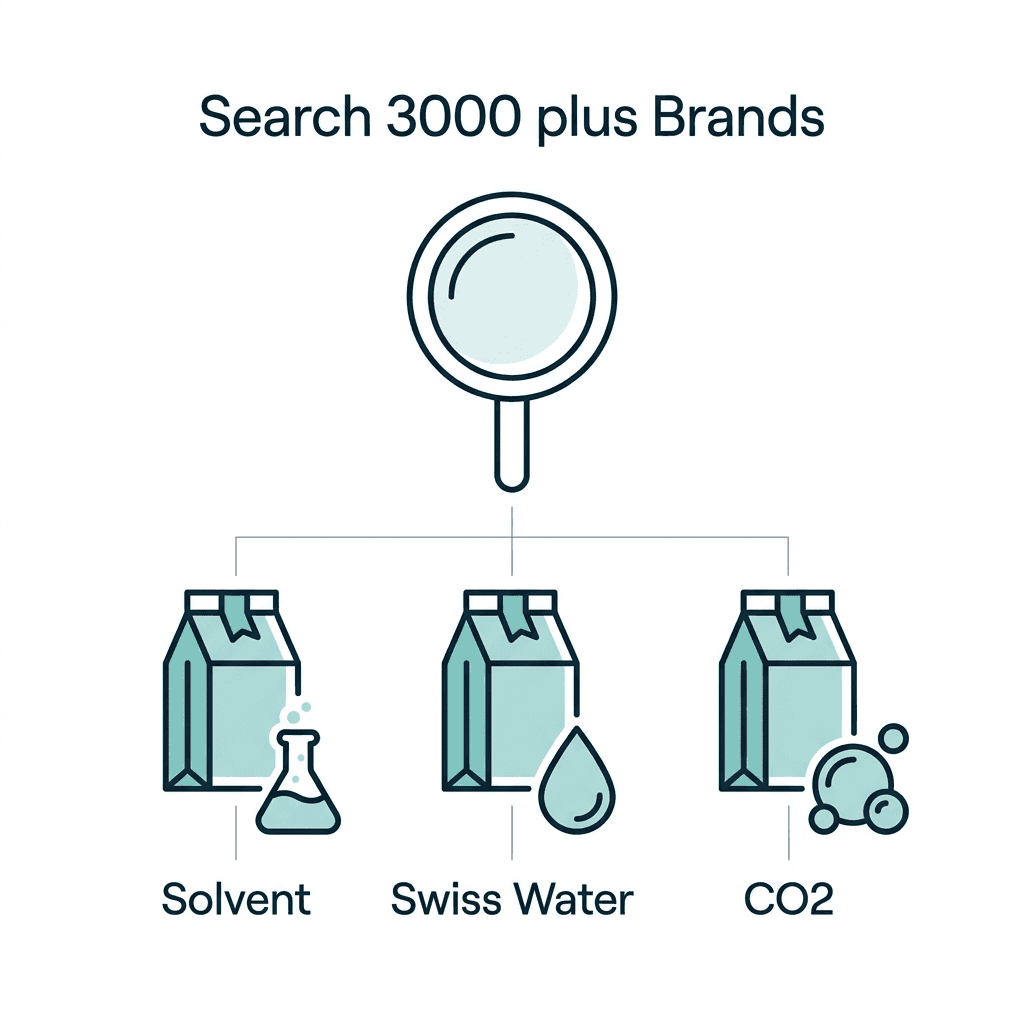
Knowing which of these five methods a specific coffee brand actually used isn't always obvious from the label alone. A free lookup tool, searching your specific decaf brand, shows exactly which method it used across over 3,000 brands.
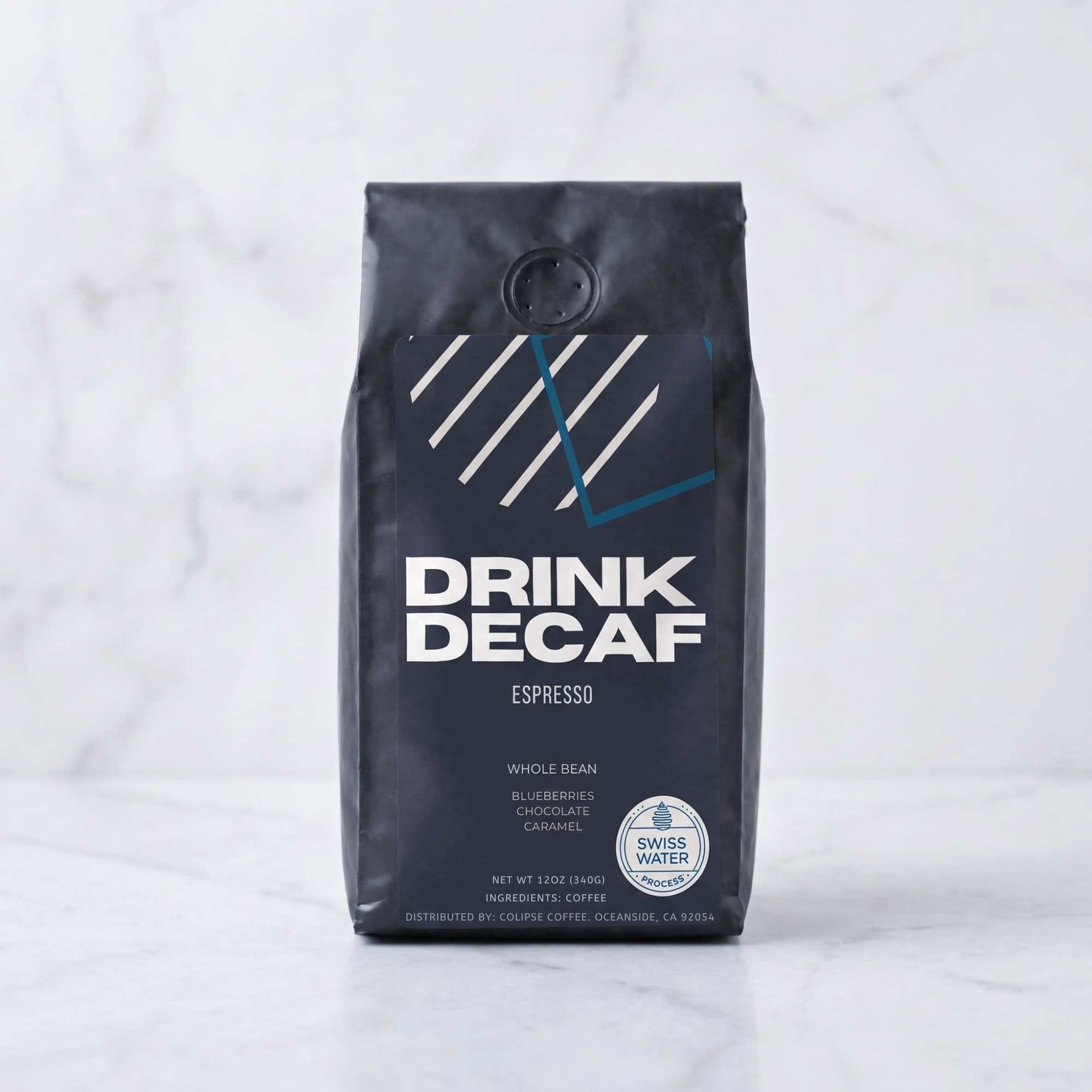
Drink Decaf's own single-origin decaf espresso is decaffeinated with the Swiss Water Process described above, so the beans start their roast already free of chemical solvents and nearly all their original caffeine. Drink Decaf's single-origin decaf espresso is roasted to order in Oceanside, CA and ships free across the US.
Does Tea Get Decaffeinated the Same Way as Coffee?
Tea goes through a similar caffeine-removal step, but starting from a different plant and often a different method mix. The details of how tea gets decaffeinated diverge once the leaf itself enters the process.
Where Can You Actually Buy Swiss Water Decaf?
Swiss Water Process is only one of five methods covered here, but it's the one shoppers ask about most. A dedicated guide to buying real Swiss Water decaf lists specific brands and sources.
Which Brands Actually Skip Methylene Chloride?
Methylene chloride is a legal but chemical-based method, one of the five covered here. Shoppers who want to avoid it specifically can check the full methylene-chloride-free brand list for verified picks.
12 oz · Whole bean
Drink Decaf EspressoSpecialty grade. Swiss Water Process® decaffeinated. Roasted to order at our California roastery. Blueberry, chocolate, caramel.
Free shipping in the US