How Do They Decaffeinate Tea?
Tea is decaffeinated using one of four commercial methods: methylene chloride, ethyl acetate, carbon dioxide, or water processing. Decaffeination does not make tea caffeine-free. Decaf tea starts as real Camellia sinensis tea with most of its caffeine removed, not an already caffeine-free plant. Which method a batch uses shapes how much caffeine and flavor survive, how many antioxidants remain, and whether any solvent residue lingers behind. No steeping trick at home reproduces any of it.
How Is Tea Decaffeinated?
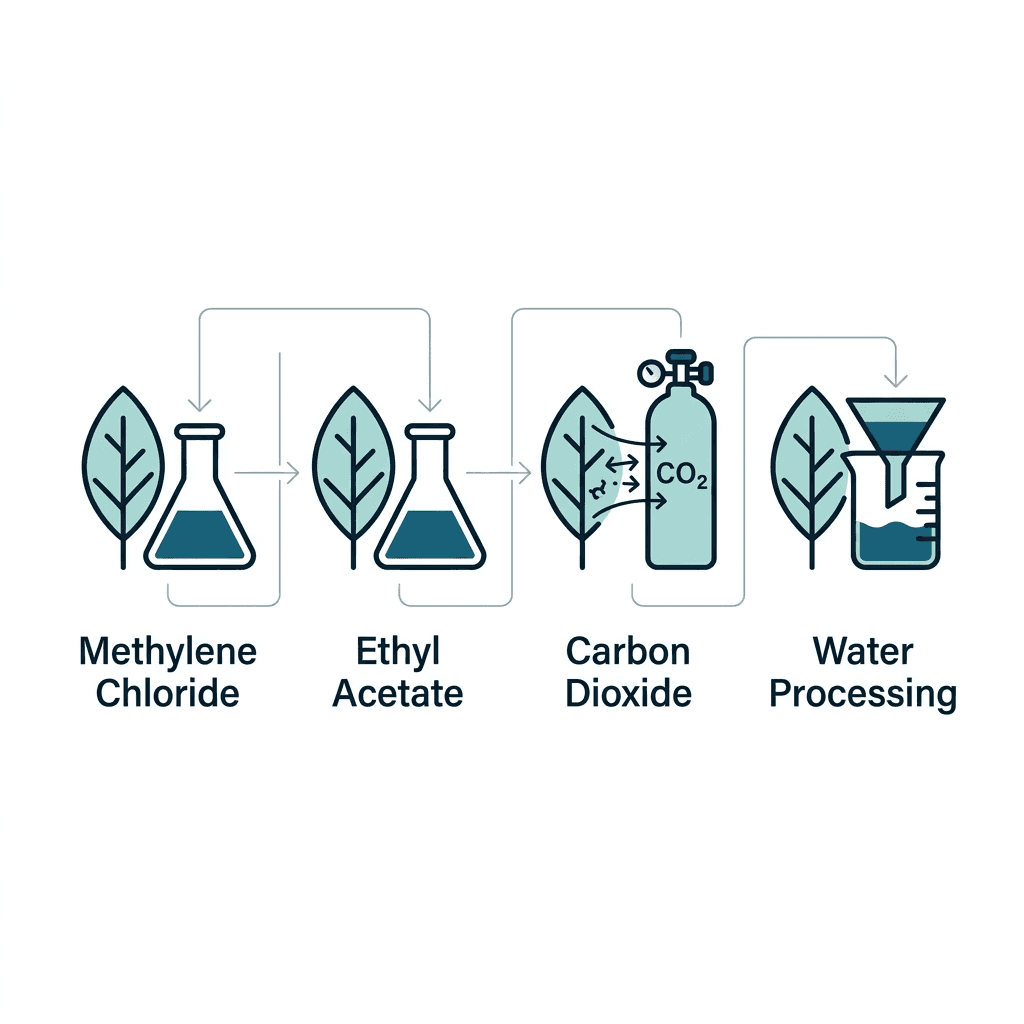
Tea is decaffeinated using one of four commercial methods: methylene chloride, ethyl acetate, carbon dioxide, or water processing. Carbon dioxide dominates loose leaf and sachet tea. Ethyl acetate is the most common method for tea bags specifically. Water processing sees far less use in tea than in coffee.
Carbon dioxide decaffeination pressurizes tea leaves until the gas reaches a supercritical state. The gas then acts as a solvent and binds to small caffeine molecules. Flavor molecules stay behind because they are too large for the gas to carry. Ethyl acetate occurs naturally in tea and fruit. Processors soak tea leaves in ethyl acetate and market the result as naturally decaffeinated. Removing that solvent completely from loose leaf afterward is nearly impossible. Water processing steeps tea leaves in hot water and filters the water through carbon to strip out caffeine. The filtered water then returns to the leaves. Processors use water processing for coffee far more often than for tea. Tea leaves are more fragile than coffee beans.
Does Decaffeination Make Tea Caffeine-Free?
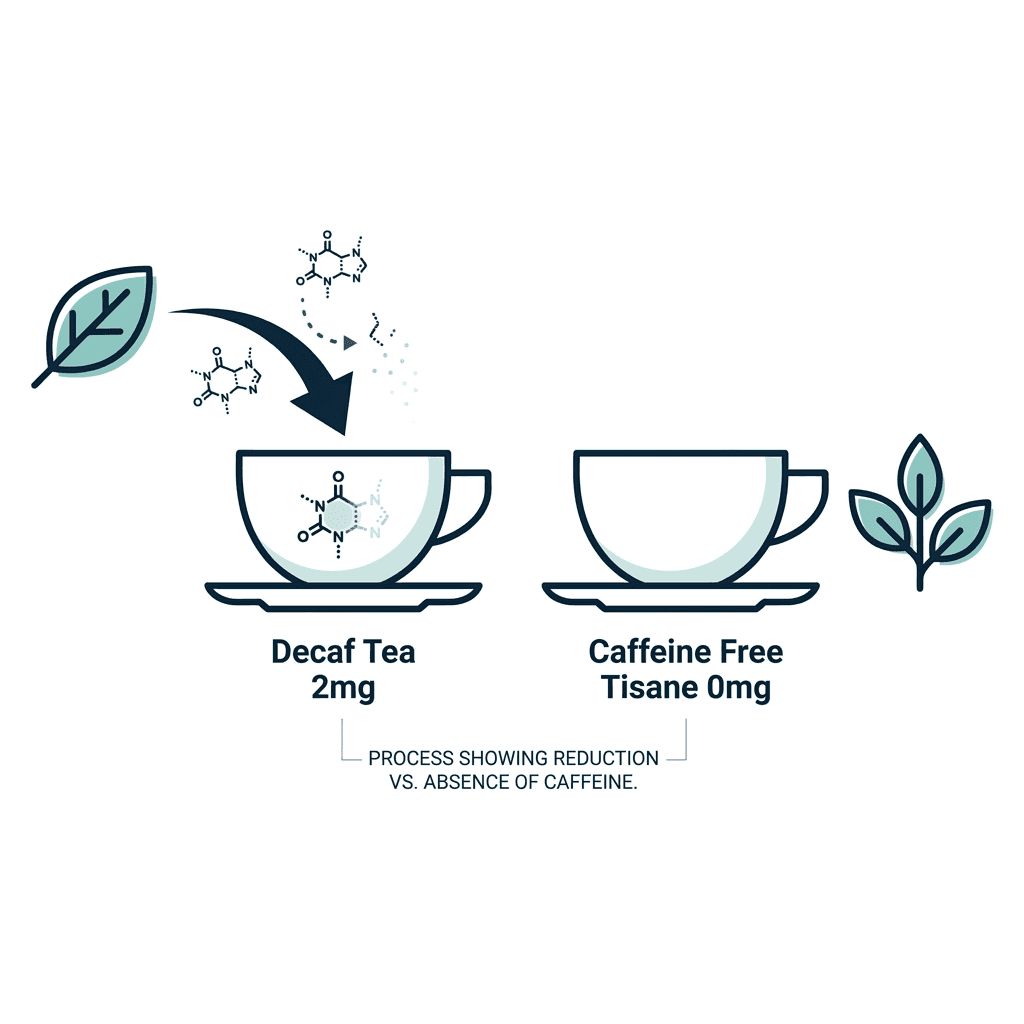
Decaffeination does not make tea caffeine-free. Decaf tea starts as real Camellia sinensis tea, and processors remove most but not all of its caffeine. Caffeine-free tea, usually a chamomile, rooibos, or peppermint tisane, never contained caffeine to begin with.
Decaf tea commonly contains around 2 milligrams (mg) of caffeine per cup. A caffeine-free tisane contains 0 mg, since it never held any caffeine to remove. That difference matters most for drinkers who need to avoid caffeine entirely rather than simply reduce it.
How Much Caffeine Is Left in Decaf Tea?
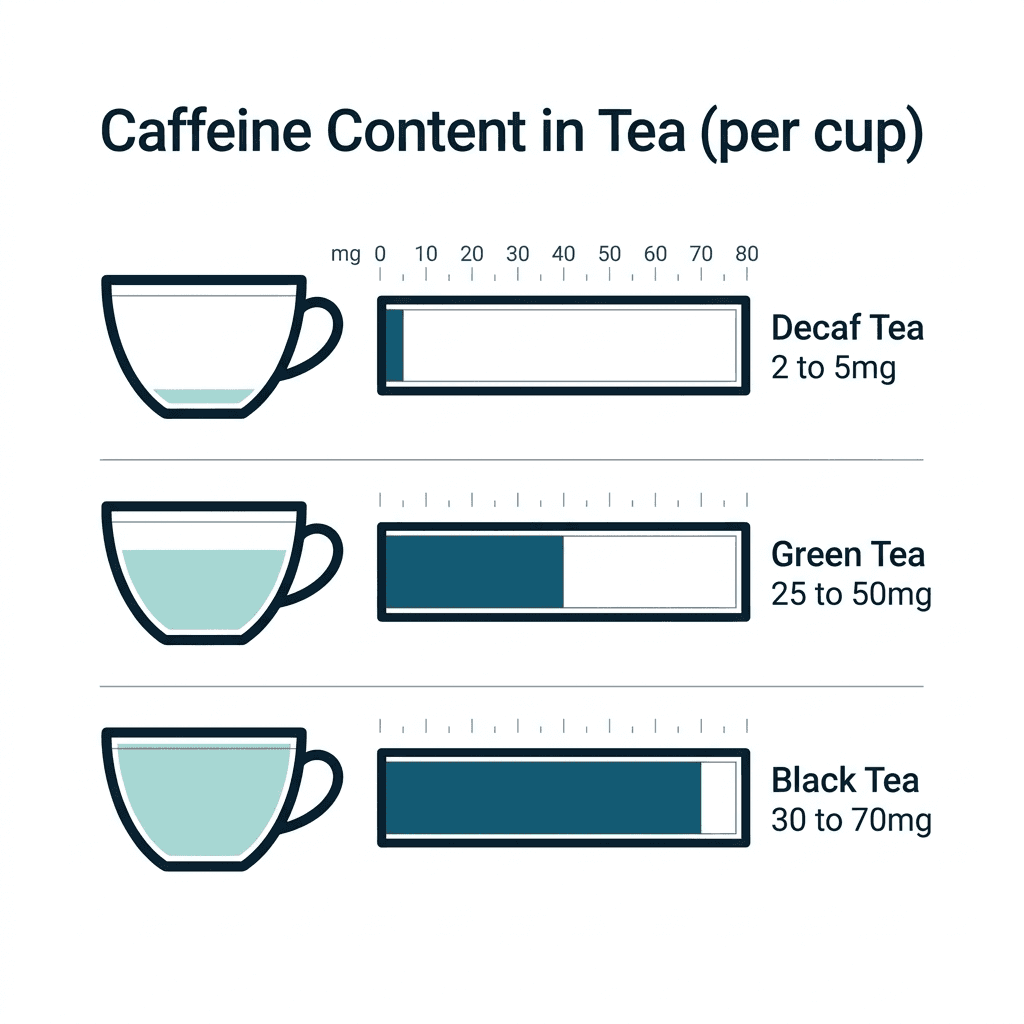
Decaf tea typically holds 2 to 5 mg of caffeine per 8-ounce (oz) cup. A 2008 University of Florida College of Medicine study, published in the Journal of Analytical Toxicology, measured decaffeinated teas at under 12 mg per 6-oz serving. That study's average came out to 5.1 mg.
Regular tea carries far more caffeine than that. An 8-oz cup of regular black tea holds roughly 30 to 70 mg, and green tea holds roughly 25 to 50 mg. Decaf tea's typical 2 to 5 mg range sits slightly below decaf coffee's typical 2 to 15 mg range. The same University of Florida research team measured that coffee range in related testing. For the full breakdown of how much caffeine decaf tea actually has, the numbers hold up across brewing methods.
Which Decaffeination Method Tastes Best?
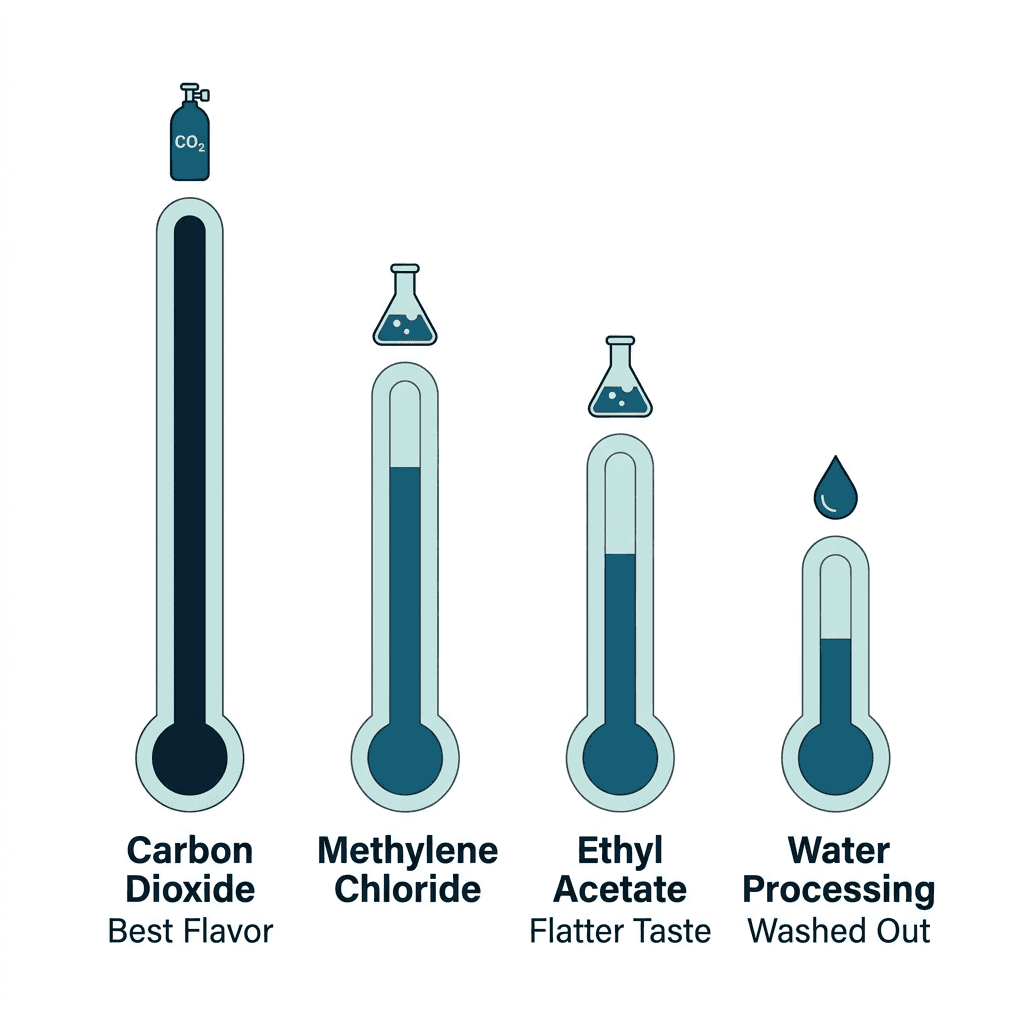
Carbon dioxide decaffeination is the method most tea brands cite as best-preserving of flavor. The gas selectively targets caffeine molecules and leaves the larger flavor molecules intact. Ethyl acetate tends to flatten flavor or leave a chemical note, and water processing often leaves tea tasting washed out.
Part of that flavor difference traces back to caffeine itself. Caffeine activates bitter taste receptors on the tongue. Removing it during decaffeination tends to lower perceived bitterness and let milder notes come through. Researchers verified that mechanism in coffee, not tea specifically. The underlying bitter-receptor interaction is not coffee-specific, though, so it applies to decaffeinated tea's flavor shift as well.
Does Decaffeination Remove Tea's Antioxidants?
Decaffeination reduces tea's antioxidant content but does not eliminate it. How much survives depends heavily on the method. Tea technologist Nigel Melican of Teacraft Ltd reports a stark split between methods. CO2-decaffeinated tea retains about 92 percent of its polyphenols. Ethyl-acetate-decaffeinated tea retains only about 18 percent.
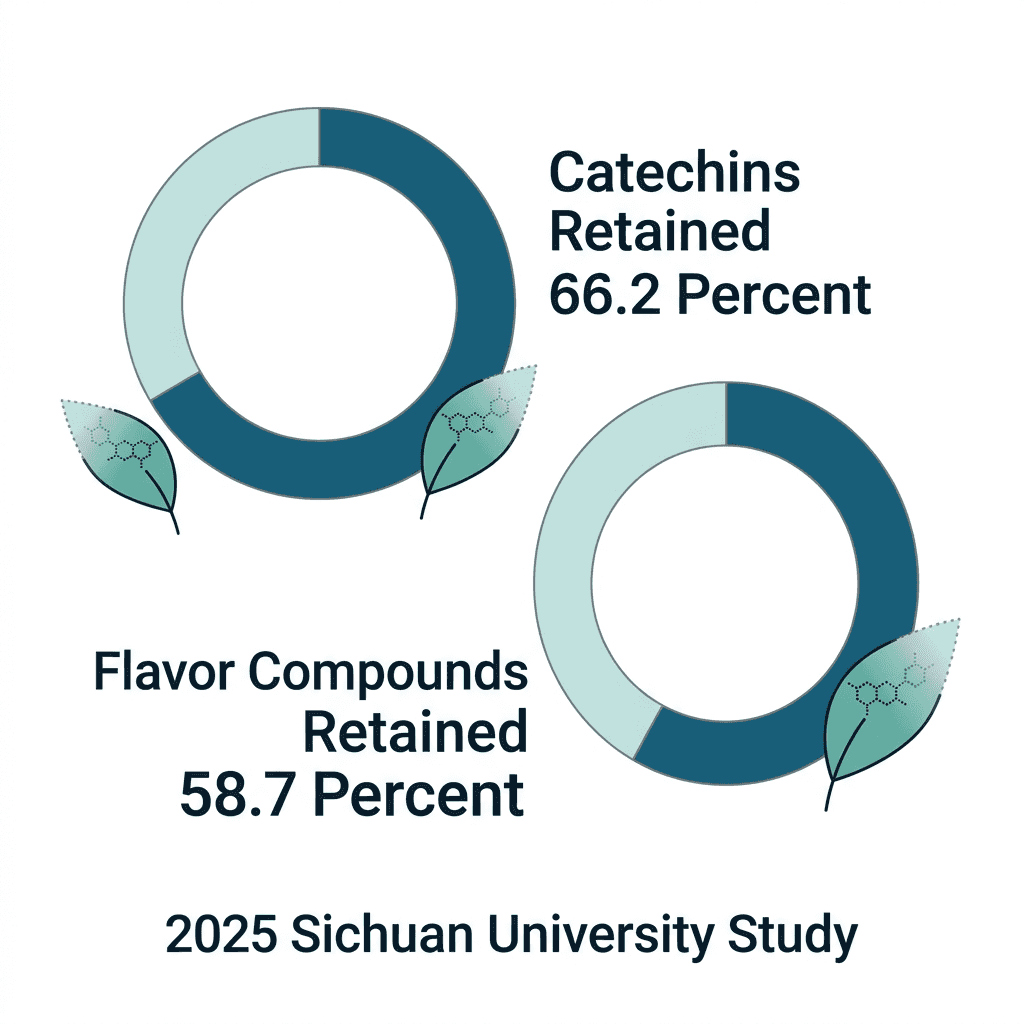
Two named studies confirm the same direction with different methods and different numbers. A 2025 study by Wenyue Yu and colleagues at Sichuan University, published in the journal Food Chemistry, tested a novel montmorillonite-enhanced adsorbent for decaffeinating black tea infusions. That adsorbent retained 66.2 percent of the tea's catechins and 58.7 percent of its overall flavor compounds. A separate 2013 study by Chiara Di Lorenzo and colleagues, published in Plant Foods for Human Nutrition, tested green and black tea infusions. One decaffeinated green tea sample in that study carried very low phenol and catechin content, which the researchers attributed to caffeine removal. A secondary source citing a 2003 study puts the gap in absolute terms. Flavanol content in decaf tea ran 16.6 to 64.2 mg lower than in caffeinated tea. Meaningful antioxidant levels remained present either way.
Whatever polyphenols survive decaffeination stay biologically active, not just chemically present. A 2021 randomized, double-blind trial by Justin Roberts and colleagues at Anglia Ruskin University, published in Nutrients, tested this directly. The trial gave 27 overweight adults a daily decaffeinated green tea extract supplying 400 mg of EGCG for 8 weeks. Maximal fat oxidation rose 45.4 percent from baseline in the group that also received quercetin and alpha-lipoic acid. A separate 2024 randomized, double-blind trial at Shanghai Jiao Tong University tested safety at the same dose. Researchers gave 62 girls aged 6 to 10 the same 400 mg daily dose of decaffeinated green tea polyphenols for 12 weeks. Neither study group reported adverse reactions.
Do Decaffeination Methods Leave Harmful Residue?
Solvent-based decaffeination can leave trace residue behind, though regulators cap how much. There is no U.S. Food and Drug Administration (FDA) standard of identity for the word decaffeinated. The real FDA rule limits methylene chloride residue in solvent-processed decaf to 10 parts per million under Title 21 of the Code of Federal Regulations (21 CFR).
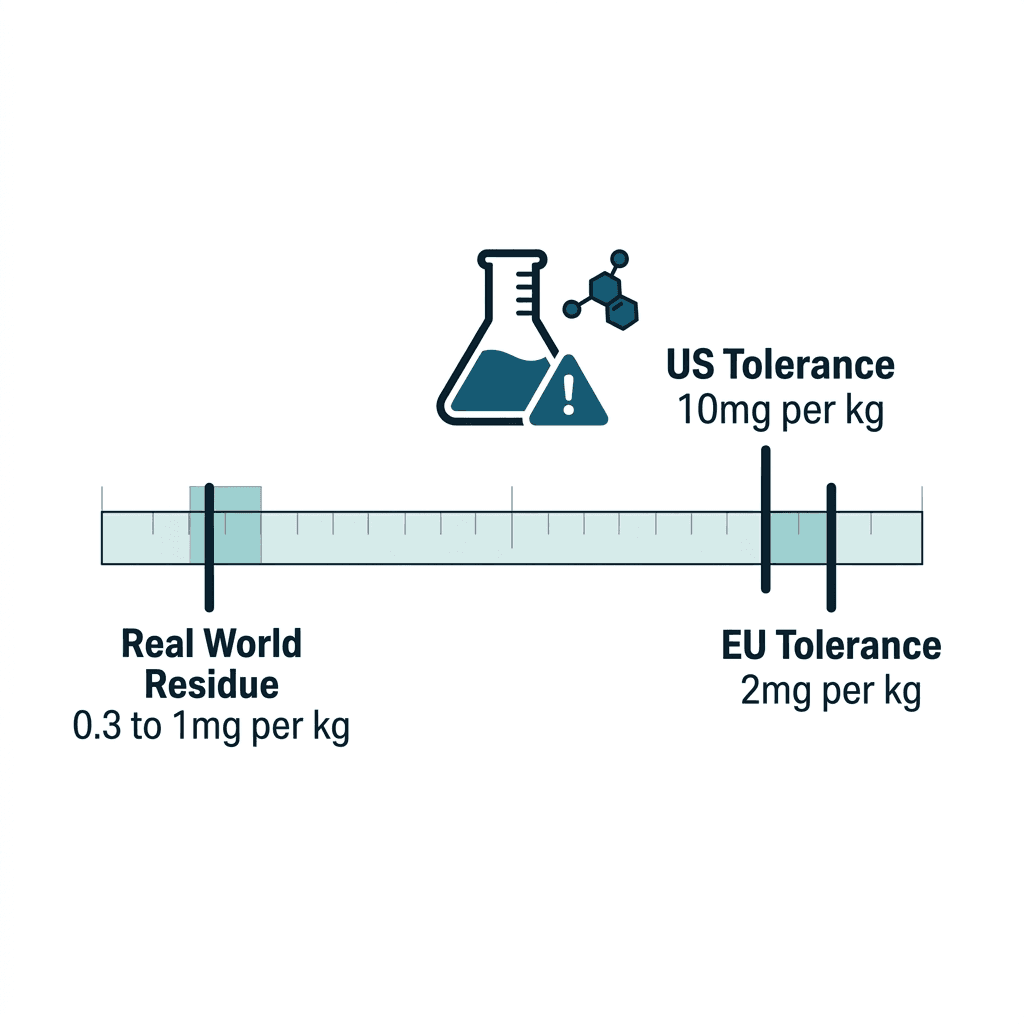
Ethyl acetate carries its own regulatory limits. Regulators permit the solvent for decaffeination under 21 CFR 173.228. The commonly cited practical tolerance is 10 mg per kilogram (kg) in the US and 2 mg per kg in the European Union (EU). Health Canada sets a looser tea-specific limit for ethyl acetate: 50 mg per kg, five times the US tolerance. Real-world residue in well-processed decaf typically runs 0.3 to 1 mg per kg, well under any of these tolerances.
Methylene chloride draws more scrutiny. The National Toxicology Program, the U.S. Environmental Protection Agency (EPA), and the World Health Organization classify methylene chloride as a carcinogen. The FDA estimates the cancer risk from multiple daily cups of methylene-chloride-processed decaf at about one in a million. The EPA's May 2024 rule bans methylene chloride from consumer and commercial uses. That rule excludes food-production uses like decaffeination, since the FDA regulates food uses of the chemical. An FDA petition to ban methylene chloride as a food additive was still pending as of that year.
Can You Decaffeinate Tea at Home?
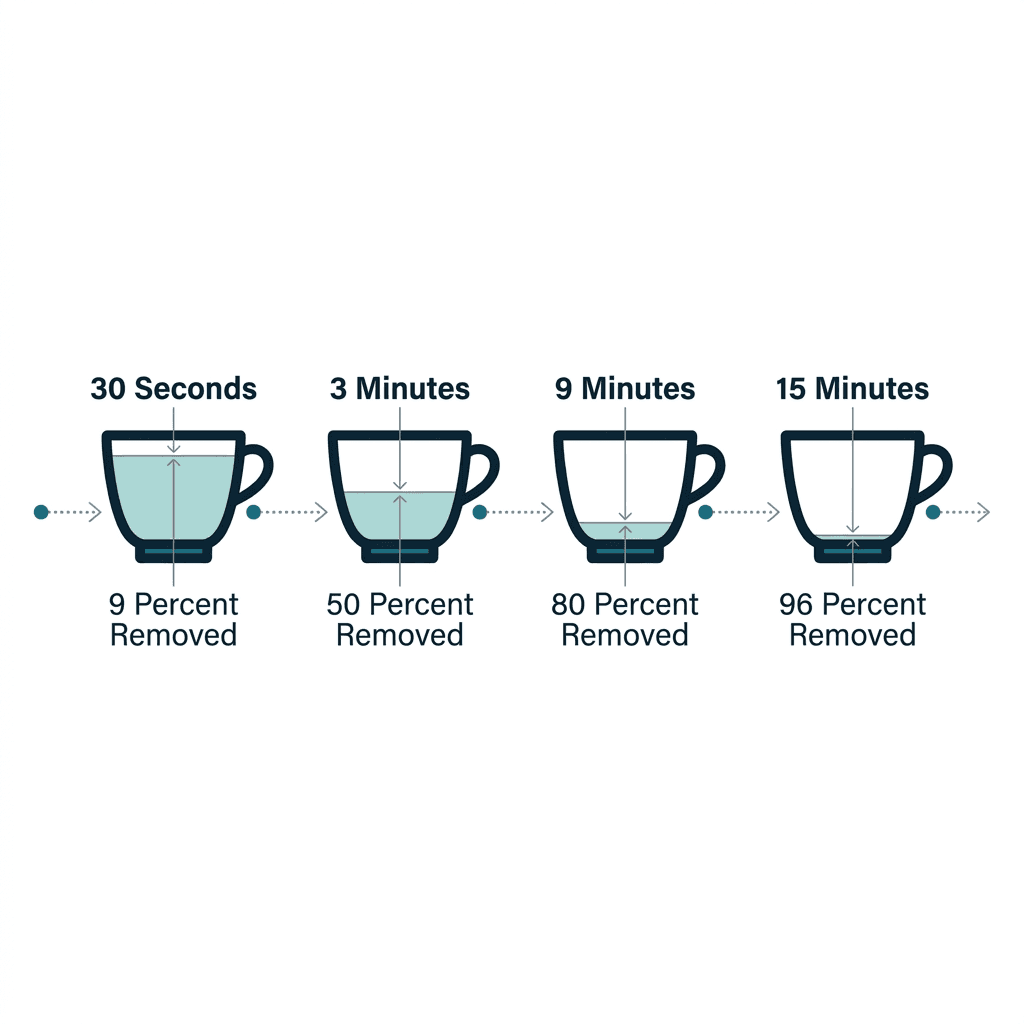
You cannot meaningfully decaffeinate tea at home with a quick steep-and-pour rinse. A 1996 study by Monique Hicks, Y-H. Peggy Hsieh, and Leonard Bell, published in Food Research International, found a 30-second rinse removes only about 9 percent of a tea's caffeine.
Longer steeping removes more caffeine, but at a real cost to the tea. The same 1996 study found a 3-minute steep removes about half the caffeine. A 9-minute steep removes about 80 percent, and a 15-minute steep removes more than 96 percent. By that point the tea is badly over-brewed. A 2008 study by Dr. Bruce Branan at Asbury College found similar numbers. A 3-minute infusion removes 46 to 70 percent of caffeine, and a 6-minute steep is needed to remove about 80 percent. Some brand sources and early blog posts claimed a 30-second rinse removes far more caffeine than that. Those claims do not hold up against the controlled study data above.
12 oz · Whole bean
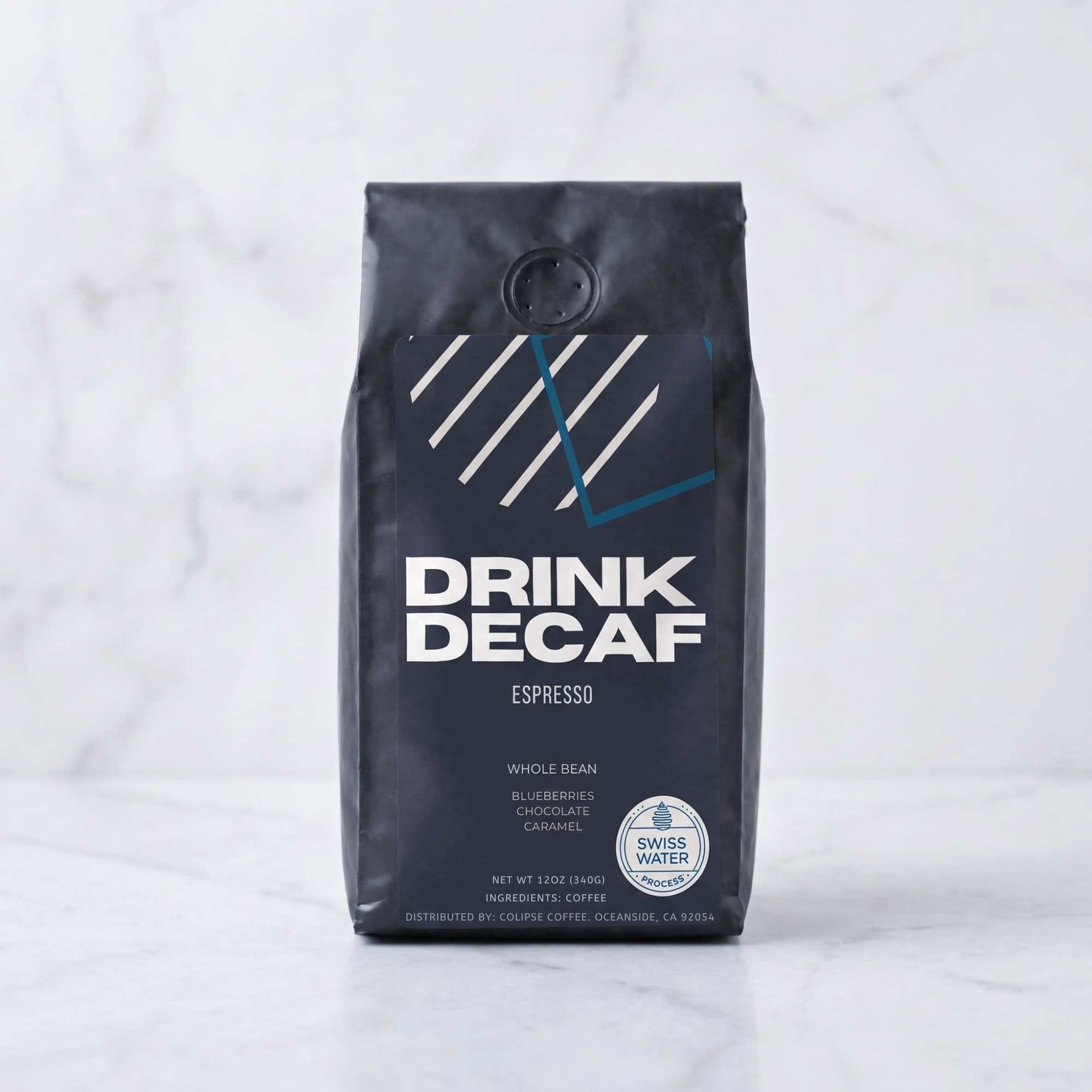
Drink Decaf EspressoSpecialty grade. Swiss Water Process® decaffeinated. Roasted to order at our California roastery. Blueberry, chocolate, caramel.
Free shipping in the US