Does Decaf Tea Have Caffeine?
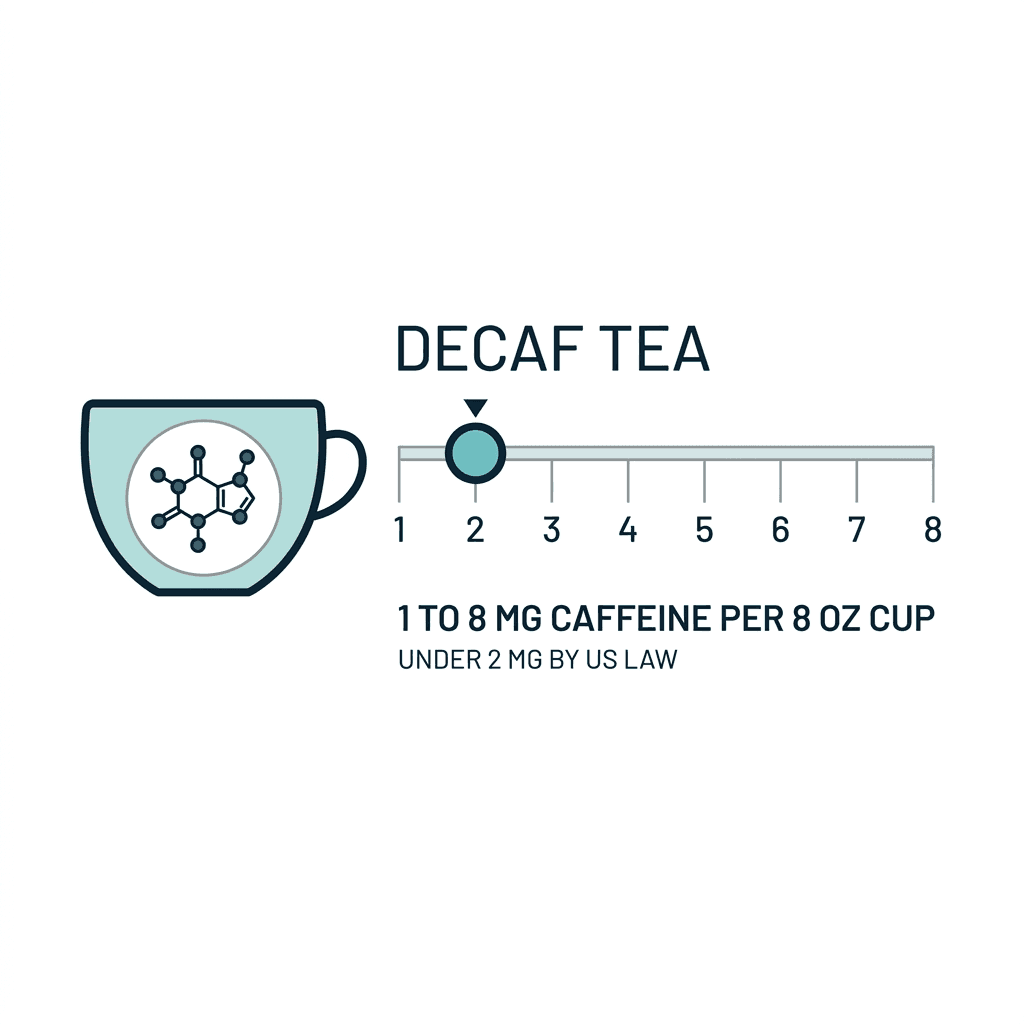
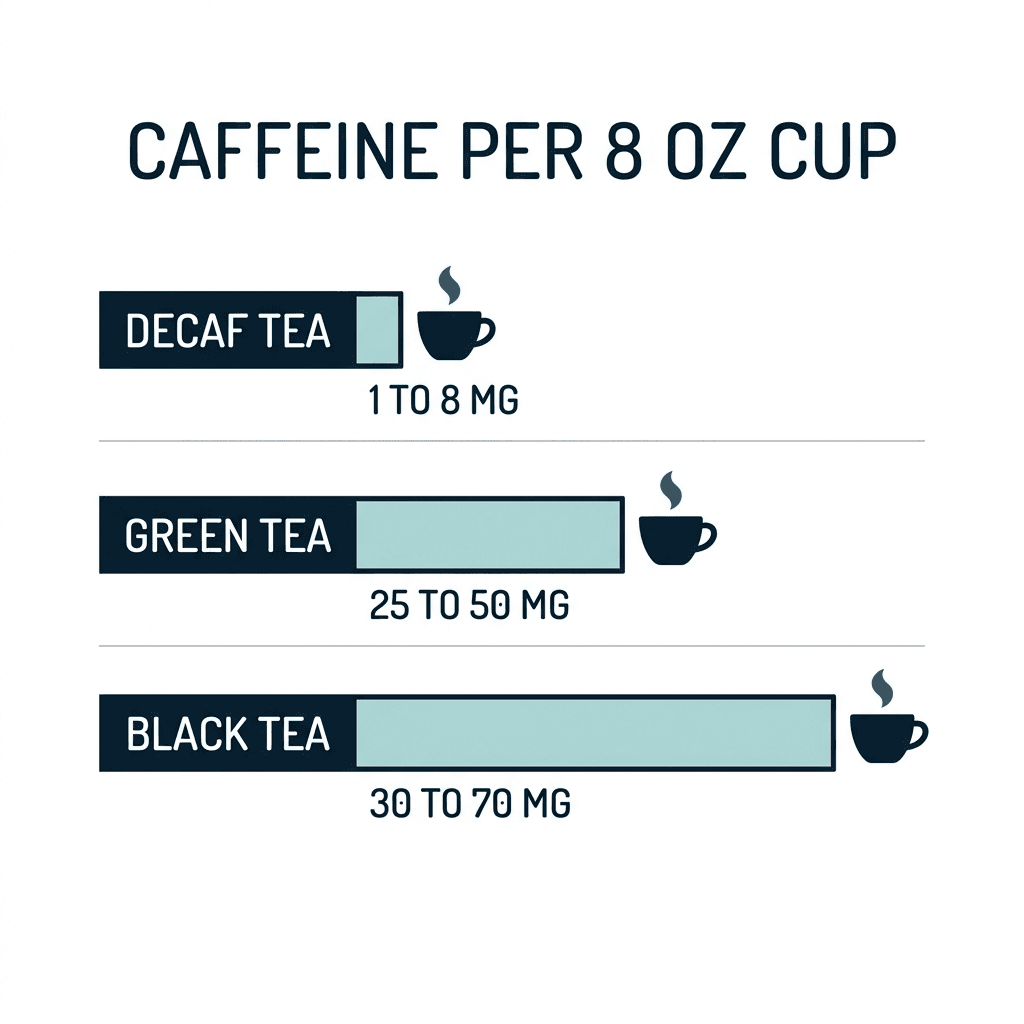
Decaf tea has caffeine. Decaffeination removes most of it, but no commercial process strips it out completely, so a small trace always remains in the cup. Decaf tea carries about 1 to 8 mg (milligrams) of caffeine per 8 oz (ounces) cup, compared to roughly 30 to 70 mg in regular black tea and 25 to 50 mg in regular green tea. Which of the four commercial decaffeination methods was used affects both how much caffeine and how many antioxidants remain, though the trace that's left is still far below the daily amount regulators consider safe for most healthy adults.
Does Decaf Tea Have Caffeine?
Yes, decaf tea has caffeine. Decaffeination removes most of it, but no commercial process strips it out completely, so a small trace always remains in the cup.
A typical 8 oz cup of decaf tea carries roughly 1 to 8 mg of caffeine, well below the 30 to 70 mg found in a regular cup of black tea. In the United States (US), tea labeled "decaffeinated" must legally contain less than 2.5% of its original caffeine level, which usually works out to under 2 mg per cup. The UK's British Heart Foundation compares decaf tea's caffeine to regular tea's: about a 96% reduction, roughly 2 mg per 200 ml (milliliters) cup against 50 mg. The exact number varies by brand, tea type, and decaffeination method, but the trace never reaches zero.
What's the Difference Between Decaf and Caffeine-Free Tea?
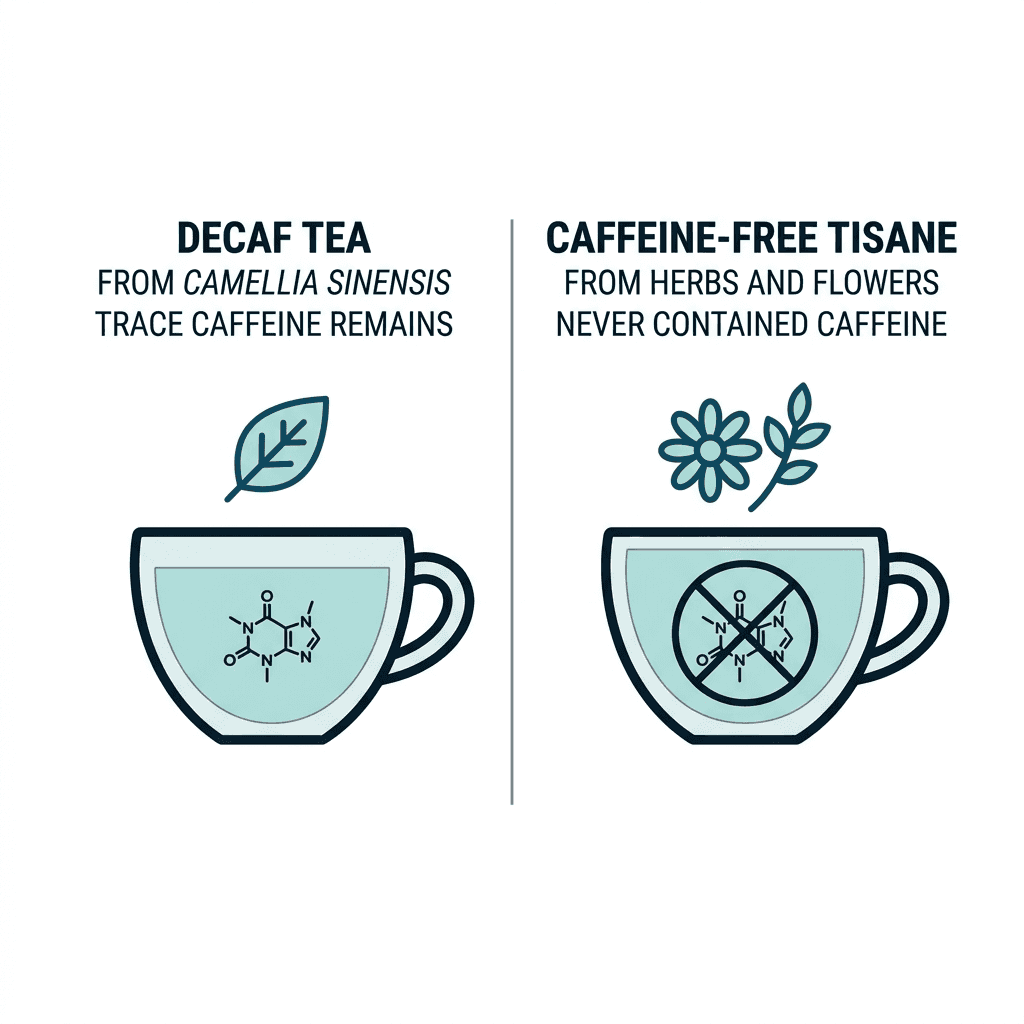
Decaf tea and caffeine-free tea are not the same thing. Decaf starts as real tea that had most of its caffeine removed; caffeine-free tea never contained caffeine to begin with.
Decaf tea comes from Camellia sinensis, the same plant behind black, green, white, oolong, and pu-erh tea, and it goes through a decaffeination process afterward, leaving a small trace of caffeine behind. Caffeine-free tea, more precisely called a tisane, is not made from the tea plant at all. It's brewed from herbs, flowers, fruit, or rooibos, so there was never any caffeine to remove in the first place. Anyone who needs a true zero should reach for a tisane rather than decaf.
How Is Tea Decaffeinated?
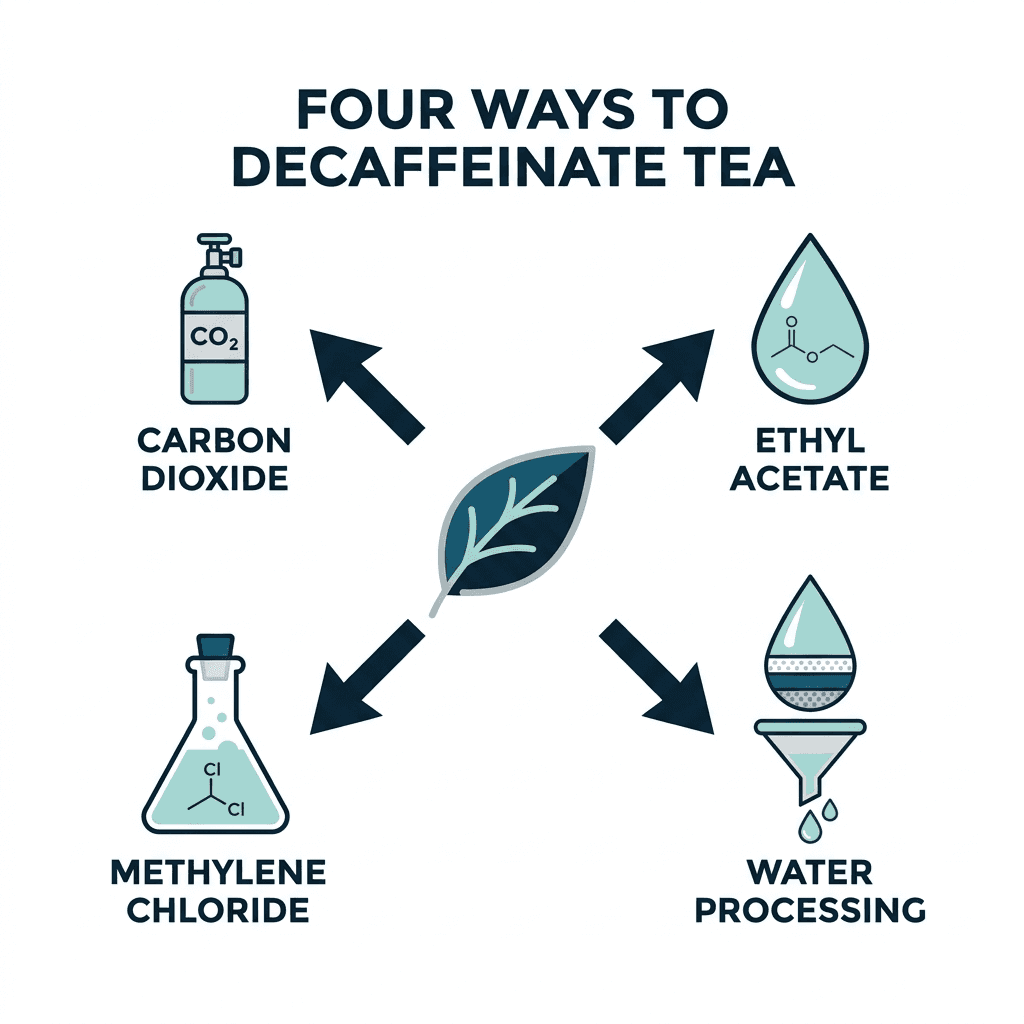
Tea is decaffeinated with one of four commercial methods: carbon dioxide, ethyl acetate, methylene chloride, or plain water. Each pulls caffeine out of the leaves while trying to keep the flavor intact.
The carbon dioxide (CO2) method pressurizes moistened tea leaves with supercritical CO2, which bonds to caffeine molecules and carries them off without touching most flavor compounds; it's widely regarded as the cleanest option for both taste and antioxidant retention. Ethyl acetate, a compound that occurs naturally in tea and many fruits, is the most common method for tea bags in the US and is sometimes marketed as "naturally decaffeinated," though it can leave a flatter or faintly chemical taste.
Methylene chloride works similarly: the solvent binds to caffeine during a soak of the leaves. It preserves flavor well, but the solvent itself draws regulatory attention and carries legal residue limits. Water processing skips solvents entirely. The leaves steep in hot water, the water passes through a carbon filter to remove the caffeine, and the filtered water is then reintroduced to the leaves to restore flavor. This method is used more often for coffee than tea, and it can leave a washed-out taste.
How Much Caffeine Does Decaf Tea Have Compared to Regular Tea?
Decaf tea carries about 1 to 8 mg of caffeine per 8 oz cup, compared to roughly 30 to 70 mg in regular black tea and 25 to 50 mg in regular green tea.
Herbal teas sit at the other end of the scale entirely, with 0 mg of caffeine, since they're brewed from plants other than Camellia sinensis and never contained any to begin with. Compared side by side, a cup of decaf tea has somewhere between a tenth and a twentieth of the caffeine in a regular cup, which is why it's the common recommendation for anyone trying to taper off caffeine gradually rather than cut it out completely.
Does Removing Caffeine From Tea Also Remove Its Antioxidants?
Yes, decaffeination reduces tea's catechin, phenol, and flavor compounds. A 2025 study by Wenyue Yu and colleagues at Sichuan University, published in Food Chemistry, tested an adsorbent-based black tea decaffeination method that retained 66.2% of catechins and preserved 58.7% of overall flavor compounds. A 2013 study by Chiara Di Lorenzo and colleagues, published in Plant Foods for Human Nutrition, found lower phenol and catechin levels in decaffeinated green tea and linked the reduction directly to decaffeination.
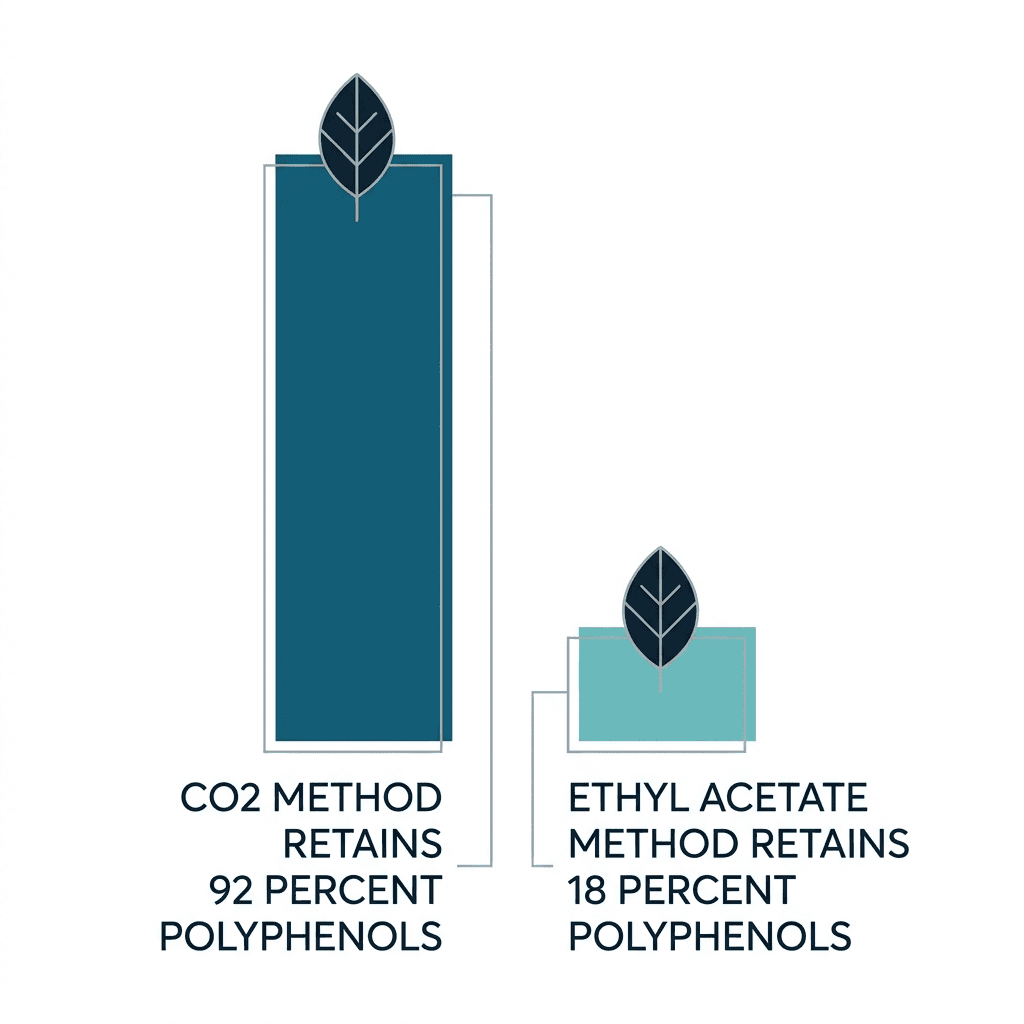
How much survives still depends heavily on which specific method is used. Nigel Melican, tea technologist and founder of Teacraft Ltd, has reported that CO2-decaffeinated tea retains about 92% of its polyphenols, while tea decaffeinated with ethyl acetate retains only around 18%, a spread consistent with what the Yu and Di Lorenzo studies found more broadly: decaffeination methods vary widely in how much antioxidant content they preserve. That same pattern shows up in decaf coffee, where solvent-based methods tend to strip more of the plant's original antioxidant content than CO2 or water processing do.
Can You Decaffeinate Tea at Home?
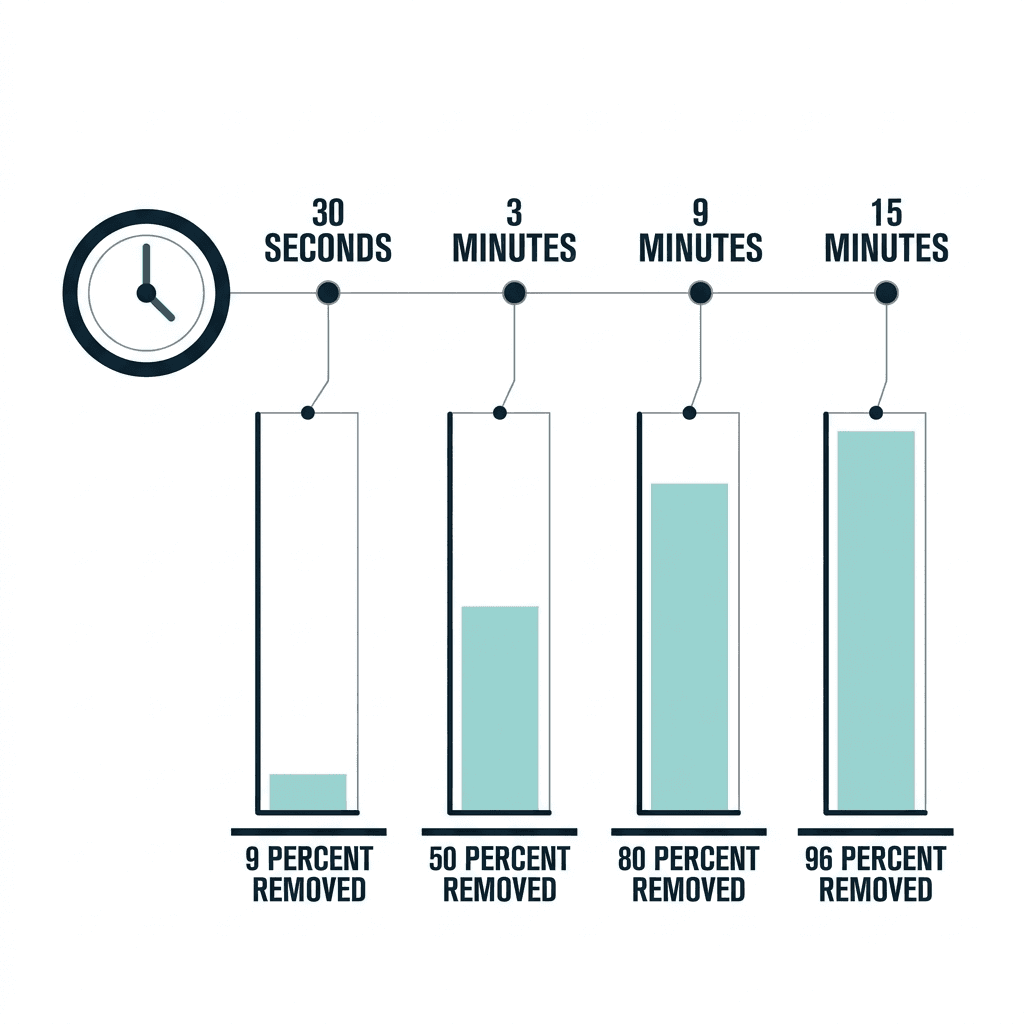
No, you cannot meaningfully decaffeinate tea at home. The popular trick of steeping for 30 seconds, discarding that water, then re-steeping does not remove enough caffeine to matter.
A 1996 study by Monique Hicks, Y-H. Peggy Hsieh, and Leonard Bell, published in Food Research International, found that a 30-second rinse strips out only about 9% of a tea's caffeine. The same study found it takes roughly 3 minutes of steeping to remove half of it, 9 minutes for 80%, and about 15 minutes to get past 96%.
A 2008 study by Dr. Bruce Branan at Asbury College reached a similar conclusion, finding that a 3-minute infusion removes only 46% to 70% of the caffeine and that a 6-minute steep is needed to reach about 80%. By the time either method has removed most of the caffeine, the tea has been steeped so long it's over-brewed, bitter, and stripped of much of its flavor and antioxidants along with the caffeine. A real, commercial decaffeination process is the only reliable way to get tea down to decaf-level caffeine without ruining it.
Is the Caffeine Left in Decaf Tea Safe to Drink?
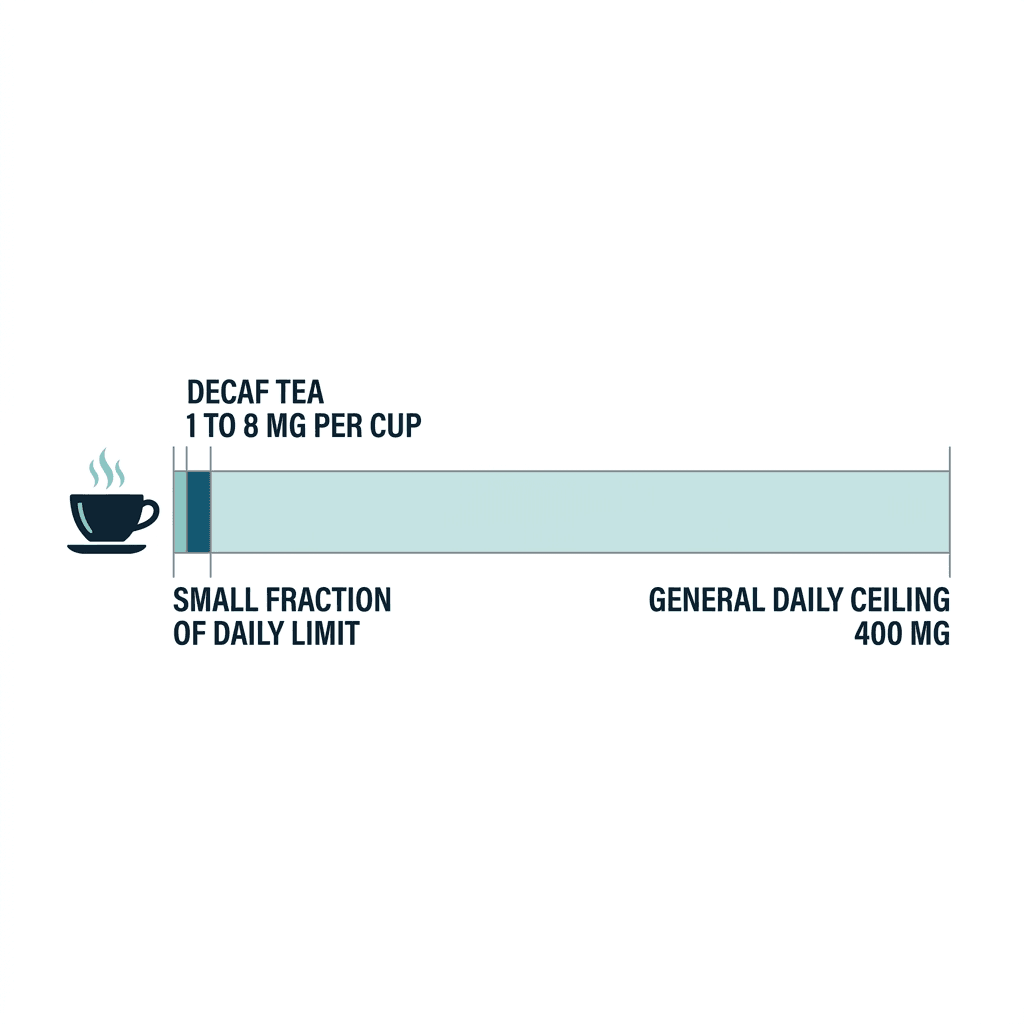
Yes, the trace caffeine left in decaf tea is safe for most healthy adults. Regulators set the general daily ceiling at about 400 mg, and decaf's 1 to 8 mg per cup is a tiny fraction of that.
Someone would need to drink dozens of cups of decaf tea in a single day to approach the 400 mg guidance the Food and Drug Administration (FDA) and Health Canada both cite as generally safe for healthy adults. The other safety question people raise is solvent residue from methylene-chloride decaffeination. Regulators address that directly by capping how much residue is allowed to remain. The US bans imports of tea decaffeinated with methylene chloride above that legal threshold, and the European Union (EU) enforces its own residue cap as well. For someone managing a specific health condition, medication interaction, or unusual caffeine sensitivity, a doctor's guidance still matters more than the general daily ceiling.
Who Should Switch to Decaf Tea to Cut Caffeine?
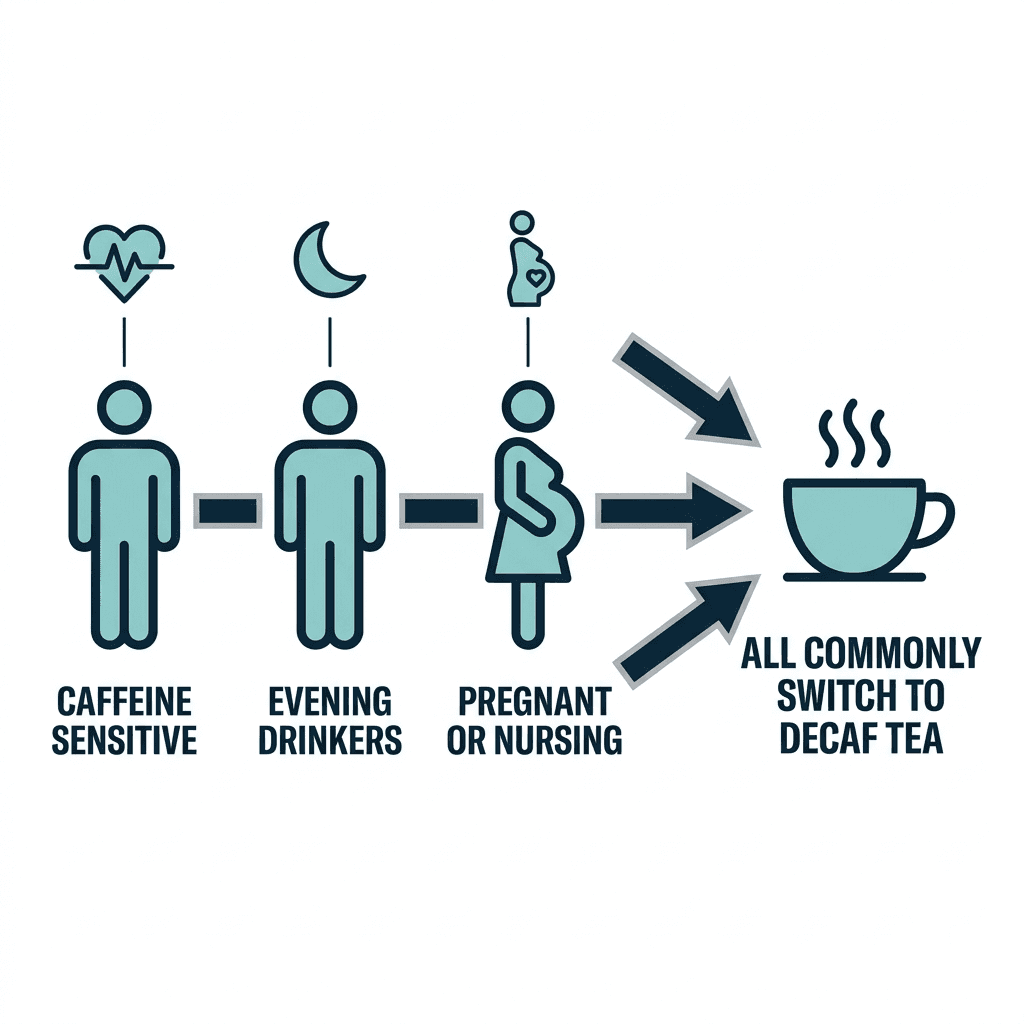
People who are sensitive to caffeine, drink tea in the evening, or are pregnant or nursing are the most common candidates for switching to decaf tea.
Caffeine-sensitive drinkers who notice jitteriness, anxiety, or heart palpitations from even small amounts often find decaf a more comfortable option than cutting tea out altogether. Evening and bedtime drinkers switch for a similar reason: caffeine can interfere with sleep, so moving to decaf after midday, or in the evening specifically, is a common recommendation for keeping the ritual of a cup without the wakefulness. Pregnant and nursing individuals are frequently advised by the American College of Obstetricians and Gynecologists (ACOG) to keep caffeine intake under 200 mg a day, which is another common reason people cited for reaching for decaf rather than regular tea. None of this is medical advice, and anyone with a specific health concern about caffeine should check with their own doctor rather than rely on general guidance alone.
Does the Type of Tea Affect How Much Caffeine Is in Decaf?
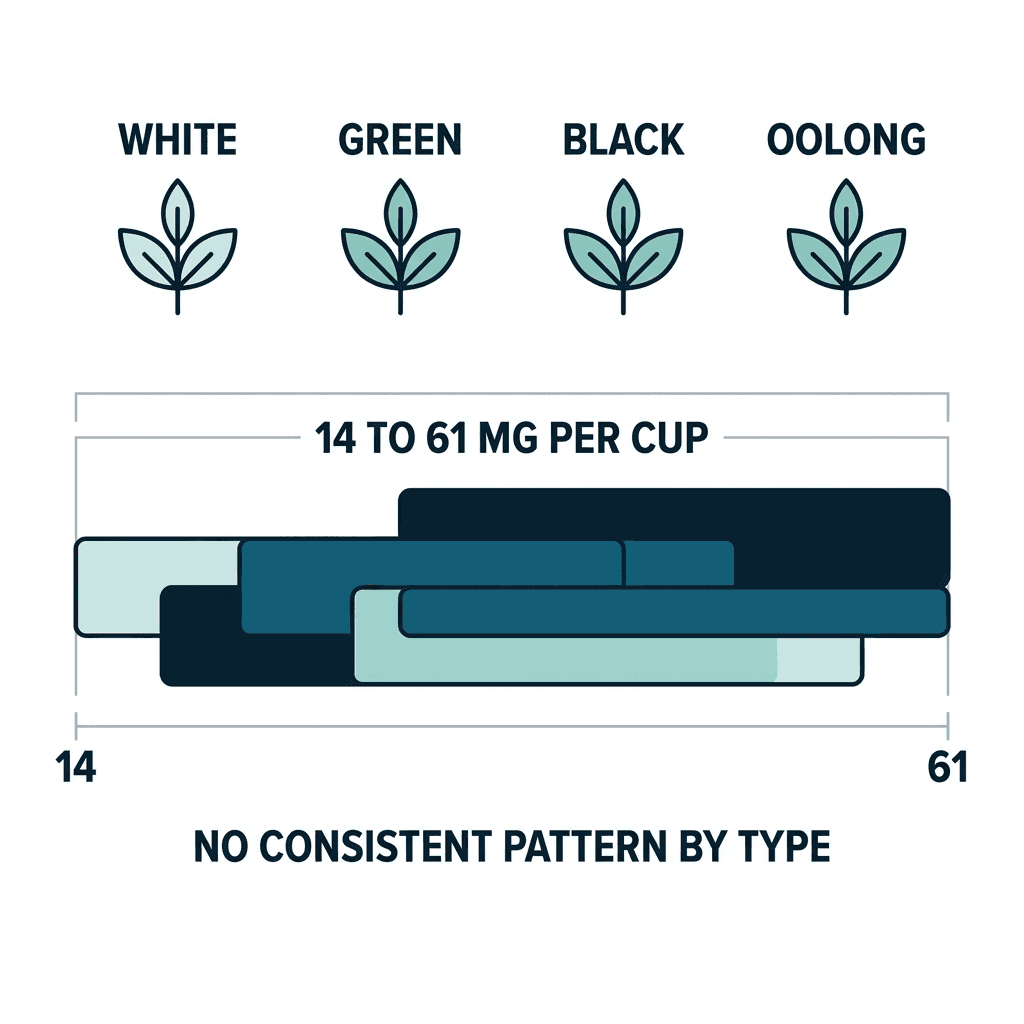
Yes, but tea type is a weaker predictor of caffeine content than most people assume, even among fully caffeinated teas, let alone their decaf versions.
A 2008 study by Jenna Chin, Michele Merves, and Bruce Goldberger at the University of Florida College of Medicine, with Angela Sampson-Cone and Edward Cone, published in the Journal of Analytical Toxicology, tested 20 commercial teas across a range of serving sizes and steep times. The study found caffeine ranging from about 14 to 61 mg per cup, with no consistent pattern tied to whether the tea was labeled white, green, or black. The same study measured decaffeinated teas specifically at under 12 mg per serving, consistent with the range given earlier in this article. The variation between two individual teas was often larger than the variation between categories. White tea is a good example of why: it's commonly assumed to be lowest in caffeine, but the young buds and leaves used to make it, such as Silver Needle, can actually be higher in caffeine by dry weight than more mature leaves.
What usually lowers the caffeine in a cup of white tea is the lower brewing temperature typically used for it, not the leaf itself. The same logic carries over to decaf: leaf quantity, water temperature, and steep time affect the final cup more than the tea category does.
Which Decaf Teas Are Worth Buying?
Caffeine content varies little between decaf tea brands, since all use a similar removal process. Flavor and format differ more, covered in the best decaf tea picks across black, flavored, and specialty blends.
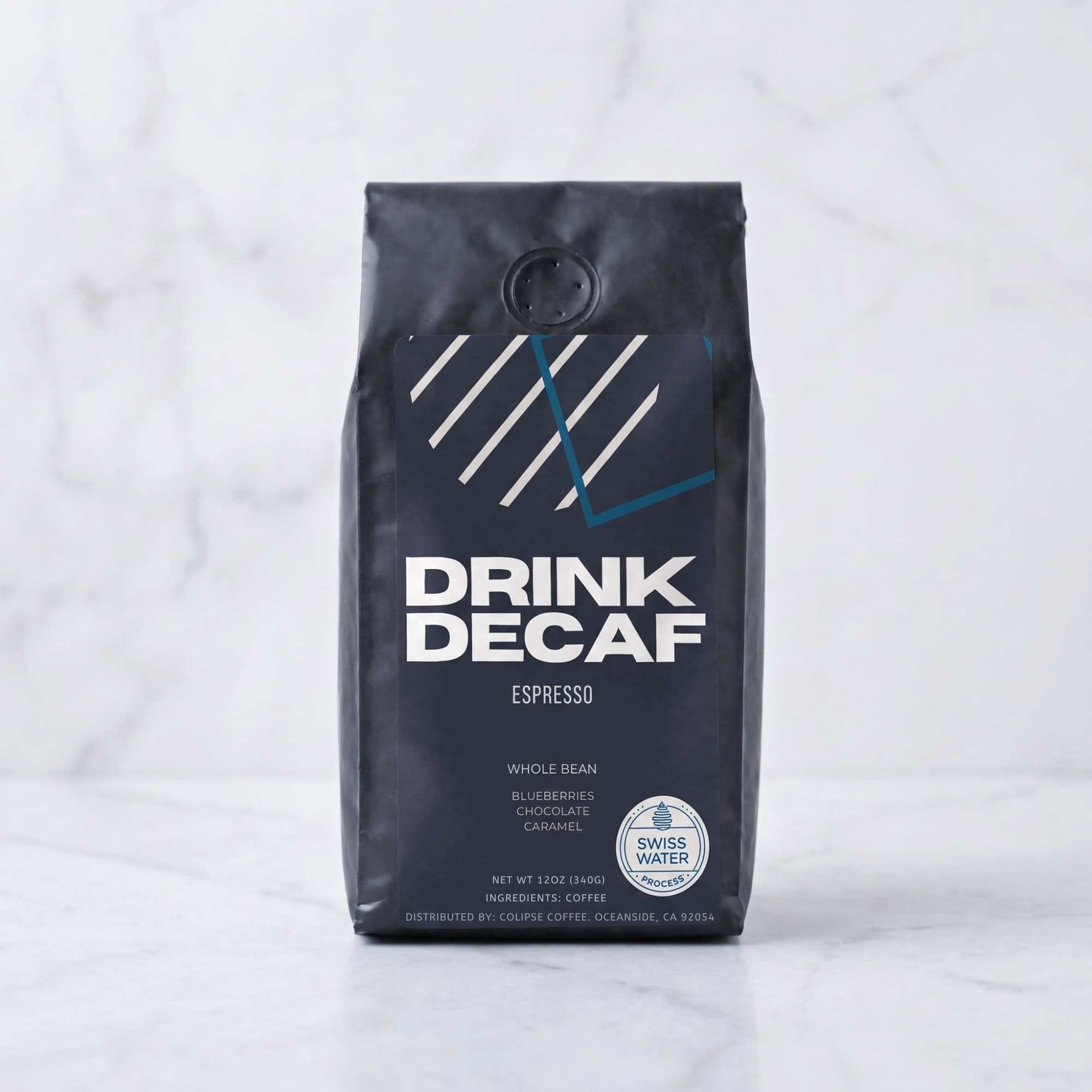
12 oz · Whole bean
Drink Decaf EspressoSpecialty grade. Swiss Water Process® decaffeinated. Roasted to order at our California roastery. Blueberry, chocolate, caramel.
Free shipping in the US