What is Decaf Coffee? Meaning, Types, and What to Know Before You Buy
Decaf coffee is regular coffee with almost all of its caffeine removed, usually with the Swiss Water Process or a carbon dioxide (CO2) method. Most decaf still carries a small trace of caffeine per cup, not zero. You can tell it apart from regular coffee mainly by the label and the process used, not by taste alone. Chemical-solvent methods exist alongside solvent-free options like the Swiss Water Process. Some decaf brands are lower in caffeine than others depending on which method they use. Daily decaf is considered safe for most healthy adults, including people managing acid reflux or looking for an evening cup. Pregnant women are generally cleared to drink it in moderation. Roast level, not the decaffeination step itself, is usually what changes the taste people notice. Decaf still delivers most of coffee's antioxidants. Its status is more complicated for some religious diets, including within the Latter-day Saint community. From there, it's a matter of knowing where to buy a genuinely good cup and why one source's decaf holds up better than another.
What Is Decaf Coffee?
Decaf coffee is coffee made from beans that have had almost all their caffeine removed before roasting, not a different plant or bean variety. The decaffeination step happens on green, unroasted beans, using water, CO2, or a solvent to pull caffeine out while leaving most of the bean's flavor compounds behind. It is still real coffee afterward, just processed to carry a fraction of the caffeine regular coffee has.
How Is Decaf Coffee Made?
Green coffee beans are decaffeinated using one of a few established methods: the Swiss Water Process, supercritical CO2, or a chemical solvent like ethyl acetate or methylene chloride. The Swiss Water Process removes caffeine with only hot water, temperature, and a caffeine-free Green Coffee Extract, with no solvent ever touching the beans, reaching about 99.9% caffeine removal. Whichever method is used, the beans are dried back down and roasted normally afterward.
Does Decaf Coffee Still Have Caffeine?
Yes, decaf coffee still has caffeine. There's no fixed United States (US) Food and Drug Administration (FDA) percentage decaf must hit, but the National Coffee Association describes commercial decaffeination as removing about 97% or more of the caffeine, and the FDA notes a cup of decaf can still carry up to roughly 15 mg (milligrams). A full breakdown of decaf coffee's caffeine content covers the exact numbers, cup for cup.
How Can You Tell Decaf From Regular Coffee?
Decaf and regular coffee look and brew almost identically, so the label is the only reliable way to tell them apart at the point of purchase. Bag markings like "Swiss Water," "Swiss Water Process (SWP)," or a decaffeination method name are the clearest signal a bean has actually been processed to remove caffeine. The Check Your Decaf tool looks up a specific brand's method directly, for shoppers who want to skip reading the bag.
Which Decaf Methods Avoid Chemical Solvents?
The Swiss Water Process and CO2 decaffeination remove caffeine using only water or carbon dioxide, with no solvent chemicals touching the beans at any stage, unlike the ethyl acetate and methylene chloride methods. That distinction is why solvent-free processing gets called out specifically on packaging.
Which Decaf Coffees Have the Lowest Caffeine?
Caffeine content in decaf varies by brand and by decaffeination method, with water-based processes like Swiss Water generally landing at the low end since they're built to push removal toward 99.9%. A ranked list of lowest caffeine decaf coffee brands breaks down specific picks by name.
Is Decaf Coffee Safe to Drink Every Day?
Yes, decaf coffee is considered safe for daily drinking by most healthy adults, since its caffeine load is a small fraction of a regular cup's. The main consideration for most people isn't caffeine at that point, it's whichever decaffeination method and roast they're buying.
Is Decaf Coffee Good for Acid Reflux and Evening Drinking?
Yes, decaf is a common substitution for people managing acid reflux or gastroesophageal reflux disease (GERD) who want to keep drinking coffee, and it's the standard choice for an evening cup precisely because its low caffeine content won't disrupt sleep the way a regular cup can. A darker roast, which is naturally lower in acid than a light roast, is the angle most often recommended alongside switching to decaf.
Can You Drink Decaf Coffee While Pregnant?
Yes, pregnant women can generally drink decaf coffee. The American College of Obstetricians and Gynecologists recommends pregnant women keep total caffeine intake under 200 mg a day. Since an 8 oz (ounces) cup of decaf carries roughly 2 to 15 mg of caffeine, several cups a day stay well under that limit, which is why decaf is generally the pregnancy-safe way to keep drinking coffee.
Does Decaf Coffee Taste Different From Regular Coffee?
Yes, decaffeination can soften some of a bean's original flavor compounds, but roast level does more to change taste than the decaf step itself. A well-roasted decaf, particularly one processed without solvents, can taste close to indistinguishable from its caffeinated counterpart.
What Are the Health Benefits of Decaf Coffee?
Decaf coffee keeps most of the antioxidants found in regular coffee, since those compounds aren't tied to caffeine and survive the decaffeination step. That makes decaf a way to get coffee's other benefits, dark roast flavor and antioxidant content included, without the stimulant load.
Can Mormons Drink Decaf Coffee?
No, the Church of Jesus Christ of Latter-day Saints' current guidance treats coffee itself, not just its caffeine content, as off-limits under the Word of Wisdom, so decaf coffee is still generally discouraged. A closer look at whether Mormons can have decaf coffee finds no confirmed official exception, only a disputed, unconfirmed account of an old letter.
Where Can You Buy High-Quality Decaf Coffee?
The clearest sign of a high-quality decaf is a bag that names its decaffeination method and its origin, not just "decaf" on the label. Single-origin, traceable beans processed without chemical solvents are the standard worth buying to, whether that's a Swiss Water Process bean or another solvent-free option.
Why Buy Drink Decaf's Single-Origin Decaf Espresso?
Drink Decaf sells one product on purpose: a dark roast, single-origin Arabica decaf espresso from the JUMARP El Palto Cooperative in Peru's Amazonas region, decaffeinated with the Swiss Water Process. It's roasted to order in Oceanside, California, in four grinds and four sizes, with full traceability back to the 189 family farms it comes from, for people who love coffee but not the caffeine.
Ready to Try It?
If you're ready to try genuinely great decaf, Drink Decaf's single-origin decaf espresso is roasted to order in Oceanside, CA and ships free across the US.
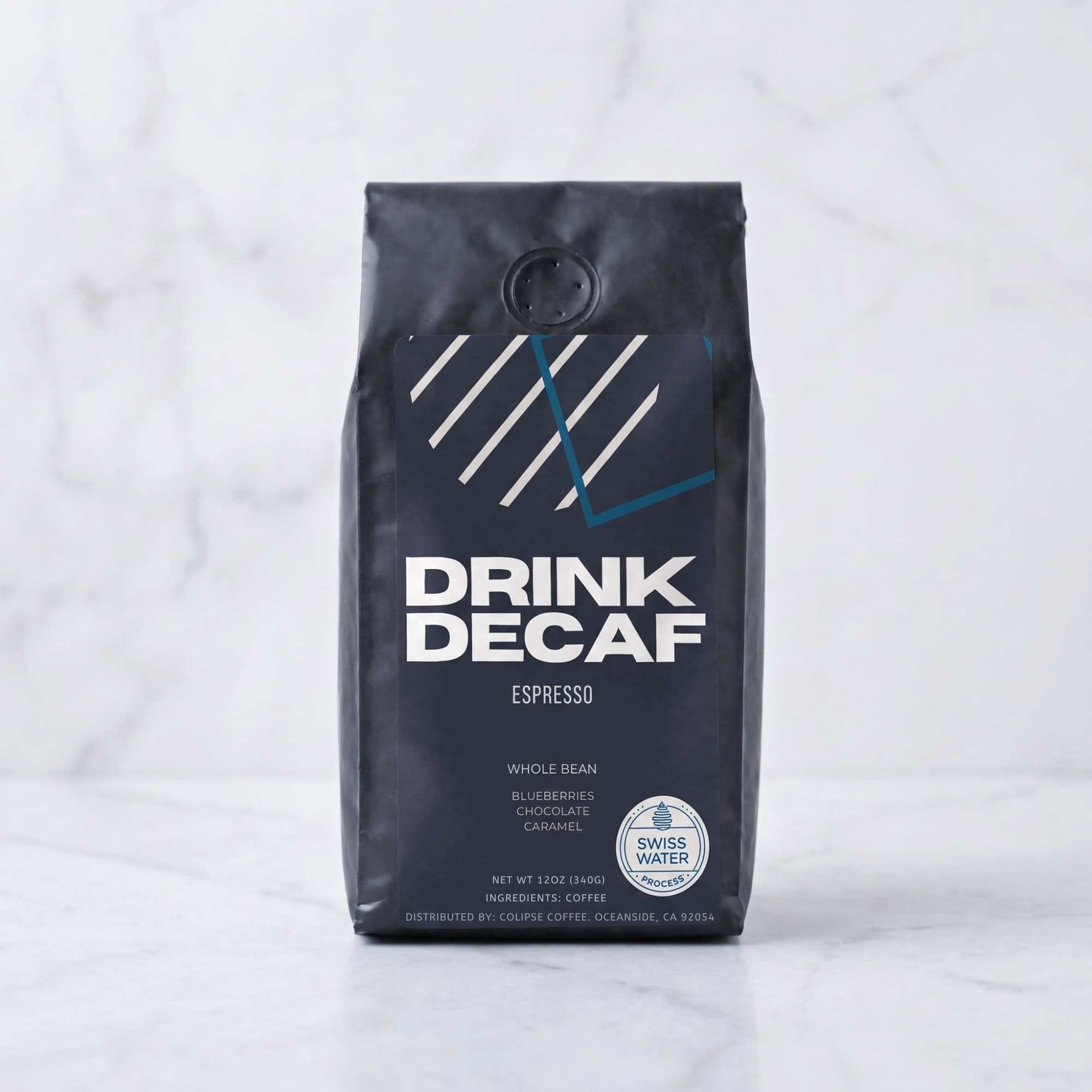
12 oz · Whole bean
Drink Decaf EspressoSpecialty grade. Swiss Water Process® decaffeinated. Roasted to order at our California roastery. Blueberry, chocolate, caramel.
Free shipping in the US