Does Decaf Coffee Have Caffeine?
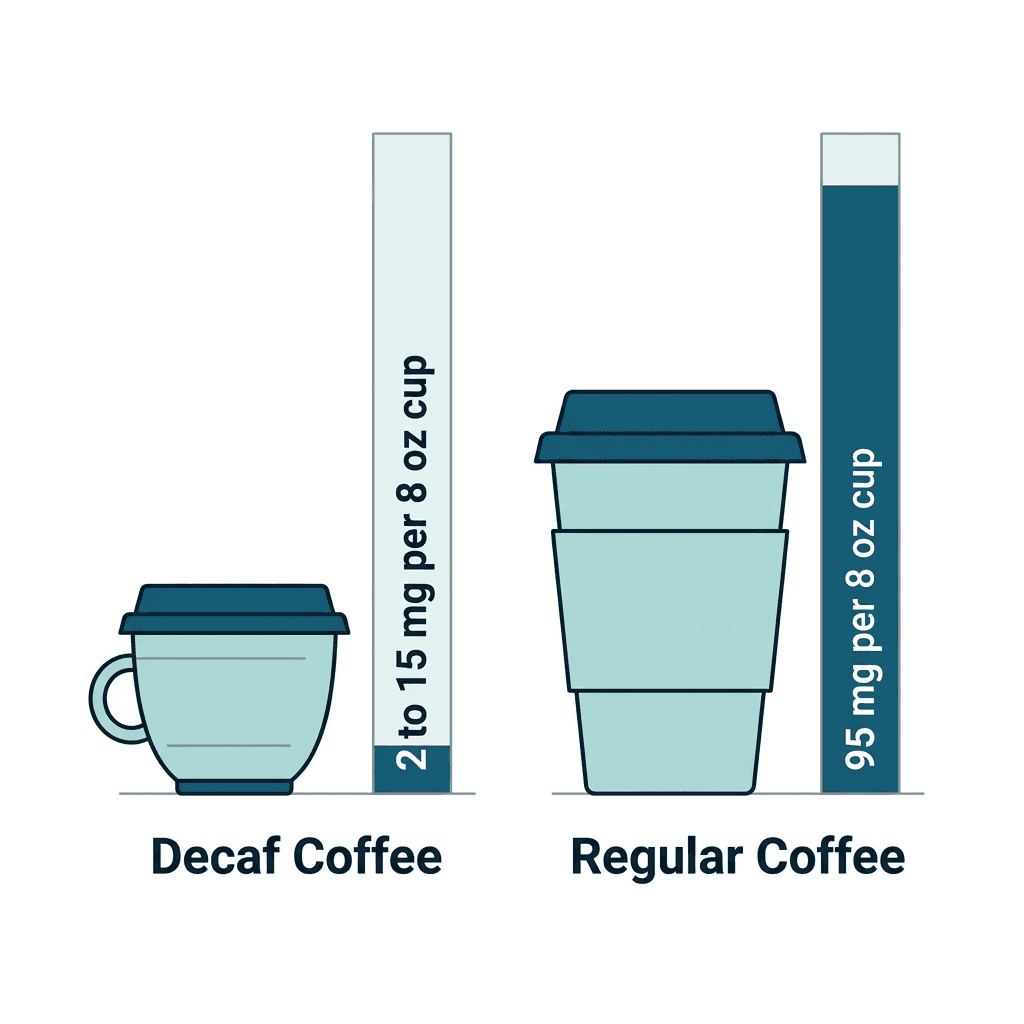
Decaf coffee contains a small but real amount of caffeine, typically 2 to 15 mg (milligrams) per 8-oz (ounce) cup, compared with roughly 95 milligrams in a regular cup. The brew is made by removing caffeine from green, unroasted coffee beans before roasting, using a chemical solvent, carbon dioxide, or the Swiss Water Process. No method removes every molecule without also stripping the compounds that make coffee taste like coffee, but the trace amount left behind is not harmful for most people.
How Much Caffeine Is in Decaf Coffee?
Decaf coffee contains a small but real amount of caffeine, typically 2 to 15 milligrams per 8-ounce cup, compared with roughly 95 milligrams in a regular cup. The exact figure varies by brand, brewing method, and bean, but no decaf coffee is completely caffeine-free.
The National Coffee Association (NCA) describes commercial decaffeination as removing about 97 percent or more of a bean's original caffeine. The Food and Drug Administration (FDA) notes decaf can still carry up to about 15 milligrams per 8-ounce cup even after that removal. A 2006 University of Florida College of Medicine study by Rachel R. McCusker and colleagues measured caffeine in decaf coffee from 10 establishments. Published in the Journal of Analytical Toxicology, the study found 0 to 13.9 milligrams of caffeine per 16-ounce serving. Repeated Starbucks samples contained 3.0 to 15.8 milligrams per espresso shot and 12.0 to 13.4 milligrams per 16-ounce brewed serving. Most cups fall well inside this range, but real outliers exist. A 2007 Consumer Reports test of decaf at national chains found most cups under 5 milligrams. A Dunkin' Donuts cup measured 32 milligrams in that same test, and a Seattle's Best cup measured 29 milligrams. Anyone counting on decaf being effectively zero caffeine should treat these outlier numbers as proof the trace amount is real, not as the norm.
How Is Decaf Coffee Made?
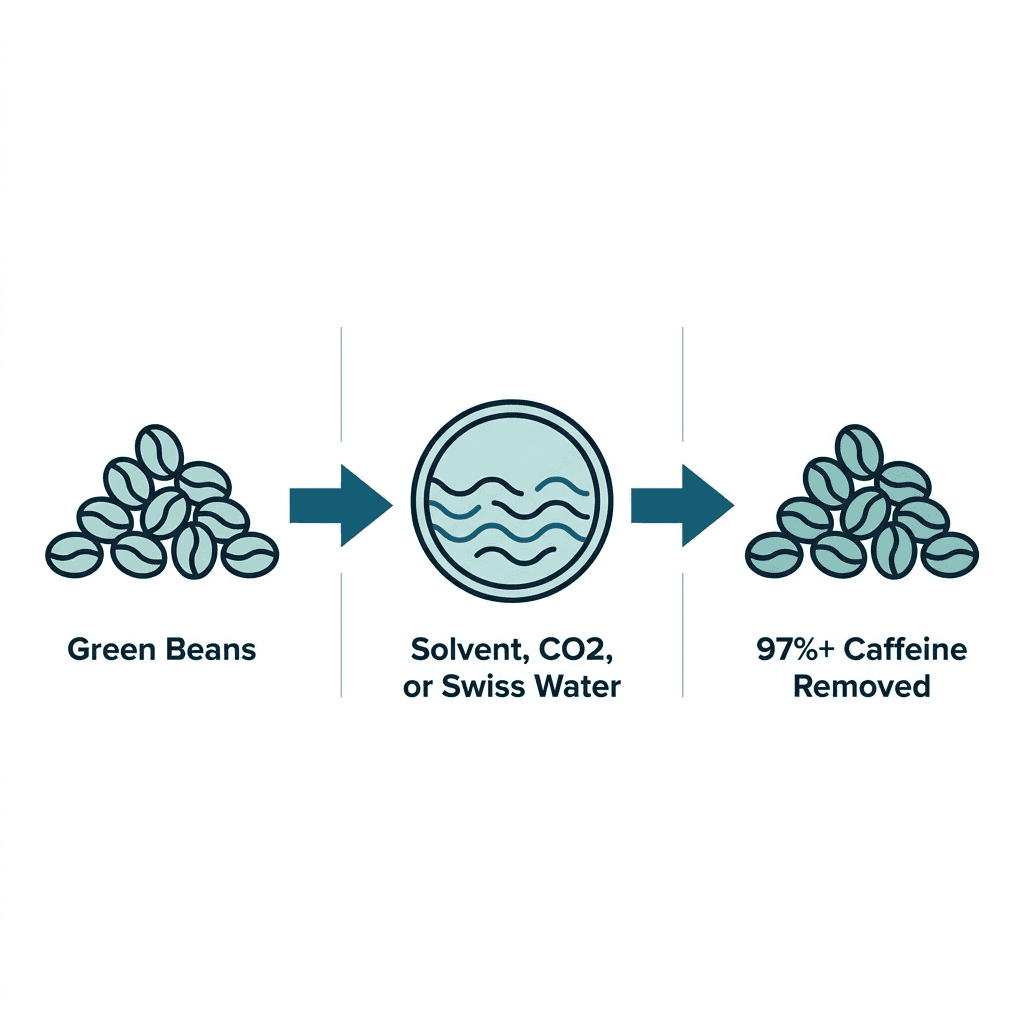
Decaf coffee is made by removing caffeine from green, unroasted coffee beans before roasting, using one of three main methods: a chemical solvent, carbon dioxide, or the Swiss Water Process. Each method aims to remove at least 97 percent of the bean's original caffeine.
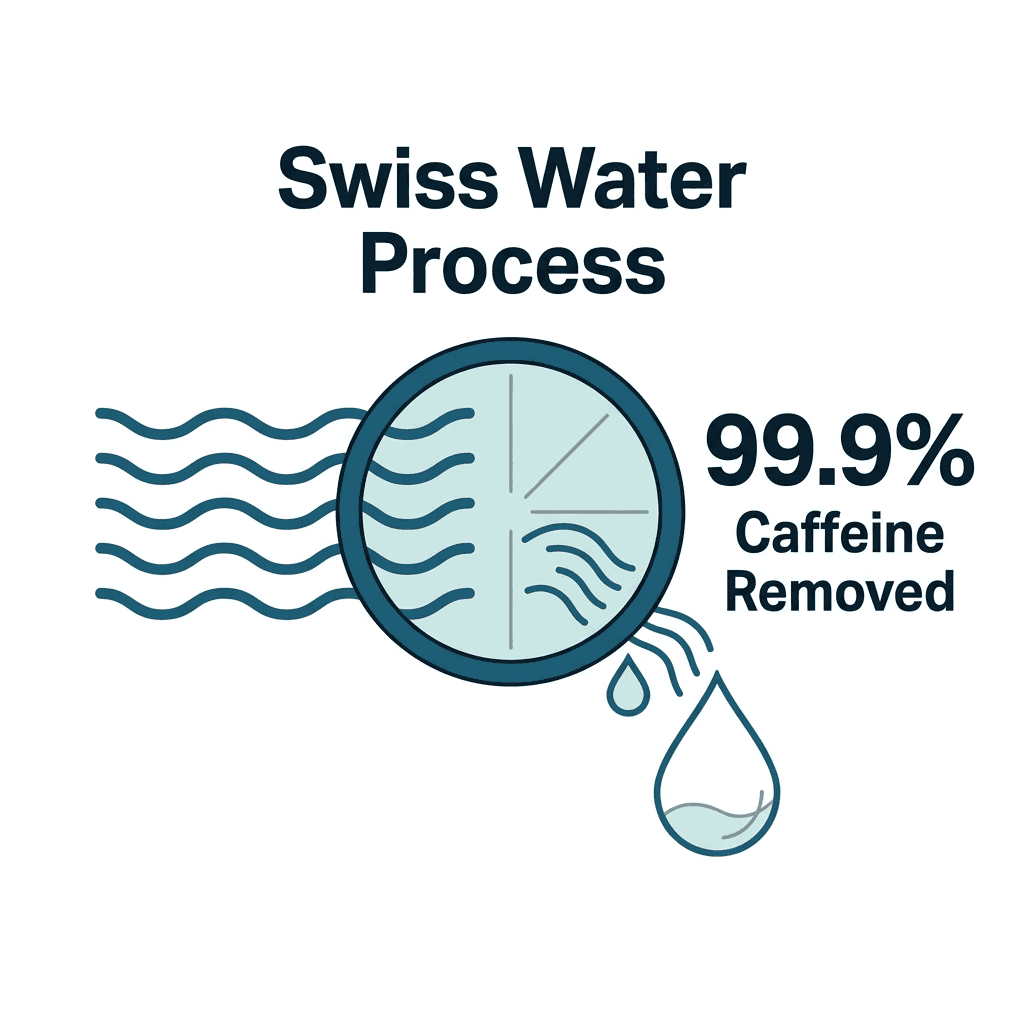
The most common approach is the solvent-based European Method: green beans are steamed to open their pores, rinsed with a solvent (commonly methylene chloride or ethyl acetate) that bonds to and extracts the caffeine, then the spent solution is removed and the beans are dried and roasted at high heat that evaporates any remaining liquid. The Swiss Water Process works differently and without chemical solvents: beans are soaked in hot water to pull out caffeine along with flavor compounds, that water is passed through activated charcoal filters that trap only the caffeine molecules, and the caffeine-free, flavor-saturated water is then used to treat new batches of beans, reaching about 99.9 percent caffeine removal. A third method uses pressurized liquid carbon dioxide to bind to and extract caffeine while leaving more flavor compounds intact. Decaffeination always happens to green beans before roasting, never after. Putting already-roasted coffee through a decaffeination bath would strip out flavor along with caffeine, not produce a usable batch.
Why Does Decaf Coffee Still Have Caffeine?
Decaf coffee still has caffeine because no decaffeination method can remove every molecule without also stripping out the compounds that make coffee taste like coffee. The industry benchmark for calling coffee "decaf" is removing at least 97 percent of its caffeine, a National Coffee Association description rather than a strict FDA rule, not all of it.
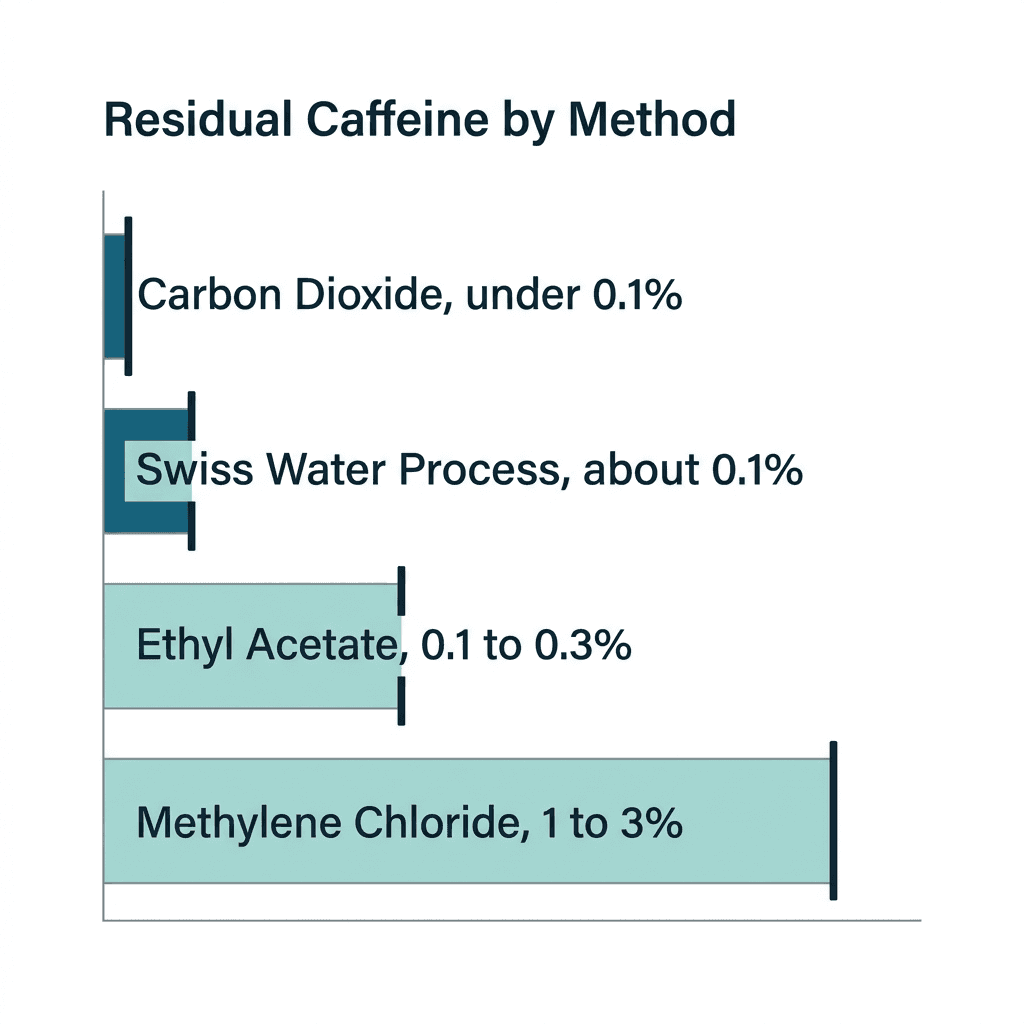
Even after a process like the Swiss Water Process reduces green coffee to about 99.9 percent caffeine-free, the final cup can still shift by a few milligrams depending on how the beans are roasted and brewed: stronger grinds, longer brew times, and more coffee per cup all pull out slightly more of the residual caffeine. How much caffeine different methods leave behind also varies: methylene chloride typically leaves 1 to 3 percent of the original caffeine behind, ethyl acetate about 0.1 to 0.3 percent, supercritical carbon dioxide under 0.1 percent, and the Swiss Water Process about 0.1 percent. Regulatory thresholds vary by country too. The United States has no percentage-removal rule, but industry practice targets 97 percent or more removed. Health Canada and the European Union cap roasted decaf at 0.1 percent residual caffeine by weight. Japan's All Japan Coffee Fair Trade Conference (AJCFT) industry standard requires only 90 percent removal, so decaf labeled in Japan can legally contain roughly twice the caffeine allowed under United States (US) or EU rules.
How Does Decaf Coffee's Caffeine Compare to Other Drinks?
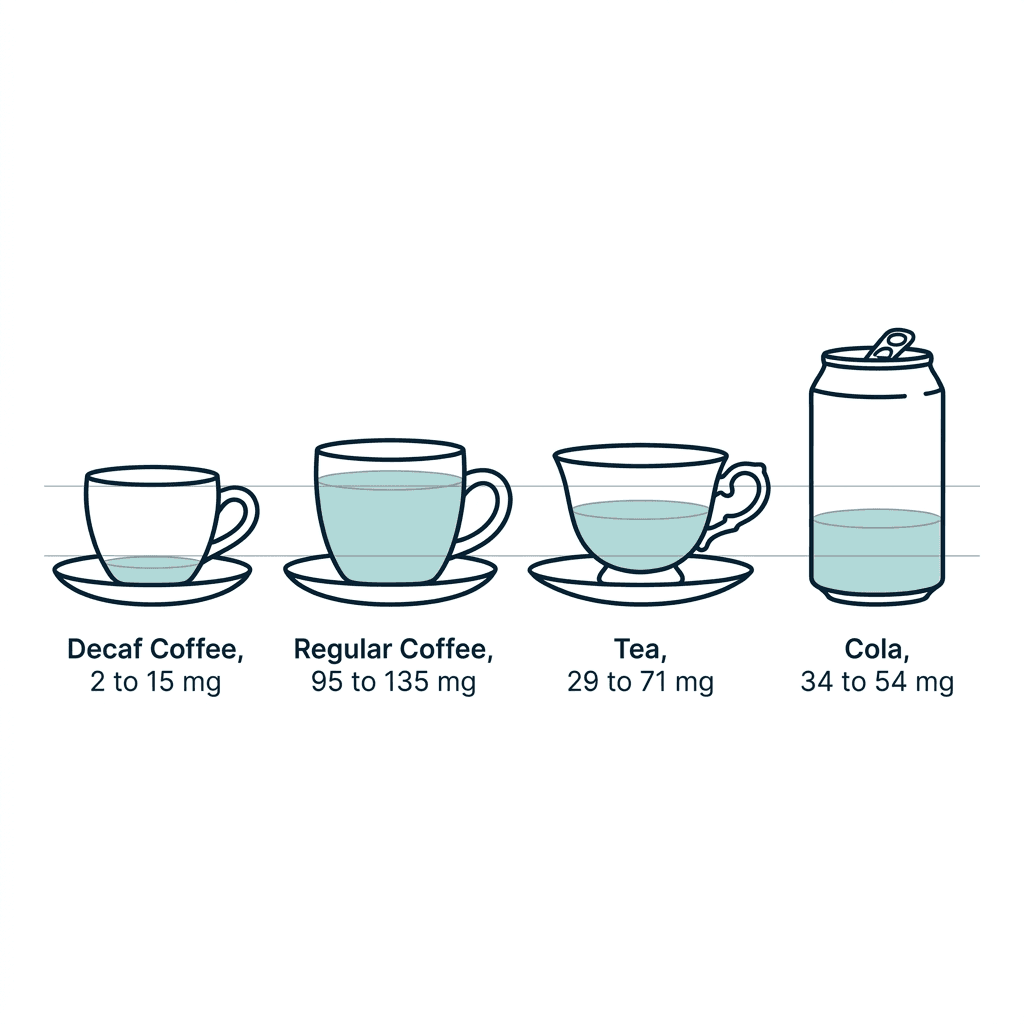
Decaf coffee has far less caffeine than nearly every other common caffeinated drink: about 2 to 15 milligrams per 8-ounce cup, versus 95 to 135 milligrams for regular drip coffee, 29 to 71 milligrams for tea, and 34 to 54 milligrams for a can of cola.
A regular 1-ounce espresso shot carries about 63 milligrams of caffeine. A two-shot regular latte has about 126 milligrams. A decaf espresso shot, by contrast, has roughly 5 milligrams, around 92 percent less caffeine than its regular counterpart. Cold brew shows the widest gap of all: regular cold brew's long steeping time extracts 100 to 200 milligrams of caffeine per 8-ounce serving, while decaf cold brew, steeped the same long way, still contains only about 5 to 25 milligrams. Green tea (29 to 37 milligrams per 8-ounce cup), black tea (30 to 71 milligrams), and matcha (40 to 70 milligrams per teaspoon of powder) all carry more caffeine than a cup of decaf, as does a 12-ounce can of cola (34 to 50 milligrams) or Mountain Dew (54 milligrams). By one comparison, an average cup of decaf carries only about 10 percent of the caffeine in a regular cup, close to the amount in an ounce of dark chocolate and less than half of what's in a can of Coke.
How Much Caffeine Is in Decaf Coffee Drinks Like Lattes and Americanos?
The caffeine in a decaf drink depends heavily on which drink it is: a decaf espresso shot, latte, Americano, pod, instant coffee, and cold brew all fall into different, narrow ranges from about 1 to 15 milligrams.
Decaf Espresso
A 1-ounce shot typically contains 0.3 to 15 milligrams of caffeine. A 2006 Journal of Analytical Toxicology study of Starbucks decaf espresso found an average of 7.02 milligrams across six samples, ranging 3.0 to 15.8 milligrams, a range broken down further in decaf espresso's caffeine content.
Decaf Latte
Most 12-ounce decaf lattes contain 2 to 10 milligrams of caffeine. A tall Starbucks decaf latte has about 15 milligrams, while Dunkin's 16-ounce version has around 7 milligrams.
Decaf Americano
A decaf Americano typically contains 2 to 15 milligrams of caffeine. Starbucks' version has 12 to 15 milligrams per 16-ounce serving, and Dunkin's stays under 18 milligrams per 16 ounces.
Decaf Coffee Pods and K-Cups
Decaf pods and K-Cups range from 2 to 7 milligrams per 8-ounce serving. Donut Shop and McCafé decaf K-Cups contain about 4 milligrams, and Nespresso decaf pods contain 2 to 4 milligrams per pod, compared with 80 to 100 milligrams for a regular K-Cup.
Decaf Instant Coffee
Decaf instant coffee contains 1 to 5 milligrams of caffeine per 8-ounce cup. Folgers decaf contains about 1 milligram per cup, while Starbucks Premium Instant Decaf contains 3 to 7 milligrams per serving.
Decaf Cold Brew
Decaf cold brew contains 3 to 15 milligrams of caffeine per 8-ounce serving, according to the NCA, higher than other decaf methods because cold brew's longer steeping time extracts slightly more caffeine.
Is the Trace Caffeine in Decaf Coffee Harmful?
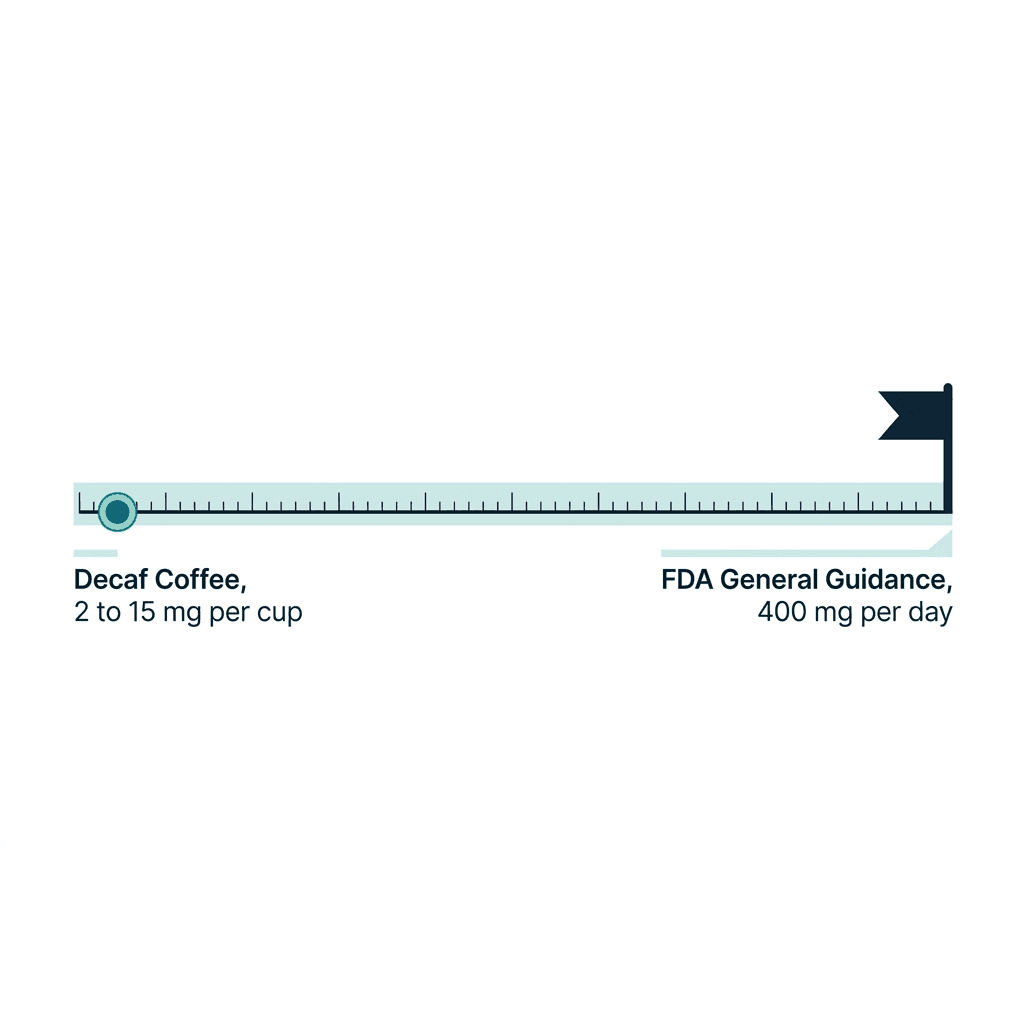
No, the trace caffeine left in decaf coffee is not harmful for most people. That trace amount comes to only 2 to 15 milligrams per cup, far below the FDA's general guidance of keeping healthy adults under about 400 milligrams of caffeine a day.
Some people worry less about the caffeine and more about the chemical solvents used in some decaffeination methods. The FDA has addressed that too: for European Method decaf, which uses methylene chloride, the agency has set a strict limit of 10 parts per million of residual solvent. The agency has also said the risk to consumers from drinking it is essentially non-existent. There is no FDA standard of identity that fixes an exact percentage for the word "decaffeinated." The widely repeated 97 percent figure comes from the NCA's own description of commercial practice, not a federal rule; the one specific FDA rule in this space is the methylene chloride residue limit. Anyone who wants to avoid solvents entirely, whether or not they're concerned about safety, can choose decaf made with the Swiss Water Process or the carbon dioxide method, both of which remove caffeine without direct chemical contact with the beans.
Should Caffeine-Sensitive People Avoid Decaf Coffee?
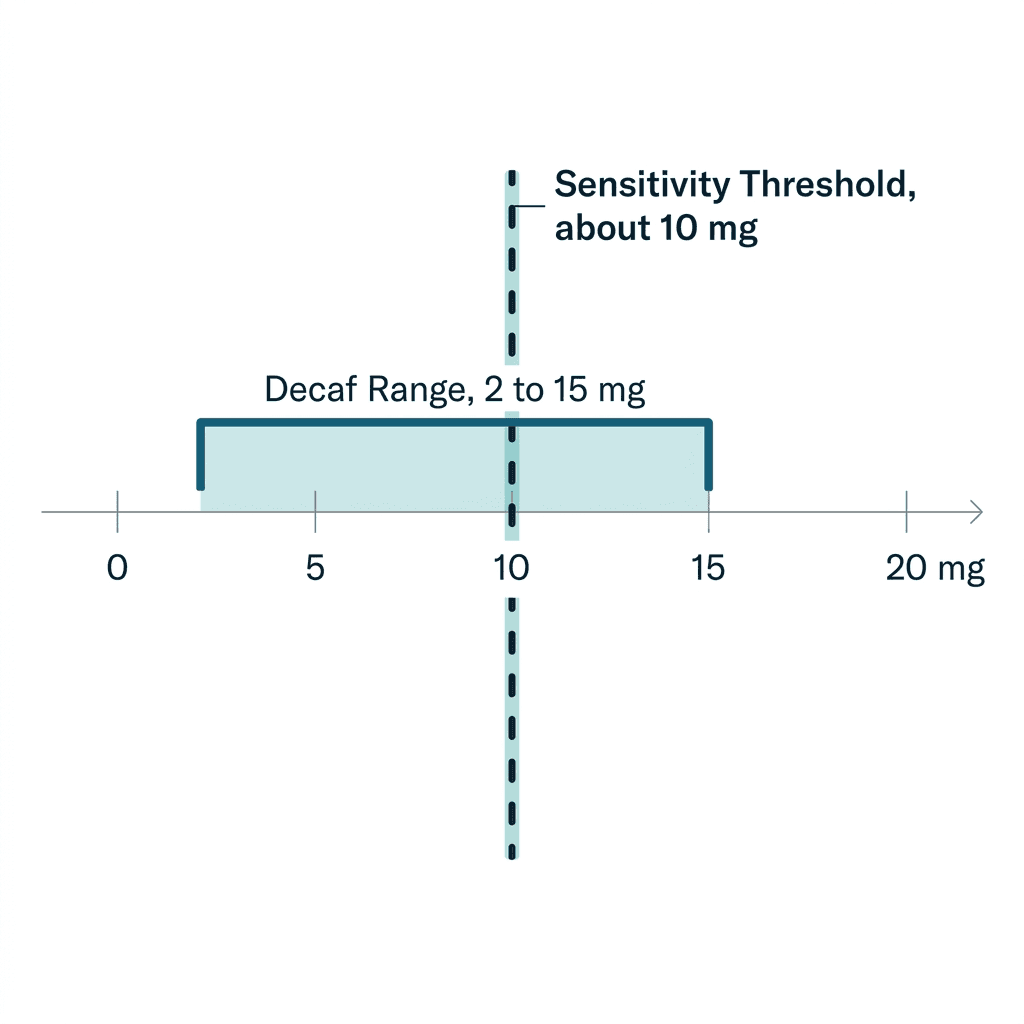
No, caffeine-sensitive people don't need to avoid decaf coffee outright, but they should know it isn't caffeine-free. Research shows doses as low as 10 milligrams can produce noticeable effects in sensitive individuals, and decaf's 2-to-15-milligram range can reach that threshold.
Roland Griffiths, Ph.D., of Johns Hopkins, commented on the 2006 University of Florida caffeine study. The Johns Hopkins researcher found that doses as low as about 10 milligrams can produce reliable subjective and behavioral effects in sensitive individuals. More than 30 percent of people can detect the effects of 18 milligrams or less, squarely inside the range many decaf servings deliver. That same University of Florida study cautioned that patients on caffeine-restricted diets, including some taking anti-anxiety medications that interact with caffeine, should be told decaf can still contain measurable amounts. Drinking several cups of decaf in a day can also accumulate: multiple servings could deliver a cumulative dose comparable to a single regular cup of coffee. Pregnant or breastfeeding individuals get a lower ceiling generally: Health Canada advises limiting total caffeine intake to 300 milligrams a day, versus 400 for most other healthy adults. Decaf's low per-cup range fits comfortably under either limit.
How Much Caffeine Is in Decaf Coffee From Popular Brands?
Caffeine in decaf coffee varies by brand, sometimes more than the size of the cup does: posted figures from Starbucks, Dunkin', Peet's, Caribou, and other major brands range from under 1 milligram to about 30 milligrams per serving.
| Brand | Caffeine |
|---|---|
| Starbucks | Posted amounts: Short 15 mg, Tall 20 mg, Grande 25 mg, Venti 30 mg |
| Dunkin' | Decaf latte (16 oz) about 7 mg; decaf Americano (16 oz) under 18 mg |
| Folgers | Instant decaf about 1 mg per 8 oz cup |
| Peet's | 5-10 mg per 8 oz cup (their own posted figure) |
| Caribou Coffee | 4-6 mg per small brewed cup, 10-15 mg in larger servings or K-Cups |
| Nespresso | 2-4 mg per decaf pod/capsule |
| Tim Hortons | No specific mg figure found in this research; uses the low-caffeine Swiss Water Process |
| Green Mountain | No specific mg figure found in this research |
Independent testing doesn't always match what brands post: Starbucks' own figures list 15 to 30 milligrams by cup size, but a 2006 University of Florida test of Starbucks decaf found lower numbers in practice, 12.0 to 13.4 milligrams per 16-ounce brewed cup and 3.0 to 15.8 milligrams per espresso shot. Reliable per-serving figures were not available in this article's research for Tim Hortons or Green Mountain beyond their general 2-to-15-milligram decaf range. That gap is noted here rather than filled with an invented number.
Which Decaf Coffee Has the Lowest Caffeine?
Decaf coffee brands that use the Swiss Water Process tend to have the lowest caffeine, since that method is certified to remove 99.9 percent of a bean's original caffeine. Colipse, Allegro, Tim Hortons, Jim's Organic Coffee, Verve, Kicking Horse, Bulletproof, San Francisco Bay, and Caribou all use this method. The lowest documented figure traces back to the same 2006 University of Florida study covered earlier in this article: one of its ten tested samples had no detectable caffeine at all, a sample colipsecoffee.com identifies as Folgers instant decaf.
How Does Decaf Tea's Caffeine Compare to Decaf Coffee's?
Decaf tea carries a similar trace of caffeine to decaf coffee, though its own range is a bit lower.
A cup of decaf tea holds roughly 1 to 8 milligrams, a shade below the decaf coffee vs. black tea's caffeine comparison's own 2-to-15-milligram range for decaf coffee.
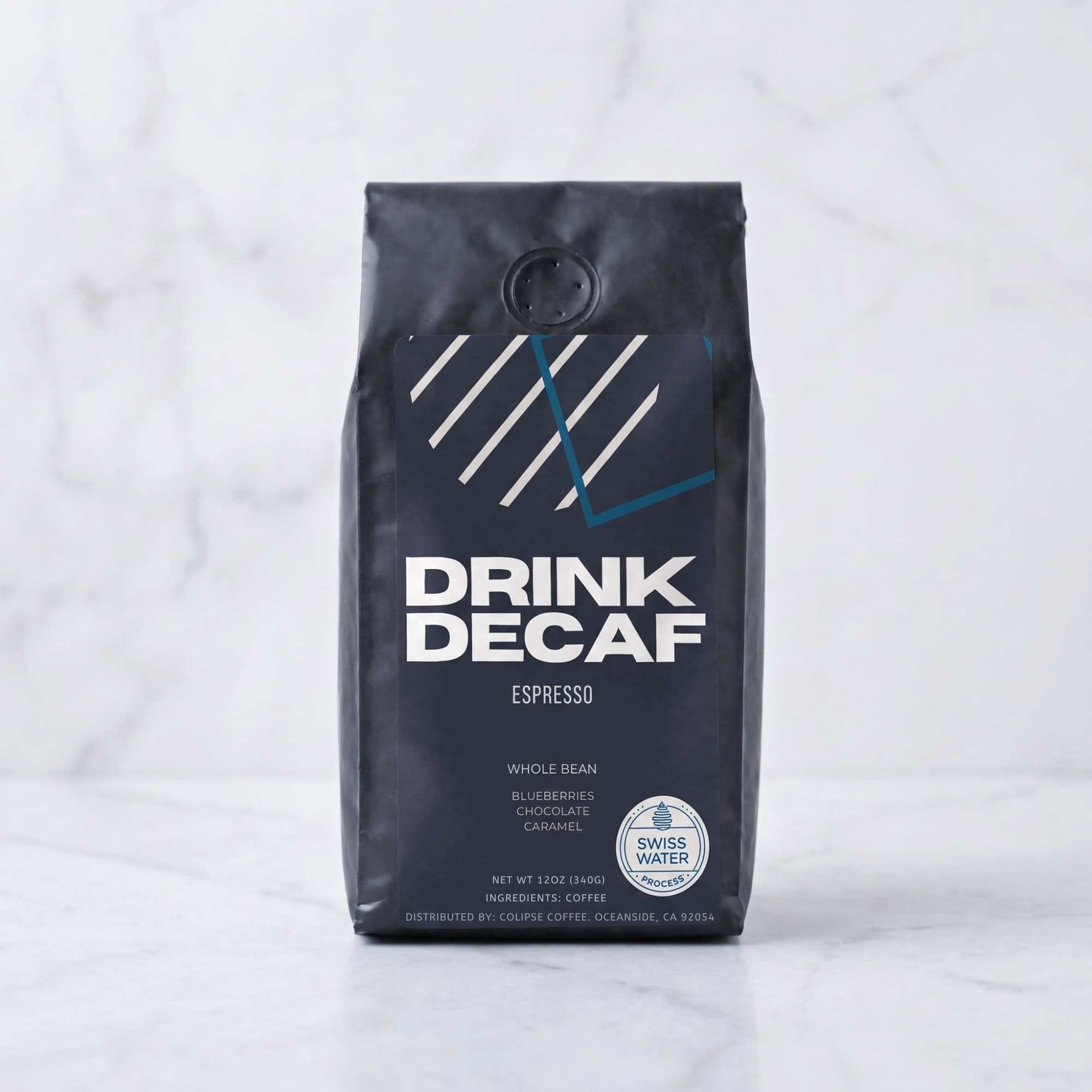
12 oz · Whole bean
Drink Decaf EspressoSpecialty grade. Swiss Water Process® decaffeinated. Roasted to order at our California roastery. Blueberry, chocolate, caramel.
Free shipping in the US