How Much Caffeine Is in Decaf Espresso?
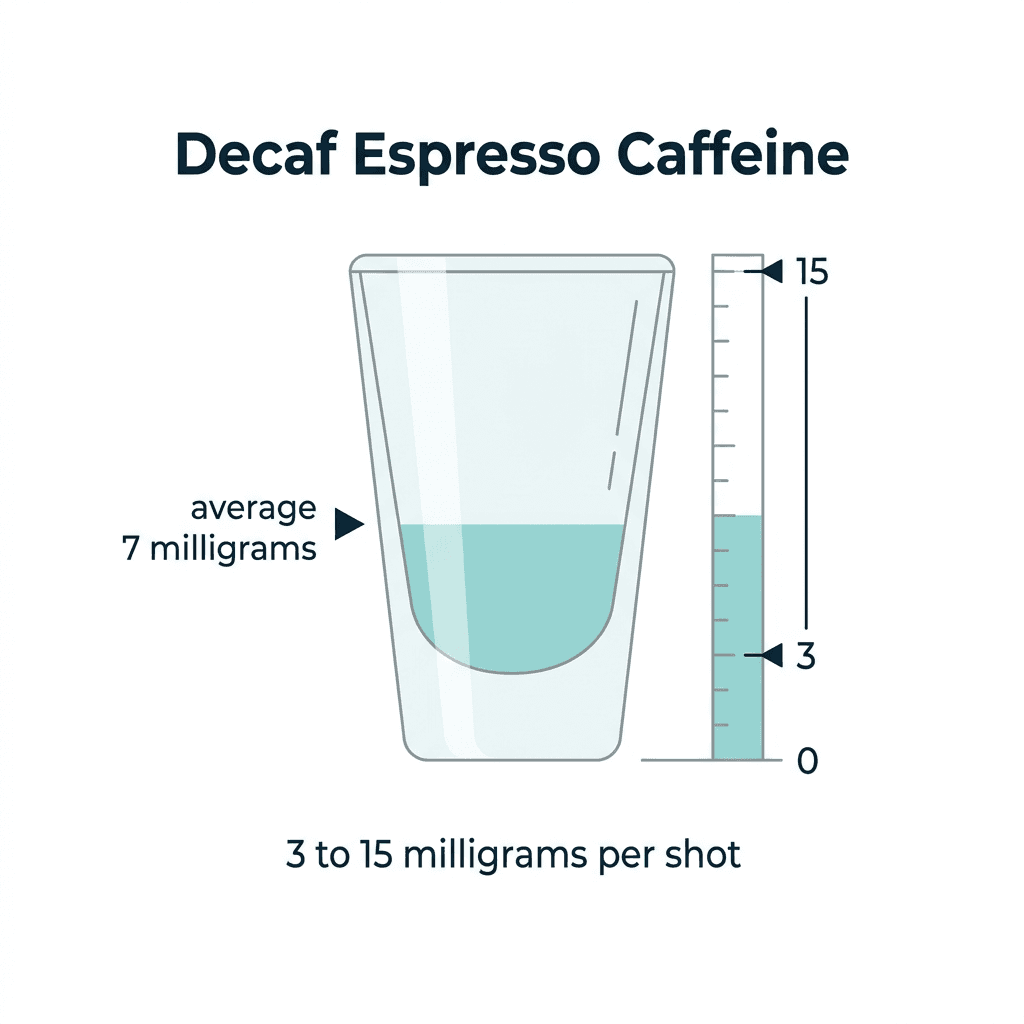
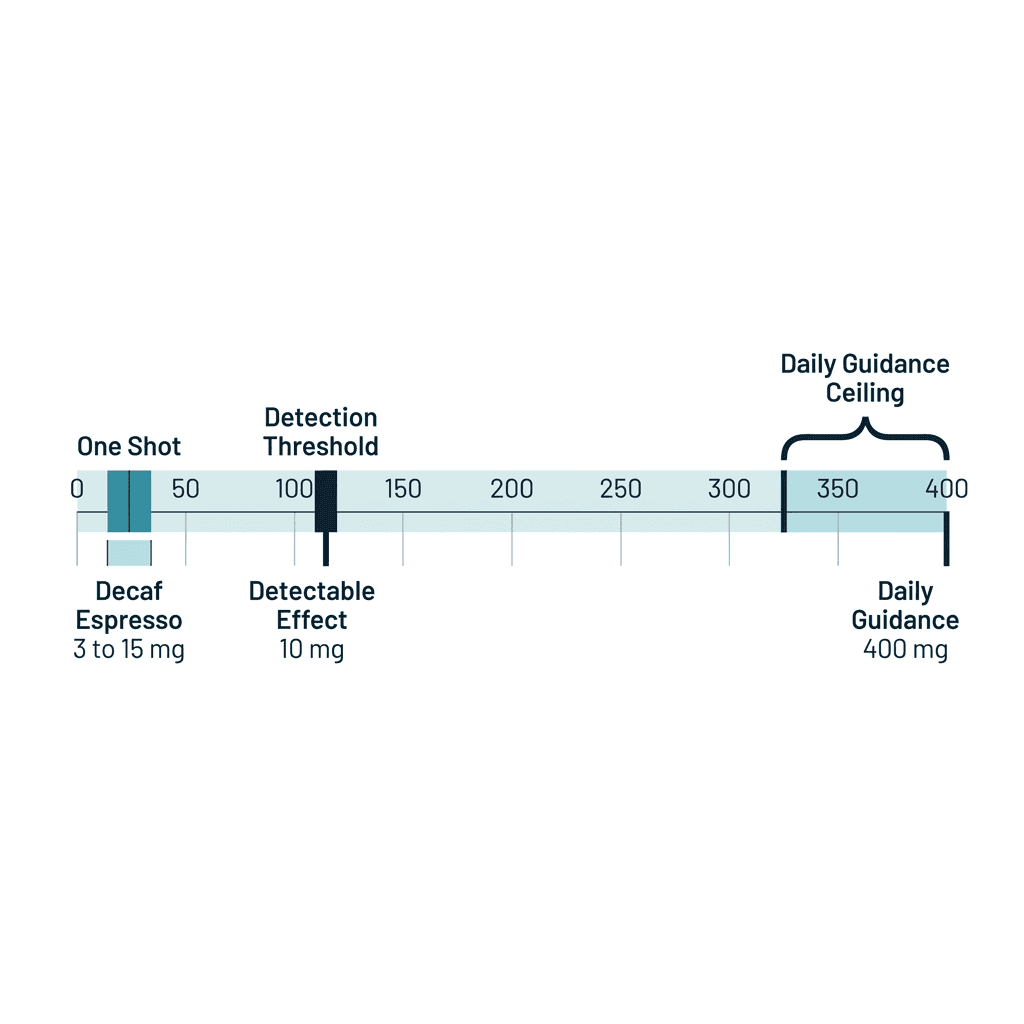
Decaf espresso contains roughly 3 to 15 milligrams of caffeine per one-ounce shot. A double shot roughly doubles that, to about 6 to 30 milligrams. The caffeine amount in decaf espresso was measured directly by a 2006 University of Florida study across six Starbucks samples, averaging about 7 milligrams per shot.
Decaf espresso's caffeine is far below a regular 8-ounce cup of coffee's roughly 95 milligrams. Rachel R. McCusker and colleagues at the University of Florida College of Medicine collected six decaf espresso samples from a single Starbucks outlet across multiple days. Their results were published in the Journal of Analytical Toxicology. They measured each sample's caffeine content using gas chromatography. The results ranged from 3.0 to 15.8 milligrams per shot, averaging 7.02 milligrams. Decaf espresso brewed specifically from Swiss Water Process beans measures closer to 5 milligrams per shot. The same 3-to-16-milligram range also appears independently in other trade sources.
Why Doesn't Decaf Espresso Have Zero Caffeine?
Decaf espresso keeps trace caffeine because no caffeine removal process reaches 100 percent. The National Coffee Association (NCA) describes commercial decaffeination as removing 97 percent or more of a bean's caffeine, and the Food and Drug Administration (FDA) notes decaf can still contain up to about 15 milligrams per 8-ounce cup. No decaffeination regulation, whether in the United States, Canada, the European Union, or Japan, sets a 100 percent removal standard.
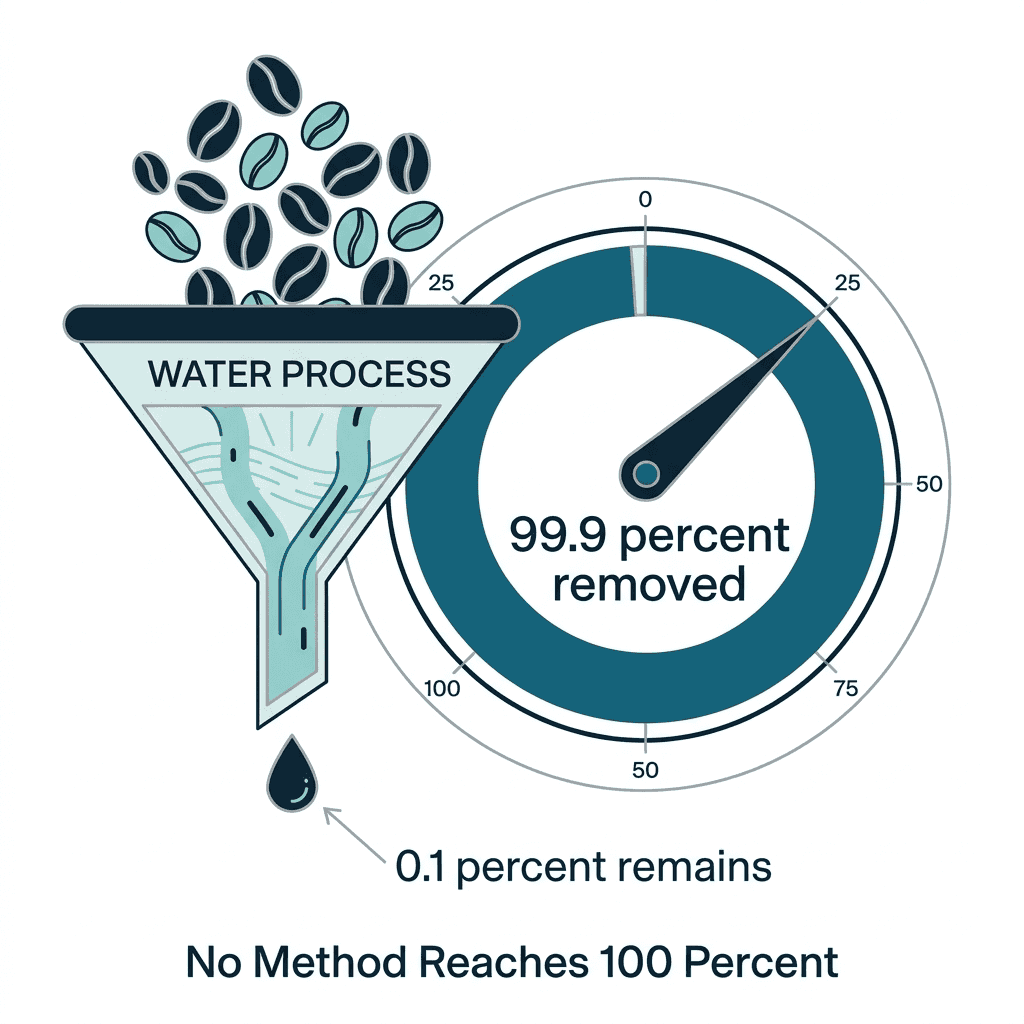
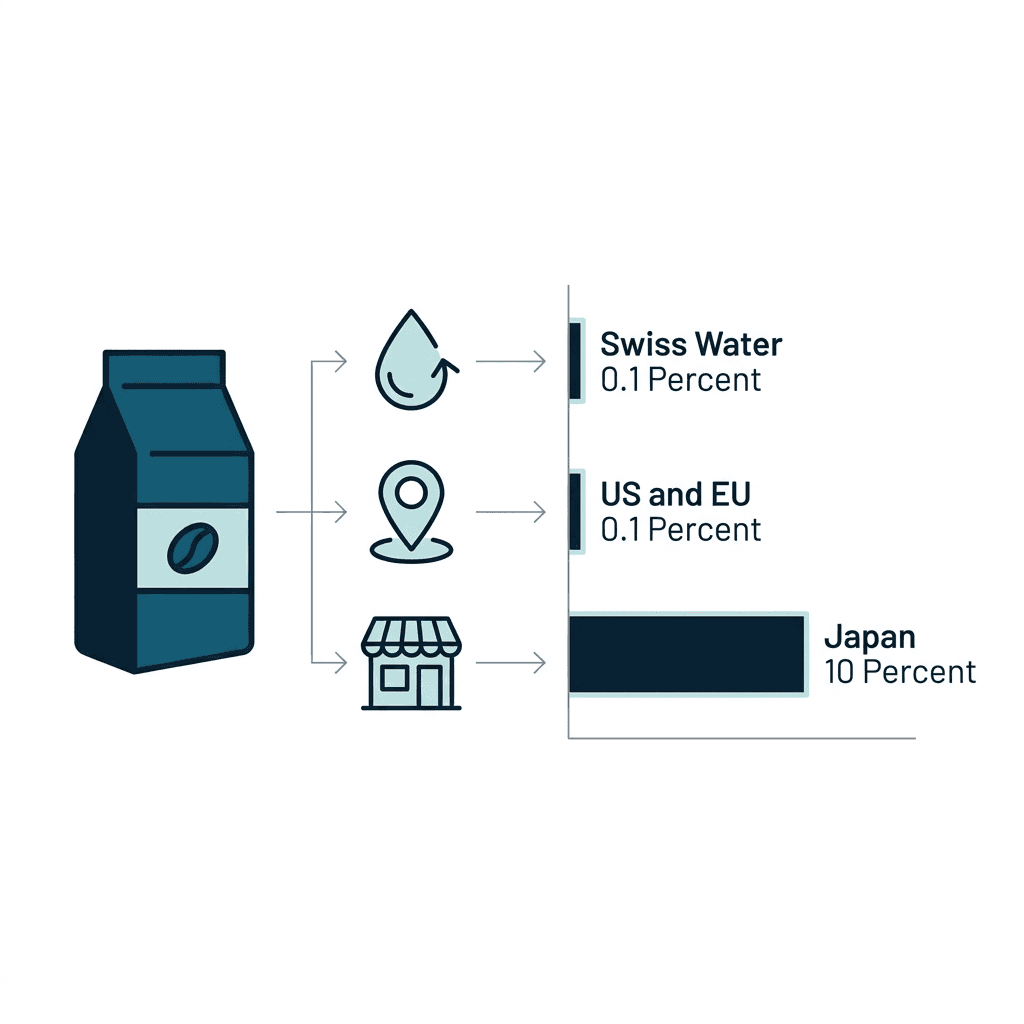
Even the Swiss Water Process, the most natural and chemical-free decaffeination method, is proven only to about 99.9 percent caffeine removal. The process reaches a point where continued soaking no longer extracts meaningfully more caffeine, leaving roughly 0.1 percent of the original amount in the bean. The process soaks green coffee beans in hot water and Green Coffee Extract rather than chemical solvents, then filters the extracted liquid through activated carbon to capture caffeine molecules. Since regulatory definitions of decaf already accept 97 to 99.9 percent removal, no commercial process brews past that point.
How Does Decaf Espresso Compare to Regular Espresso?
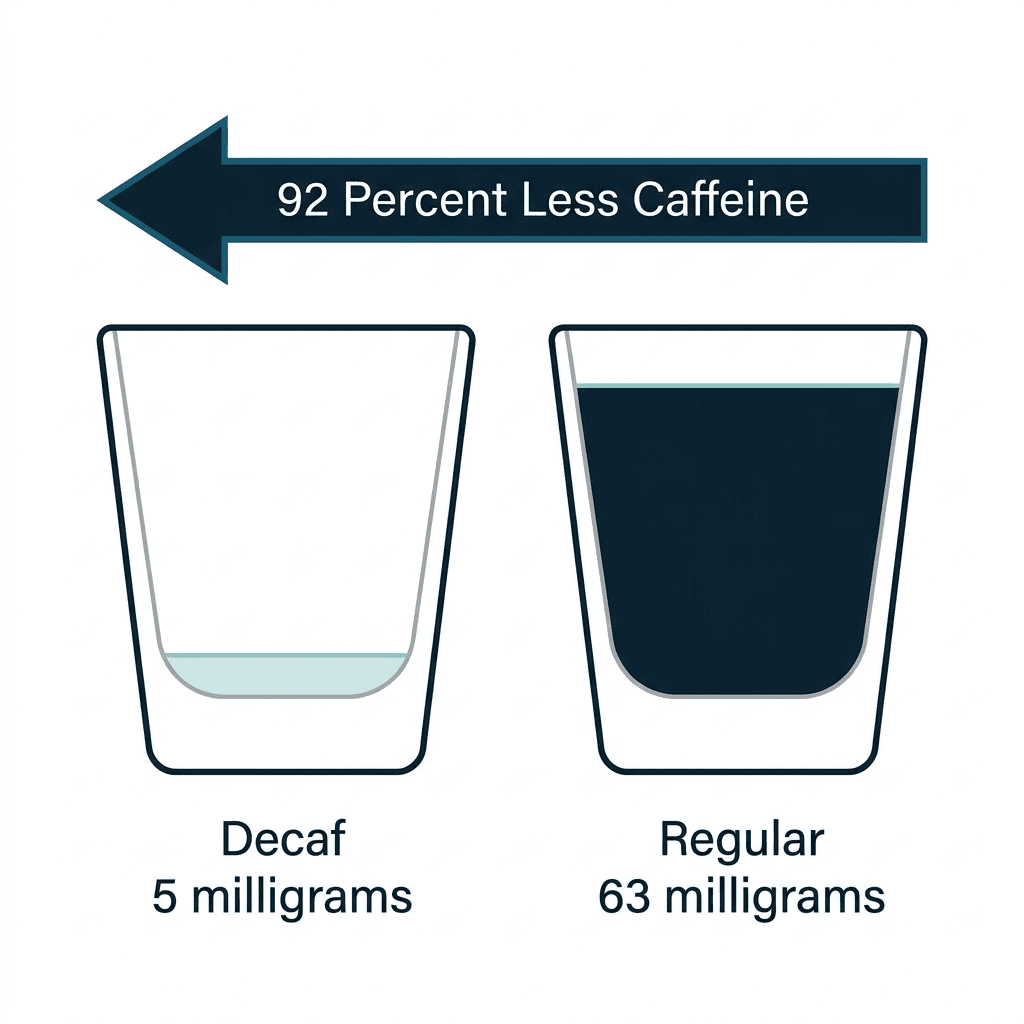
Decaf espresso contains about 92 percent less caffeine than regular espresso, about 5 milligrams against 63 milligrams per shot. A separate 2007 study of 97 commercial espresso shots found regular espresso averaging 106 milligrams per serving on average, well above decaf espresso's 3-to-15-milligram range from the earlier University of Florida study. Beyond caffeine, the two share the same brewing method and a broadly similar taste profile.
The amount of caffeine in espresso was measured directly by Ben Desbrow and colleagues at Griffith University, across 97 commercial espresso shots at Australian cafes. Their results were published in Food and Chemical Toxicology. The findings ranged from 25 to 214 milligrams per serving, averaging 106 milligrams with a standard deviation of 38 milligrams, a spread that reflects how much shot size and pull time vary the number in practice.
Another difference between regular and decaf espresso is flavor: decaffeination can mute some of the original nuance without changing how the shot is pulled, since both use the same pressurized brewing process. That process forces hot water through finely ground beans at similar temperatures and pressures. Because espresso concentrates coffee into a small serving, decaf espresso can also hold more caffeine per milliliter than decaf drip coffee, roughly 0.10 to 0.51 milligrams per milliliter against drip's roughly 0.01 to 0.06 milligrams per milliliter, even though its total serving size is far smaller.
What Affects Caffeine Levels in Decaf Espresso?
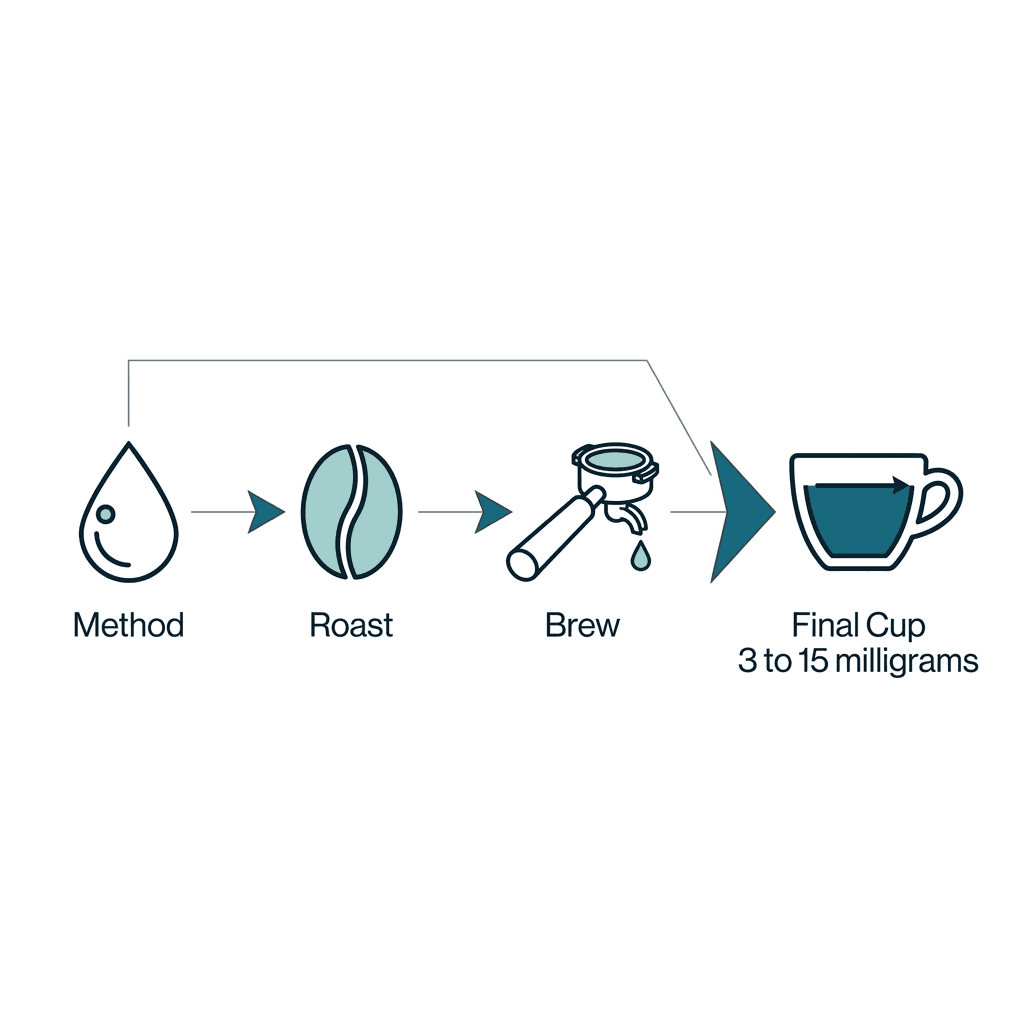
Caffeine in decaf espresso depends on the decaffeination method, the beans, and how the shot is brewed. The decaffeination method is the single biggest factor: the Swiss Water Process removes the most caffeine of any common approach, while carbon dioxide and solvent-based methods remove noticeably less.
Roast level changes how much caffeine ends up in a given serving of decaf espresso, independent of the decaffeination method. Roasting changes a bean's density without changing its total caffeine, so measuring coffee by volume with a scoop collects more beans, and more caffeine, than measuring the same roast by weight on a scale. Brewing method, brew strength, and how much coffee is used each shift the final count by a few more milligrams on top of whatever the decaffeination method already removed. Real-world testing shows how much these variables can shift the total together. Consumer Reports published its own 2007 test of 36 decaf cups across six national chains and found most under 5 milligrams of caffeine. Three chains measured well above that, and above the roughly 15-milligram limit decaf typically stays under: Dunkin' Donuts at 32 milligrams, Seattle's Best at 29 milligrams, and Starbucks at 21 milligrams, while McDonald's consistently measured the lowest. Brand and location matter as much as the method a label claims.
How Does Decaf Espresso Compare to Other Decaf Drinks?
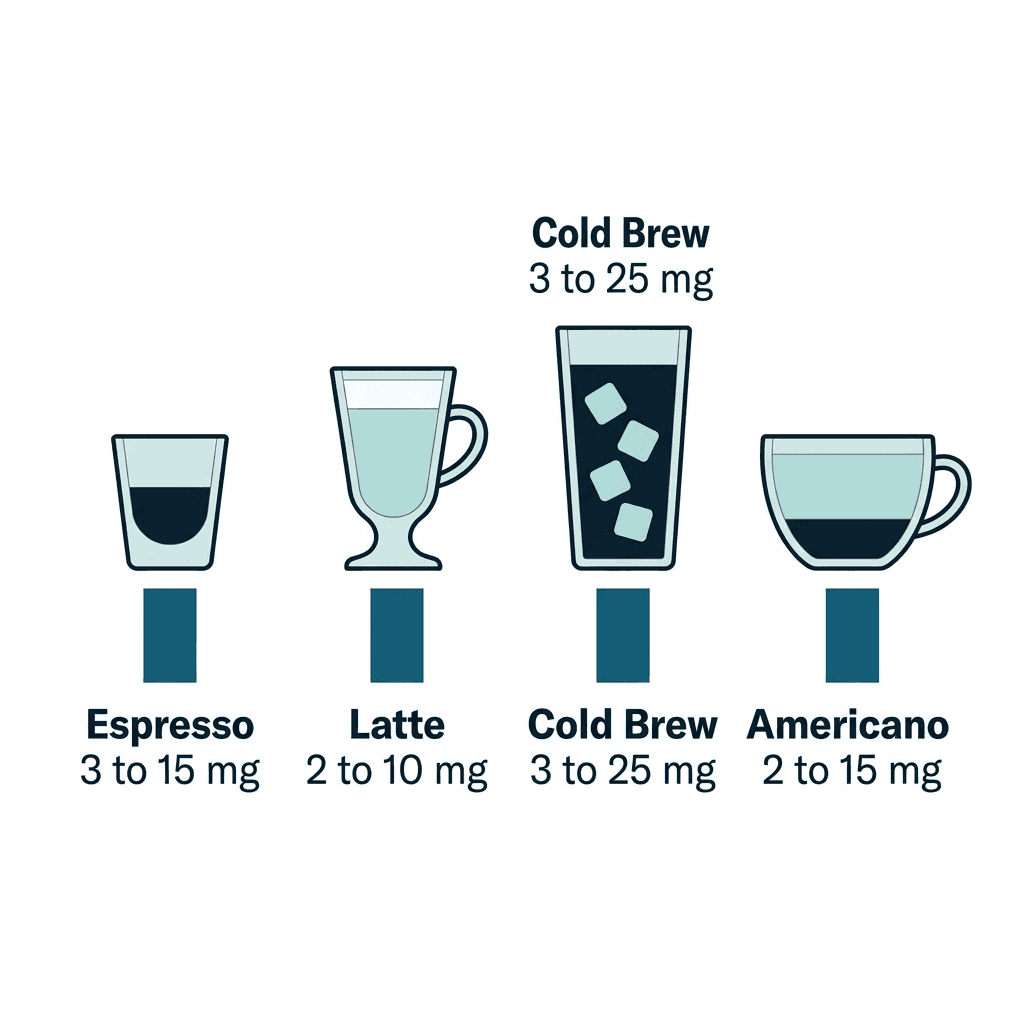
Decaf espresso contains lower total caffeine than most other decaf formats, though not always by volume. A 12-ounce decaf latte with two Swiss Water Process shots contains about 10 milligrams of caffeine, within the typical 2 to 10 milligram range.
Decaf drip coffee contains roughly 2 to 15 milligrams per 8-ounce cup, with most brands clustering toward the lower end. Decaf cold brew contains more, typically 3 to 25 milligrams per 8-ounce serving, because its long steep time and heavier grounds-to-water ratio extract more caffeine even from decaffeinated beans. A decaf Americano typically contains 2 to 15 milligrams of caffeine, depending on the number of espresso shots. Its caffeine content is similar to decaf drip coffee despite the different brewing method.
Is Decaf Espresso Safe for People Sensitive to Caffeine?
Yes. Decaf espresso stays well within safe limits for most caffeine-sensitive people, though it isn't guaranteed to fall below what a sensitive person can detect. Roland Griffiths, Ph.D., of Johns Hopkins University School of Medicine, found doses as low as about 10 milligrams can produce reliable effects in sensitive individuals, and over 30 percent of people can detect doses of 18 milligrams or less.
Caffeine intake from decaf espresso remains a small fraction of the limits health authorities set. The FDA's general guidance keeps healthy adults under about 400 milligrams of caffeine a day, and a single decaf espresso shot's 3 to 15 milligrams is only a small fraction of that allowance. The American College of Obstetricians and Gynecologists (ACOG) recommends pregnant individuals keep caffeine under 200 milligrams a day, and several decaf espresso shots stay well within that limit too.
Decaf espresso is not risk-free for everyone. A 2002 study in Circulation by Roberto Corti and colleagues at University Hospital Zurich found decaf espresso raised systolic blood pressure by about 12 millimeters of mercury after 60 minutes in non-habitual drinkers, despite no rise in blood caffeine levels. A 1983 study in The American Journal of Clinical Nutrition found both decaf and regular espresso reduce nonheme iron absorption by 60 to 90 percent because of chlorogenic acid.
How Do You Choose Decaf Espresso with the Least Caffeine?
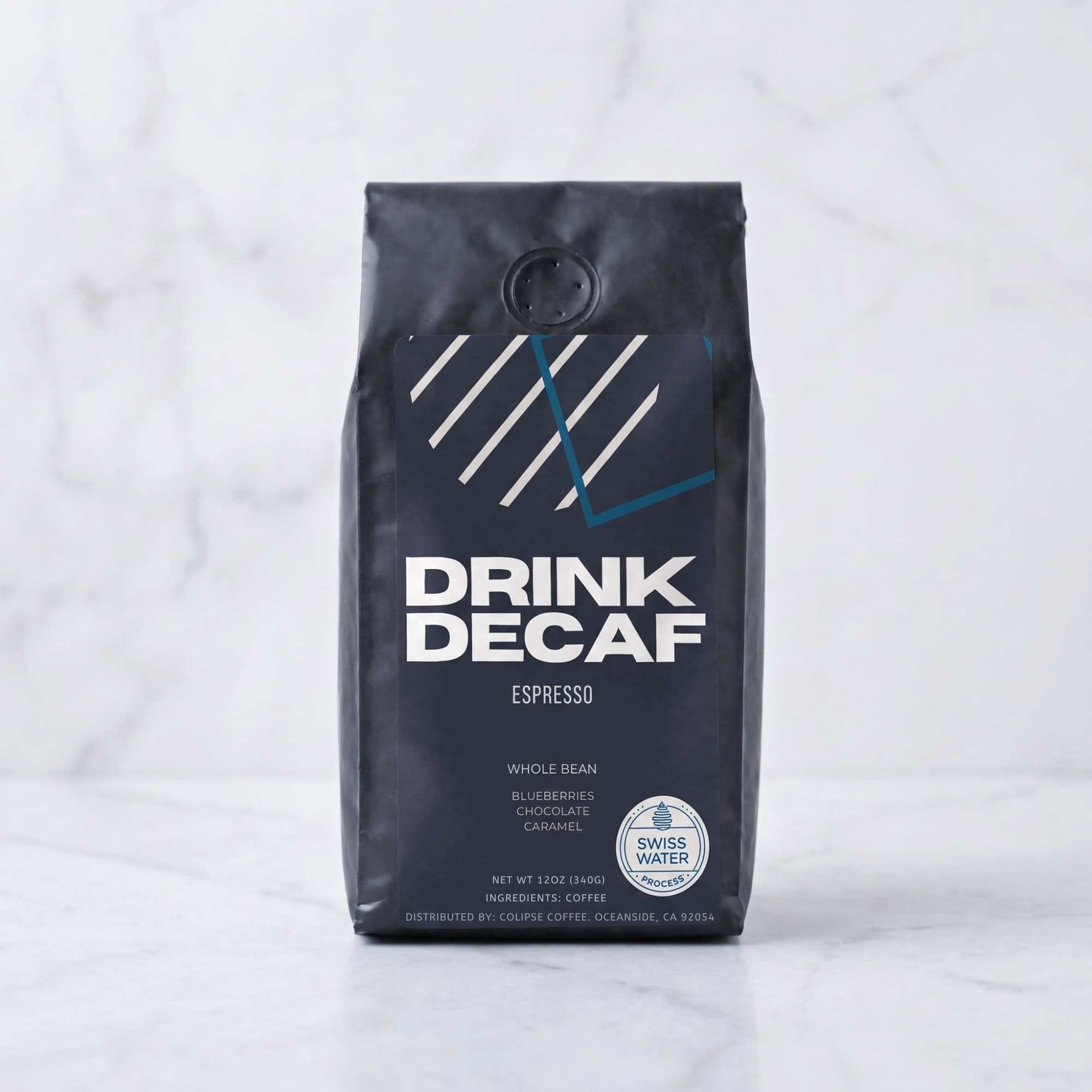
Choosing the lowest-caffeine decaf espresso means checking the decaffeination method and the brand, not just the word "decaf." Beans processed with the Swiss Water Process contain the lowest residual caffeine of any common method, at roughly 0.1 percent of the original amount.
Brand and location still matter beyond the method itself, since even chains using the same nominal process have tested far apart in independent lab results, as the earlier Consumer Reports figures show. Country of purchase adds another variable: United States (US), Canadian, and European Union (EU) rules keep decaf's residual caffeine to roughly the same trace levels, but Japan's All Japan Coffee Fair Trade Conference (AJCFT) industry standard requires only 90 percent removal. Decaf espresso bought under a Japan-labeled standard can contain up to twice the caffeine allowed elsewhere as a result.
What Determines Decaf Coffee's Caffeine Overall?
Espresso is just one format; decaf coffee generally still contains a small but real amount across every brewing method. How the removal method, brand, and country of purchase shift decaf coffee's caffeine content beyond espresso is covered in full, including lattes, pods, and cold brew.