Research Library
Drink Decaf grounds every claim on this page in peer-reviewed research. Here is what the science says about Swiss Water Process, decaffeination chemistry, and what actually ends up in your Drink Decaf cup.
Swiss Water® Process
Swiss Water Process was conceived in Switzerland in 1933 and commercialized in 1988. It is the only decaffeination method certified organic by OCIA, equivalent to USDA NOP and EU Organic standards. The facility runs in Delta, British Columbia, using glacial runoff from the Coast Mountains. No chemical solvents enter the process at any stage.
The mechanism is Green Coffee Extract (GCE): water already saturated with every soluble compound found in coffee except caffeine. When green beans are soaked in GCE, caffeine is the only compound with a concentration gradient to follow. Everything else stays in the bean because there is nowhere for it to go. Drink Decaf sources every batch through this process, where carbon filtration pulls caffeine out of the GCE, which is recirculated and reused, removing up to 99.9% of caffeine with 0.1% or less remaining.
Swiss Water returns 80% of the water used back to the local municipality. No chemical waste. No solvent disposal. Over 40% of their decaf options carry at least one certification: Organic, Fairtrade, Rainforest Alliance, Kosher, or Halal.
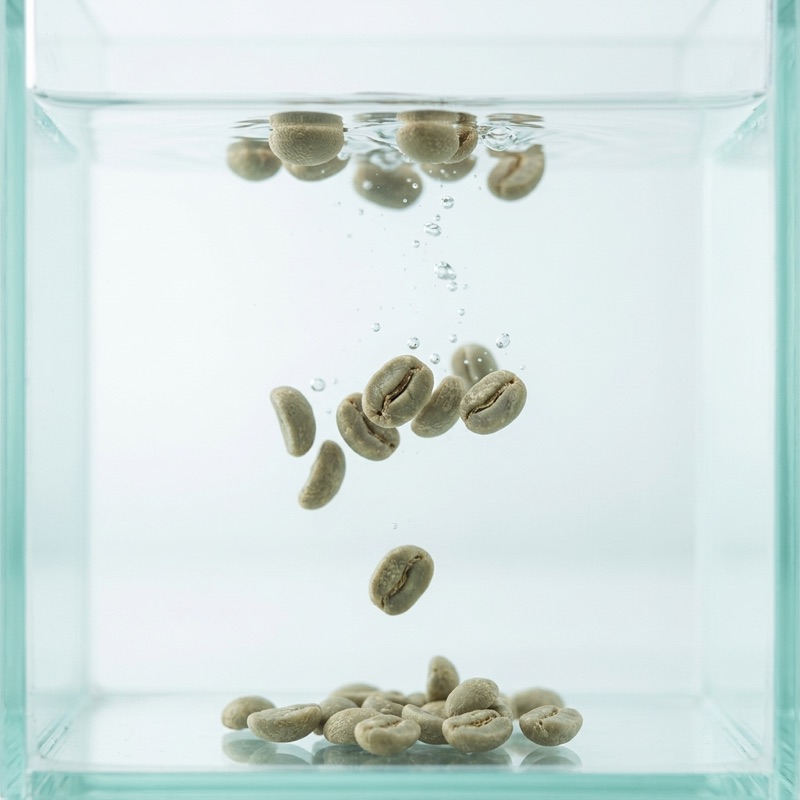
Step 01
Green beans enter GCE
Unroasted green coffee beans are soaked in Green Coffee Extract, water pre-saturated with all coffee solutes except caffeine.
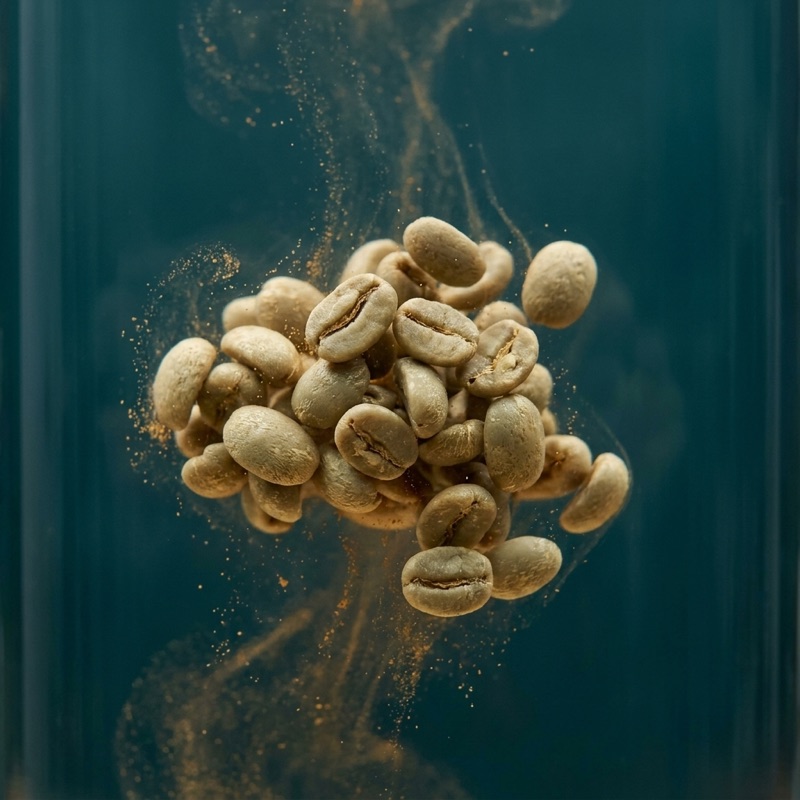
Step 02
Caffeine diffuses out
Only caffeine has a concentration gradient. It migrates from bean into the GCE via osmosis. Flavor compounds stay locked inside the bean.
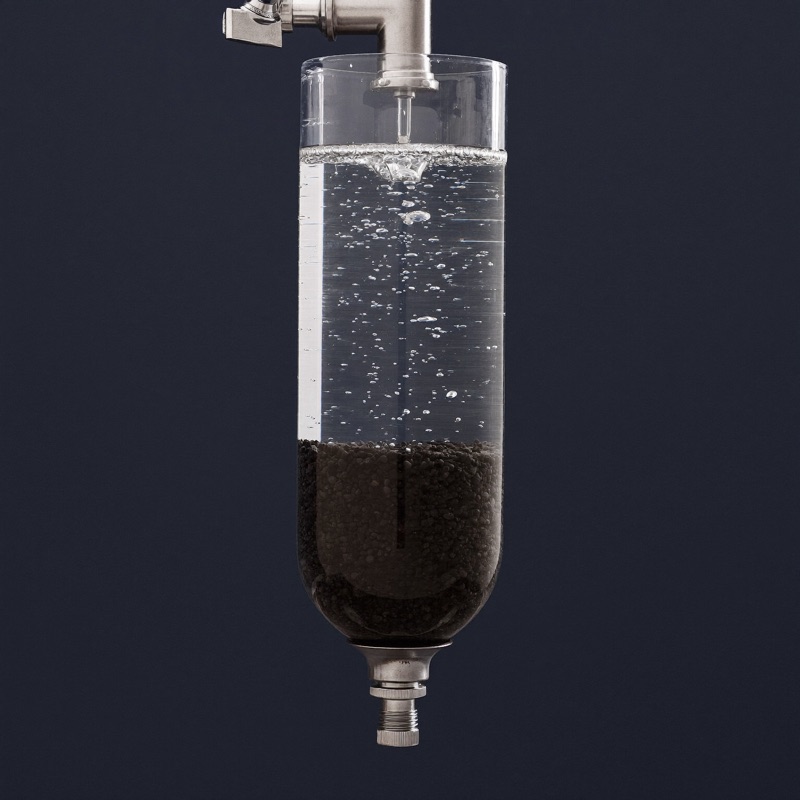
Step 03
Carbon filtration
Caffeine-laden GCE passes through proprietary activated carbon columns. Caffeine binds to the carbon. Clean GCE is regenerated and recirculated.
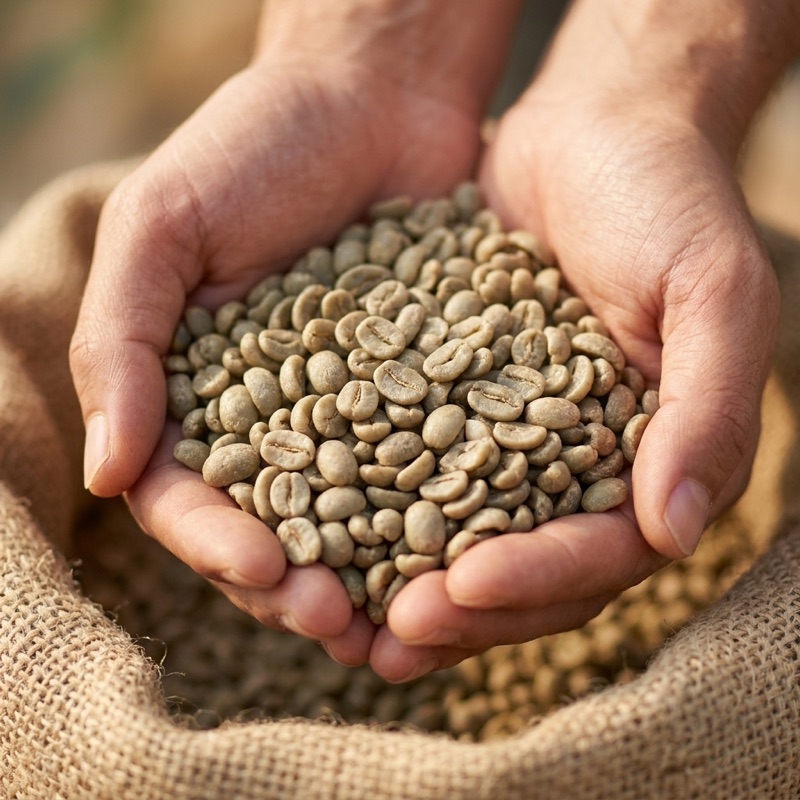
Step 04
99.9% caffeine-free
Beans emerge with 0.1% or less caffeine remaining. No solvents. No steam pre-treatment. Flavor compounds and chlorogenic acids intact.
99.9%
of caffeine removed from Drink Decaf beans
0
chemical solvents in Drink Decaf
80%
of process water returned to the municipality
1988
year the Swiss Water Process entered the market
3–15mg
caffeine in an 8 oz cup of Drink Decaf
The four common coffee decaffeination methods are the Swiss Water Process, carbon dioxide (CO₂) process, direct solvent process, and indirect solvent process. These methods fall into two main categories: solvent-based and non-solvent-based decaffeination. Drink Decaf Coffee uses the Swiss Water Process because it removes 99.9% of caffeine without chemical solvents.
Researchers at the University of Salerno mapped every commercial decaffeination method in use today and documented what each one does to the coffee bean at a chemical level. Their review covered four methods: methylene chloride, ethyl acetate, Swiss Water Process, and supercritical CO2, evaluating solvent selectivity, residue potential, organic certification eligibility, and environmental waste.
The key distinction is selectivity. Methylene chloride and ethyl acetate are broad chemical solvents: effective at pulling caffeine out, but they pull other compounds too. Swiss Water uses equilibrium diffusion: the water is already pre-saturated with every soluble coffee compound except caffeine. When fresh beans are introduced, only caffeine has a concentration gradient to follow. Nothing else migrates out because there is nowhere for it to go.
Decaffeination Processes: A Review of Physical, Chemical and Biological Techniques · Journal of Supercritical Fluids, 2018
Solvent residue
Lower is better
The amount of chemical solvent detectable in the finished bean after processing. Regulatory bodies set legal limits for how much residue is acceptable in finished decaf.
Caffeine selectivity
Higher is better
How precisely the method targets caffeine without stripping other compounds from the bean. Low selectivity means flavor molecules, antioxidants, and sugars leave with the caffeine.
Organic certification
Certification status
Whether the method is eligible for organic certification under USDA NOP or equivalent standards. Chemical solvents are prohibited by definition in certified organic processing.
Flavor compound loss
Lower is better
The degree to which volatile aromatic compounds (the molecules responsible for coffee's smell and taste) are removed or degraded during the decaffeination process.
Chemical waste output
Lower is better
Whether spent solvent requires disposal as chemical waste after processing. Solvent-based facilities must manage and treat contaminated liquid; water-based and CO2 methods do not.
Caffeine removed
Higher is better
The percentage of caffeine eliminated from the bean. 97% is the industry benchmark for labeling a product decaffeinated in the US, not an FDA-set rule; the EU sets a stricter 99.9% threshold. Swiss Water exceeds both by a significant margin.
The International Agency for Research on Cancer classifies methylene chloride (the most common chemical solvent in commercial decaffeination) as a Group 2A substance: a probable human carcinogen and potential endocrine disruptor. The FDA allows up to 10 ppm residue in finished decaf. The EU sets its limit at 2 ppm, five times stricter.
The Clean Label Project tested popular commercial decaf brands and found measurable methylene chloride traces in several of them. All came in below the FDA limit. Swiss Water Process uses no chemical solvents, so residue testing returns zero across the board. Drink Decaf contains no detectable solvent residue.
Is Decaf Coffee Safe? · Center for Environmental Health · Is Coffee Decaffeinated in a Safe Way? · C&EN / ACS, 2024
Methylene chloride in 17 commercial decaf brands
µg/kg · Eurofins ISO 17025 certified lab · Feb 2022
5
of 17 brands
had measurable methylene chloride residue
Results were 10–100× higher than the same brands tested in 2020–21. All remained below the FDA 10 ppm ceiling.
Swiss Water Process decaffeination uses Green Coffee Extract, water already saturated with every flavor compound except caffeine. Because the extract is flavor-saturated, only caffeine migrates out of the bean. No steam pre-treatment, no solvent contact, no loss of volatile aromatics. Drink Decaf retains the full aromatic profile of the original green bean.
Solvent-based methods open the bean with high-pressure steam before applying methylene chloride. That steam strips the volatile aromatic compounds responsible for origin character: fruit notes, floral tones, acidity, before the solvent is even introduced. The result is a flatter cup with reduced clarity.
The process also has an environmental profile solvent methods cannot match: over 85% of process water is returned to source, and activated carbon filters are renewable. Chemical solvent processing generates hazardous waste and cannot support organic, Fairtrade, or Rainforest Alliance certifications.
"Send off a fruit-forward coffee and you can expect to receive a fruit-forward decaf in return."
Sweet Maria's Coffee Library · sweetmarias.com
Certifications Swiss Water holds
A 2016 study published in European Food Research and Technology (Springer) used HPLC-DAD analysis to measure chlorogenic acid levels across twelve green coffee samples from multiple origins. The compound tracked was 5-O-caffeoylquinic acid (5-CQA), the dominant chlorogenic acid in coffee and the one most closely linked to antioxidant and anti-inflammatory effects.
Decaffeination alone does not significantly reduce 5-CQA. Steaming does. Solvent-based methods require a steam pre-treatment step to open the bean structure. That steam hydrolyzes ester bonds in chlorogenic acids, breaking apart 5-CQA molecules before the solvent even touches the bean. Swiss Water has no steaming step. Drink Decaf skips steam entirely, so 5-CQA reaches the cup undegraded.
The same paper found a counterintuitive result: solvent decaffeination actually increases 3-CQA and 4-CQA in the bean, because these acids sit adjacent to cell walls where caffeine binds. The lixiviation process that removes caffeine pulls them out and concentrates them in the extract. Total chlorogenic acid sum in decaffeinated coffee is higher than in untreated coffee.
Chlorogenic acids, caffeine content and antioxidant properties of green coffee extracts · European Food Research and Technology, 2016
5-CQA retained after processing
Relative to untreated green coffee · Vietnam Robusta
Untreated
Swiss Water
Solvent + steam
The steaming step, not decaffeination itself, drives the 5-CQA loss in solvent-processed decaf.
Total chlorogenic acid sum (3-CQA + 4-CQA + 5-CQA)
Relative units · Vietnam Robusta · same paper
Untreated
Decaffeinated
Steamed
Decaffeination increases 3-CQA and 4-CQA via lixiviation. Steamed coffee has the lowest total CGA of all three.
A 2018 Life Cycle Assessment published in the Journal of Supercritical Fluids (University of Salerno) evaluated the full environmental impact of caffeine extraction per kilogram of finished decaf, across a 60/40 Arabica/Robusta blend. Agricultural stage and transportation were the largest impact drivers. The decaffeination step itself was secondary — but the method chosen still mattered.
Solvent-based methods introduce chemical waste streams that have no equivalent in water-based processing. Swiss Water Process returns over 80% of process water clean to local waterways, generates no solvent waste, and uses activated carbon filters that are renewable. There is no chemical runoff to dispose of at any stage. Drink Decaf generates no chemical waste and no solvent runoff at any point in its production.
Optimising the supercritical CO₂ method with solar energy and reduced fertiliser inputs reduced human health environmental impact by 17.6%, ecosystem diversity impact by 10.3%, and resource availability impact by 16.1%. Solvent methods offer no equivalent pathway to optimisation because the chemical step cannot be replaced.
Life Cycle Assessment of Supercritical CO₂ Extraction of Caffeine from Coffee Beans · Journal of Supercritical Fluids, 2018
LCA environmental impact — optimised vs baseline scCO₂
Reduction achieved with solar energy + reduced fertiliser inputs
Human health
Ecosystem diversity
Resource availability
Solvent methods have no equivalent optimisation pathway. The chemical step cannot be substituted.
Swiss Water Process — environmental profile
of process water returned clean to local waterways
chemical solvents used or disposed of at any stage
chemical runoff generated
activated carbon filters are renewable and reusable
Zou and colleagues used HS-SPME-GC×GC-TOFMS to profile volatile aroma compounds across 8 matched pairs of regular and decaffeinated coffee: same origin, species, roast level, different only in decaffeination method. Each sample measured in triplicate: 48 total observations. A Random Forest classifier identified decaf vs. regular with 100% accuracy based on aroma profile alone.
Key mechanism: solvent decaffeination strips 60% of sucrose from Arabica beans during the steam pre-treatment. Sucrose is the primary precursor to pyrazines: the nutty, roasted, earthy aroma compounds formed during roasting via the Maillard reaction. Less sucrose means fewer pyrazines means a flatter cup. Swiss Water requires no steaming. Sucrose is untouched. The Maillard reaction has full precursor material to work with. Drink Decaf retains its sucrose through decaffeination, giving the Maillard reaction full precursor material during roast.
Decaffeination of Coffee: Process, Composition Changes and Health Effects · Nutrients, 2022
Pyrazines affected by solvent decaffeination
Of 13 pyrazines profiled · Zou et al. 2022
Retained
Significantly reduced
Solvent decaffeination strips sucrose via steam pre-treatment, depleting the Maillard precursors that form pyrazines during roasting. Swiss Water uses no steam; sucrose remains intact.
| Outcome | Number of pyrazines (of 13 total) |
|---|---|
| Retained (not significantly changed) | 5 |
| Significantly reduced by solvent decaffeination | 8 |
60%
sucrose lost in Arabica (DCM, Folmer 2017)
8/13
pyrazines significantly reduced in solvent decaf
20%
sucrose lost in Robusta (DCM)
100%
ML classifier accuracy distinguishing decaf from regular
Sucrose lost during decaffeination
% of sucrose removed from green bean · Folmer et al. cited in Zou et al. 2022
DCM · Arabica
DCM · Robusta
Water-based
Water-based methods require no steam pre-treatment, so sucrose loss is significantly lower. Swiss Water Process uses no steam at any stage. DCM data from Folmer (2017) via Zou et al.
| Decaffeination method | Sucrose lost from green bean |
|---|---|
| DCM solvent · Arabica | 60% |
| DCM solvent · Robusta | 20% |
| Water-based (incl. Swiss Water Process) | Significantly lower; no steam pre-treatment |
Farah and colleagues analyzed chlorogenic acids and their lactones in green and roasted Arabica coffees, comparing regular against water-decaffeinated samples across multiple roast degrees. The question: does water decaffeination deplete the phenolic compounds that give coffee its antioxidant and flavor properties?
In green coffee, water decaffeination produced a 16% average increase in total CGA on a dry matter basis. CGA lactone direct precursors increased by 237%. In roasted coffee, CGA levels in decaf were 3 to 9% lower than regular, a difference driven by roasting chemistry, not by the decaffeination process itself. Drink Decaf delivers this antioxidant advantage in every bag, with CGA levels higher than untreated green coffee.
Chlorogenic Acids and Lactones in Regular and Water-Decaffeinated Arabica Coffees · Journal of Agricultural and Food Chemistry, 2006
CGA in green Arabica — regular vs water-decaf
Dry matter basis · Farah et al. 2006
Regular
Water-decaf
Water washing concentrates CGA in the green bean as caffeine is removed. The decaffeination step itself does not deplete antioxidant phenolics.
| Coffee type | Total CGA (dry matter basis) |
|---|---|
| Regular Arabica | Baseline |
| Water-decaffeinated Arabica | +16% average increase |
+16%
total CGA increase in water-decaffeinated green Arabica
+237%
increase in CGA lactone precursors in green water-decaf
3–9%
lower CGA in roasted decaf vs regular (roasting effect, not decaf)
Arabica
species studied — same as Drink Decaf

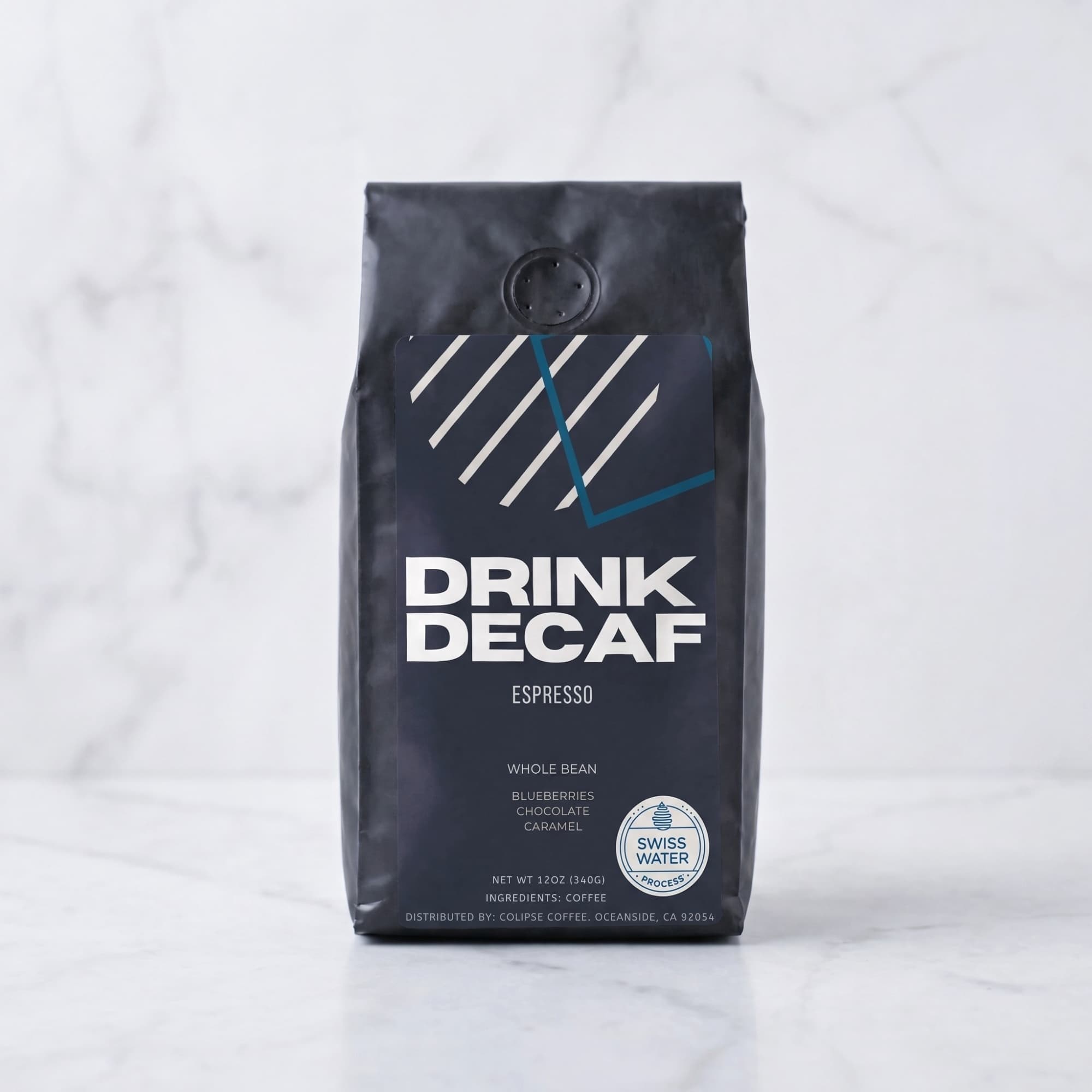
Decaf Espresso (12 oz / 340g)
Single origin, SCA 83+
$23.50
Free U.S. shipping
On every order
$0
Swiss Water Process
99.9% caffeine removed, no chemicals
This page is for informational purposes only and does not constitute medical advice. All studies linked are peer-reviewed or published by recognized health authorities. Consult your physician before making dietary changes.