Ethyl Acetate Decaf: What It Is and How It Works
Ethyl acetate decaf, or EA decaf, uses ethyl acetate to remove caffeine from coffee. Ethyl acetate is an ester that occurs naturally in fruits, including bananas and apples, and in coffee cherries. The process removes caffeine from green coffee beans through four stages, steaming, soaking in ethyl acetate, steaming again, and drying, removing 97-99% of the bean's caffeine. Regulators permit ethyl acetate for decaffeination under strict residue limits far below what a banana naturally contains, and the method trades chemical speed for a lower caffeine-removal ceiling than the chemical-free Swiss Water Process reaches.
What Is Ethyl Acetate Decaf?
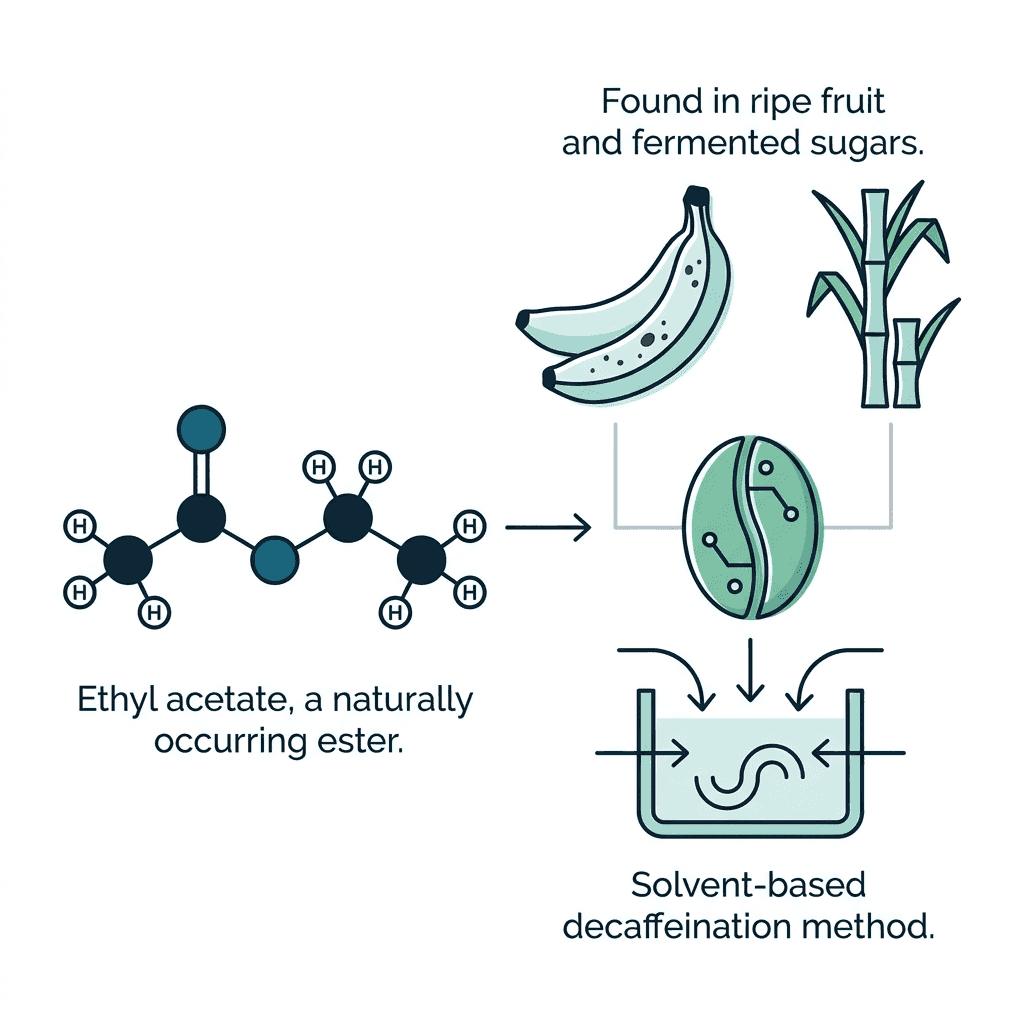
Ethyl acetate decaf, also known as the sugarcane process or EA decaf, is coffee decaffeinated with ethyl acetate, an ester found naturally in fruits like bananas, apples, and coffee cherries. Ethyl acetate is a colorless liquid with a sweet, fruity smell. Manufacturers use ethyl acetate as a solvent in nail polish remover, glues, paints, and printing inks and to decaffeinate coffee.
The ethyl acetate method uses a chemical solvent to decaffeinate coffee, similar to the methylene chloride method. Swiss Water and CO2 decaffeination use different processes without these chemical solvents.
The sugarcane process and naturally decaffeinated both describe the same decaffeination method. Coffee roasters use these names on packaging because commercial ethyl acetate often comes from fermented sugarcane instead of other feedstocks.
How Does the Ethyl Acetate Decaffeination Process Work?
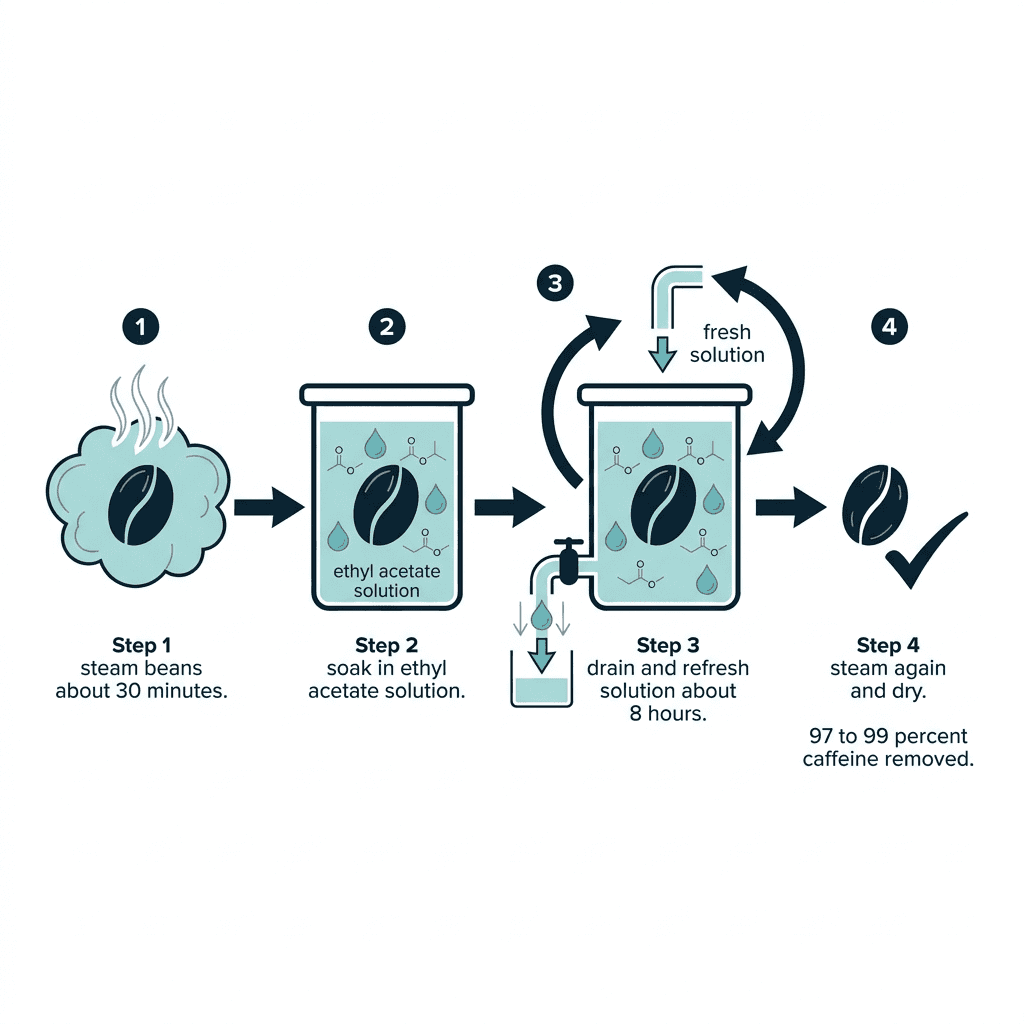
Ethyl acetate decaffeination removes caffeine from green coffee beans through four stages: steaming, soaking in ethyl acetate, steaming again, and drying. Coffee beans are first steamed for roughly 30 minutes to open their pores, then submerged in a water-and-ethyl-acetate solution that selectively bonds to caffeine molecules and pulls them out of the bean.
Ethyl acetate decaffeination repeats that soaking step, draining the caffeine-rich solution and replacing it with fresh ethyl acetate over roughly 8 hours, until 97-99% of the bean's caffeine is gone. The beans are then steamed a second time to evaporate any remaining ethyl acetate before drying, polishing, and shipping for roasting.
Where Does the Ethyl Acetate in Decaf Coffee Come From?
Ethyl acetate used to decaffeinate coffee comes from either natural or synthetic sources.
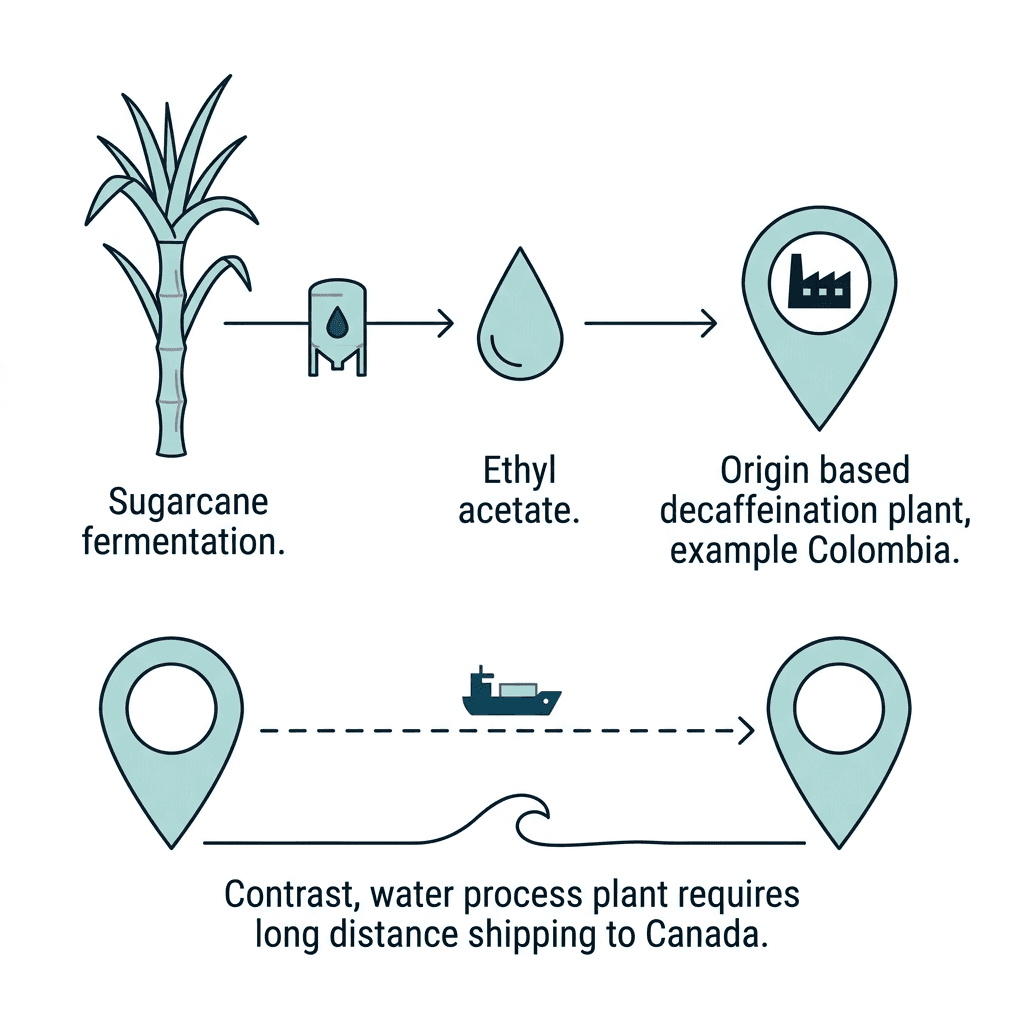
Natural ethyl acetate occurs in fruits and can be produced by fermenting plant-derived sugars, such as sugarcane. Ethyl acetate in decaf coffee typically comes from fermented sugarcane. In Colombia, dedicated decaffeination plants process coffee beans at origin.
Most industries use synthetic ethyl acetate made from ethanol and acetic acid because natural ethyl acetate is costly and impractical to produce at commercial scale. In contrast, the Descafecol plant in Manizales, Colombia, processes most specialty-grade ethyl acetate decaf coffee using ethyl acetate derived entirely from sugarcane.
Solvent-based decaffeination, including ethyl acetate and methylene chloride methods, held about 39.75% of the global decaf market in 2025. The Swiss Water Process was the fastest-growing decaffeination method during the same period. A 2018 University of Salerno review compared ethyl acetate with methylene chloride, supercritical CO2, and the Swiss Water Process. The review reported a 2 ppm EU residue limit for ethyl acetate, moderate caffeine selectivity, and no eligibility for organic certification. Drink Decaf's own decaffeination science page breaks down that full comparison.
The Count de Lauraguais first synthesized ethyl acetate in 1759, by distilling a mixture of ethanol and acetic acid. Ethyl acetate was first used to decaffeinate coffee in 1910, when the German inventors Ludwig Seisser and Heinrich Trillich separately patented ethyl acetate decaffeination processes that same year.
Is Ethyl Acetate Decaf Safe to Drink?
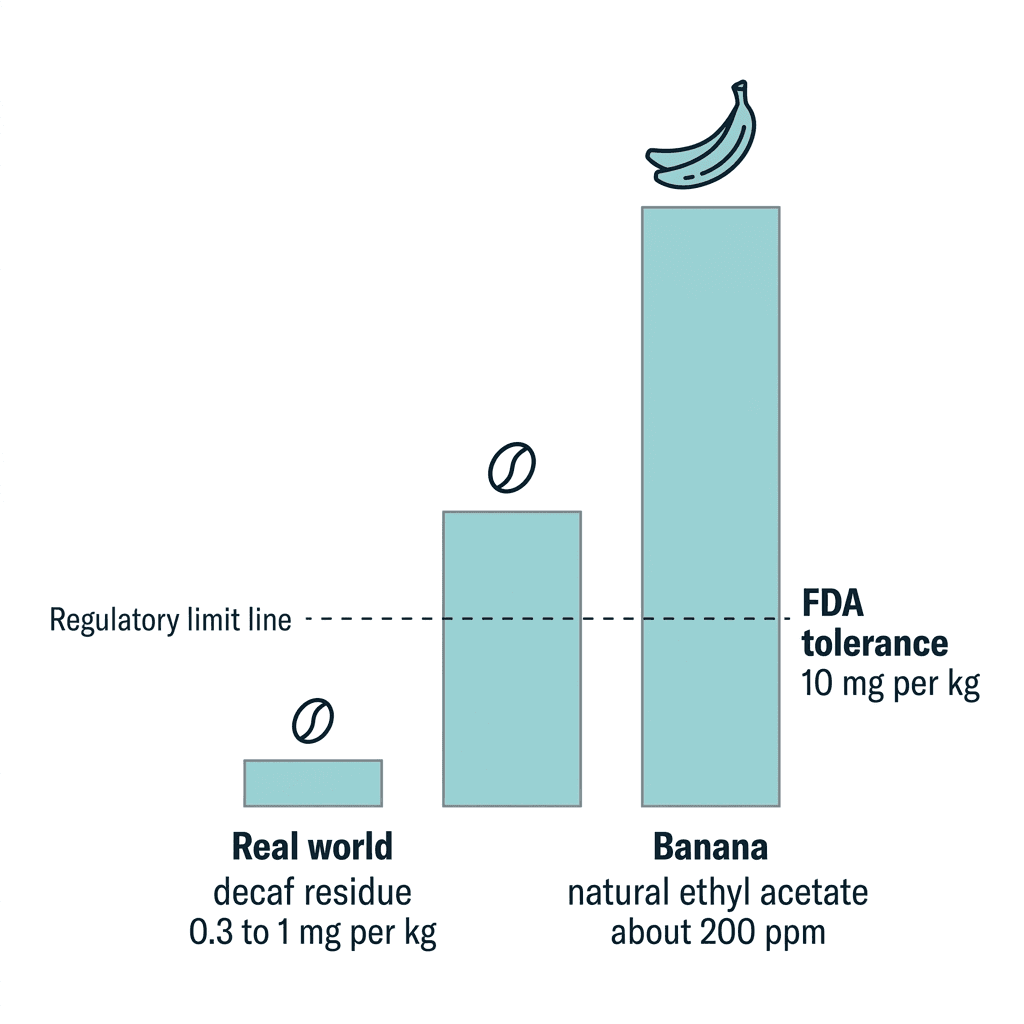
Yes, ethyl acetate decaf is safe to drink under current US and European Union (EU) food regulations. Ethyl acetate is permitted as a coffee and tea decaffeination solvent under Title 21 of the Code of Federal Regulations (CFR), section 173.228, which requires current good manufacturing practice, and the commonly cited practical tolerance for residual ethyl acetate in finished decaf is 10 mg/kg (milligrams per kilogram) in the US and 2 mg/kg in the EU.
Residual ethyl acetate levels in well-processed decaf typically finish at 0.3-1 mg/kg, well under both limits. A banana naturally contains roughly 200 ppm (parts per million) of ethyl acetate, about 20 times the Food and Drug Administration's (FDA) residue tolerance for finished decaf. Ethyl acetate in large quantities is harmful to ingest regardless of its natural or synthetic origin, but the trace amounts left in coffee sit well below Environmental Protection Agency (EPA) and FDA allowable levels. The irritation risk tied to ethyl acetate applies mainly to workers handling the concentrated solvent, not to someone drinking the finished coffee.
Does Ethyl Acetate Decaf Taste Different From Regular Coffee?
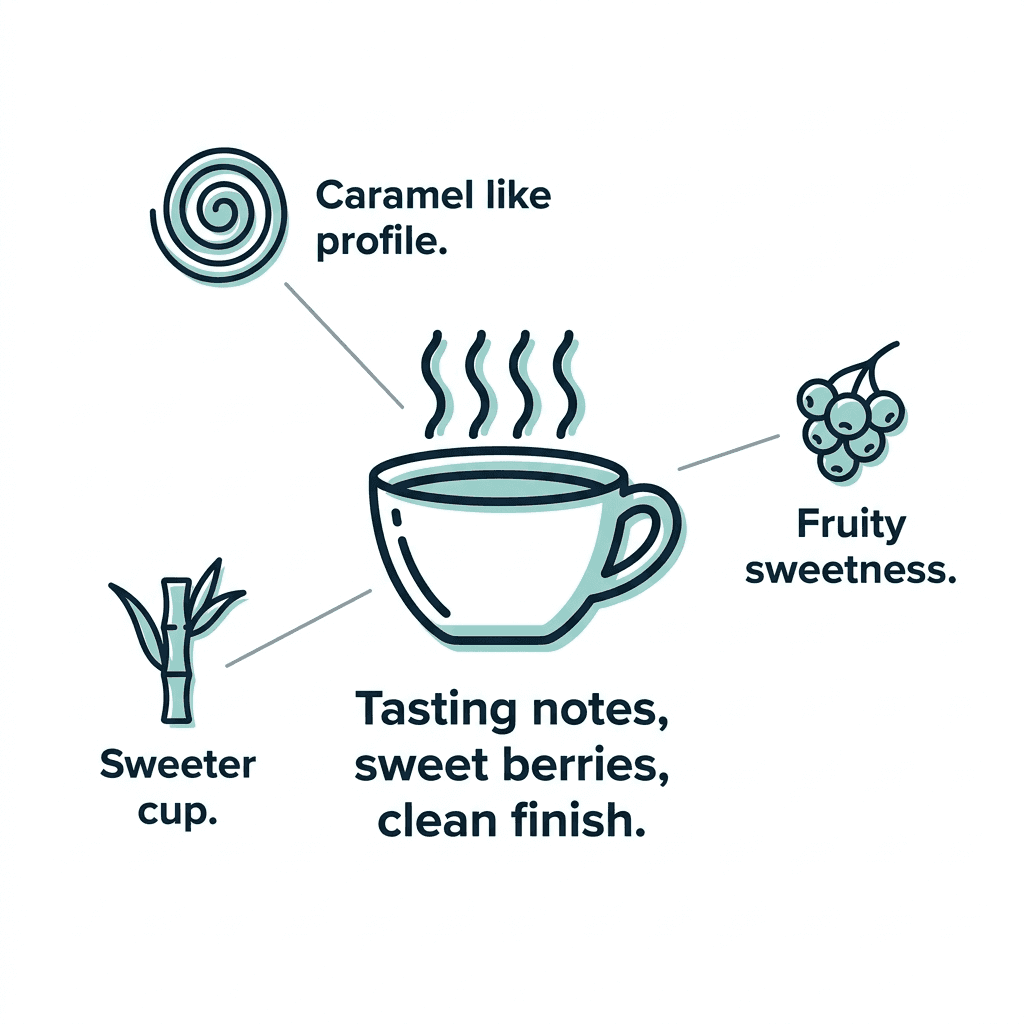
Yes, ethyl acetate decaf can taste noticeably different from regular coffee, usually in ways roasters describe as favorable. Producers report a sweeter cup with a smooth, caramel-like profile and fruity sweetness, which they attribute to the sugarcane-derived solvent itself.
Clarity Coffee describes its single-origin Colombian ethyl acetate decaf, Los Idilos, as carrying tasting notes of sweet berries with an extremely clean finish, comparable to a fully washed Ethiopian coffee. Some coffee drinkers report a slight residual taste from ethyl acetate decaffeination, though producers describe that effect as minimal.
How Does Ethyl Acetate Decaf Compare to the Swiss Water Process?
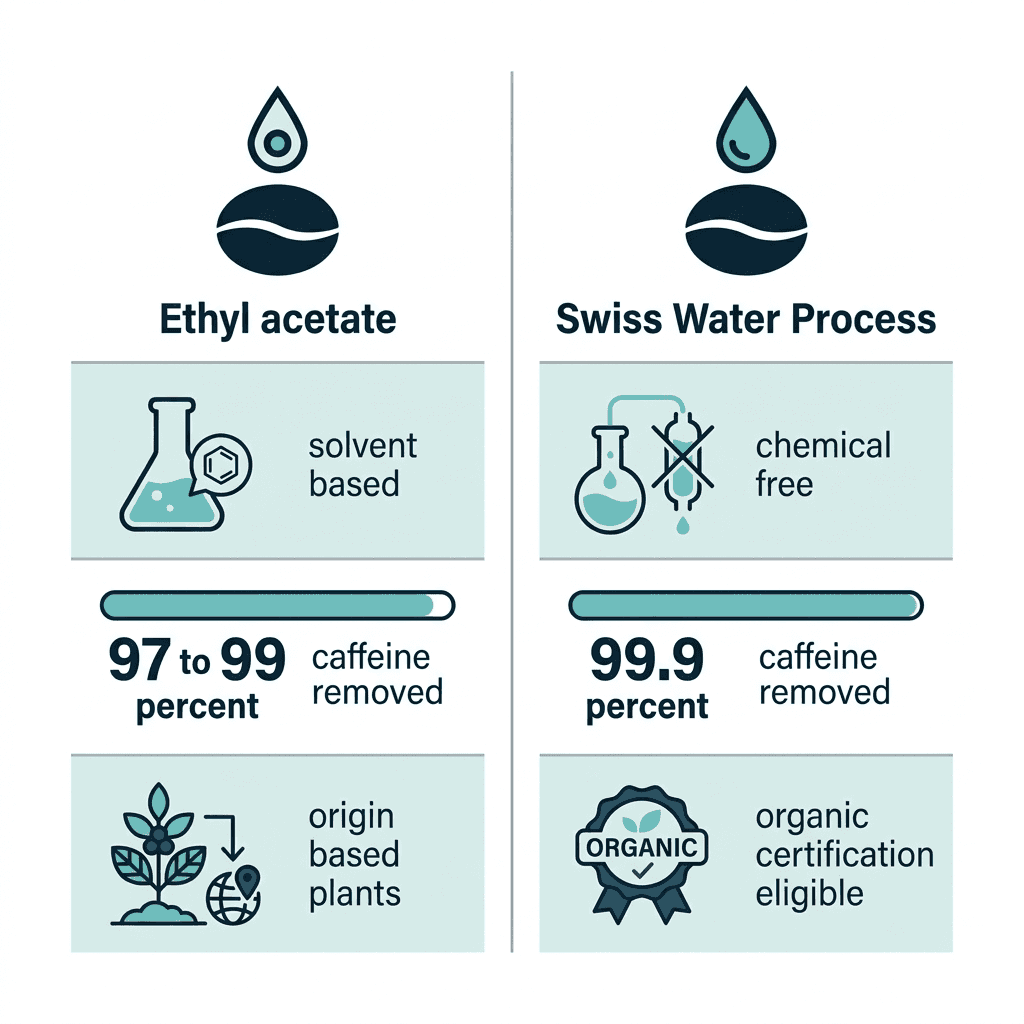
Ethyl acetate decaf and the Swiss Water Process differ mainly in how they remove caffeine. Ethyl acetate decaf uses ethyl acetate as a solvent to extract caffeine from coffee beans. The Swiss Water Process removes caffeine without chemical solvents, using water, temperature, time, and filtration.
The Swiss Water Process is commonly marketed at 99.9% caffeine removal, a higher published figure than ethyl acetate's own 97-99%. Ethyl acetate decaffeination finishes faster and suits large-scale operations, while the Swiss Water Process takes a few hours longer without becoming a practical availability issue. Ethyl acetate decaffeination plants operate at coffee origin, including Colombia, avoiding the shipping distance the Swiss Water Process requires to and from its Burnaby, British Columbia facility. The Swiss Water Process's chemical-free method also preserves organic certification eligibility in a way solvent-based methods like ethyl acetate cannot.
How to Find Which Coffee Brands Use Ethyl Acetate Decaf?
Most decaf packaging never states which method was used, so ethyl acetate and Swiss Water decafs often sit side by side with no way to tell them apart on sight. Drink Decaf's free Check Your Decaf tool searches over 3,000 decaf coffee brands to show which decaffeination method each one actually used. Answer one quick question about how your decaf is made, or look up a specific brand by name, to see whether it relies on ethyl acetate, methylene chloride, or a chemical-free process.
12 oz · Whole bean
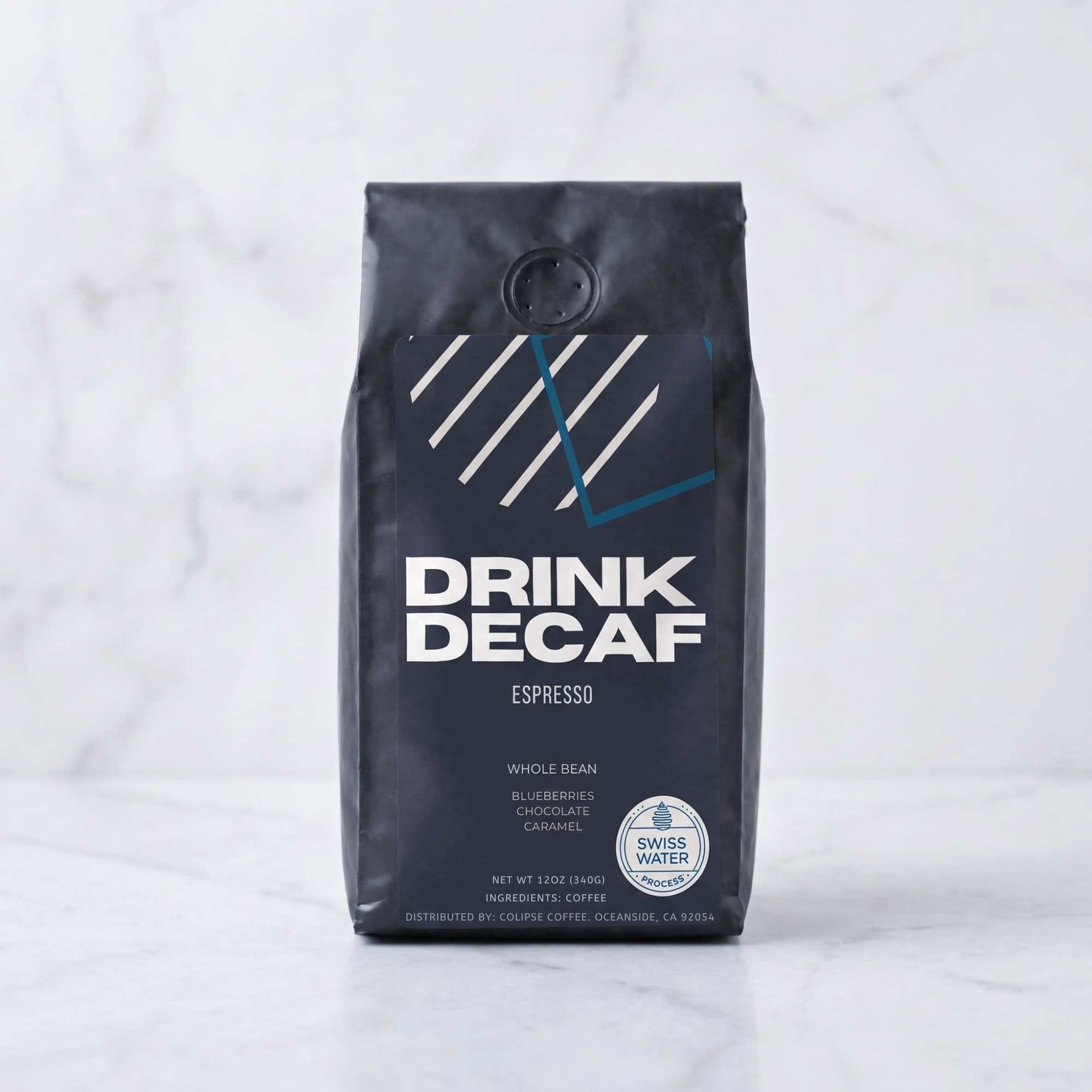
Drink Decaf EspressoSpecialty grade. Swiss Water Process® decaffeinated. Roasted to order at our California roastery. Blueberry, chocolate, caramel.
Free shipping in the US