Where to Buy Swiss Water Decaf Coffee
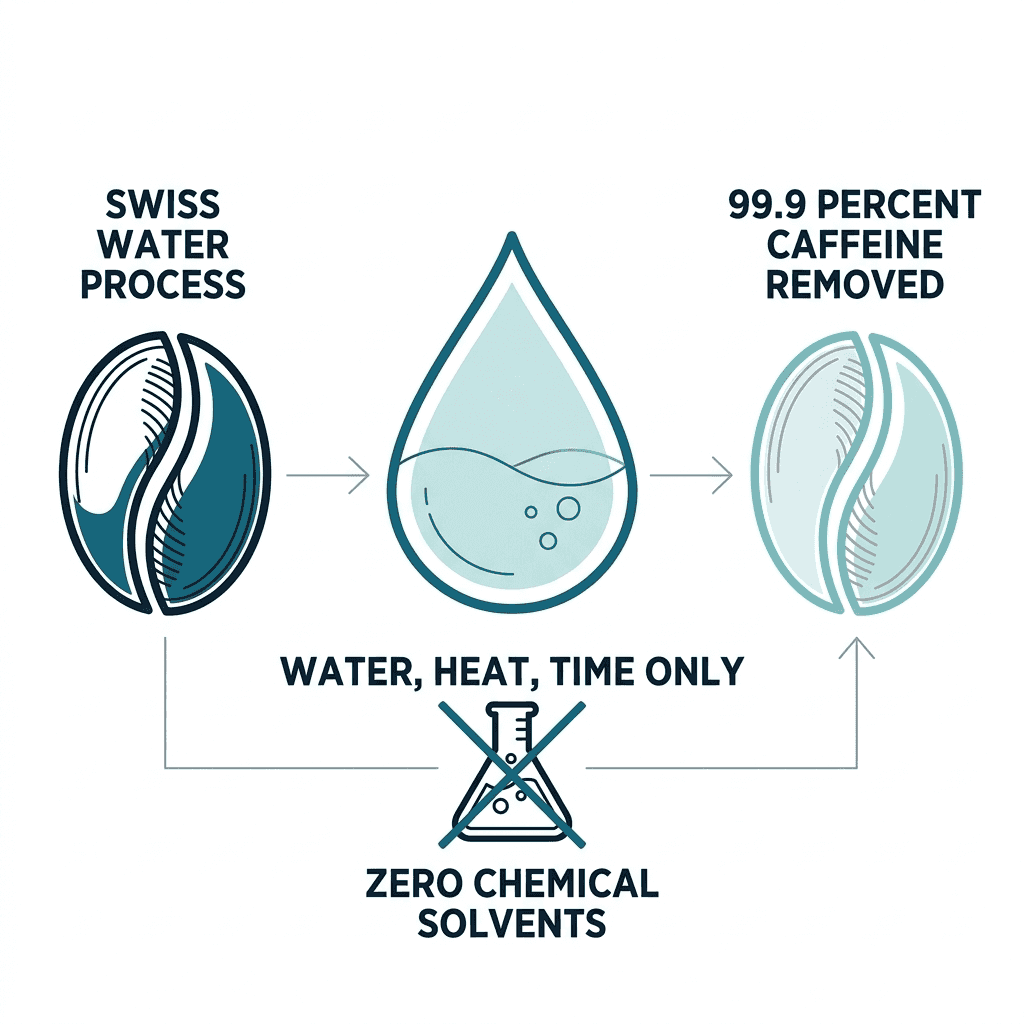
The Swiss Water Process is a patented decaffeination method that uses only water, heat, and time to remove about 99.9% of a coffee's caffeine, with no chemical solvents touching the beans. Swiss Water itself runs a retailer locator on its own site, and its own online shop plus individual roasters sell decaf processed this way directly. Compared with chemical-solvent decaf, the water-based method preserves more of a coffee's original flavor and certifications while avoiding solvent residue, which is why it's considered both safe and close in taste to regular coffee.
What Is the Swiss Water Process?
The Swiss Water Process is a patented decaffeination method that uses only water, heat, and time. The method removes about 99.9% of a coffee's caffeine, with no chemical solvents touching the beans.
Swiss Water Decaffeinated Coffee Inc. owns the process and runs its own plant in Vancouver, British Columbia. The method preserves a coffee's origin flavor characteristics because it avoids esters and solvents entirely, unlike most other decaffeination routes.
How Does the Swiss Water Process Remove Caffeine?
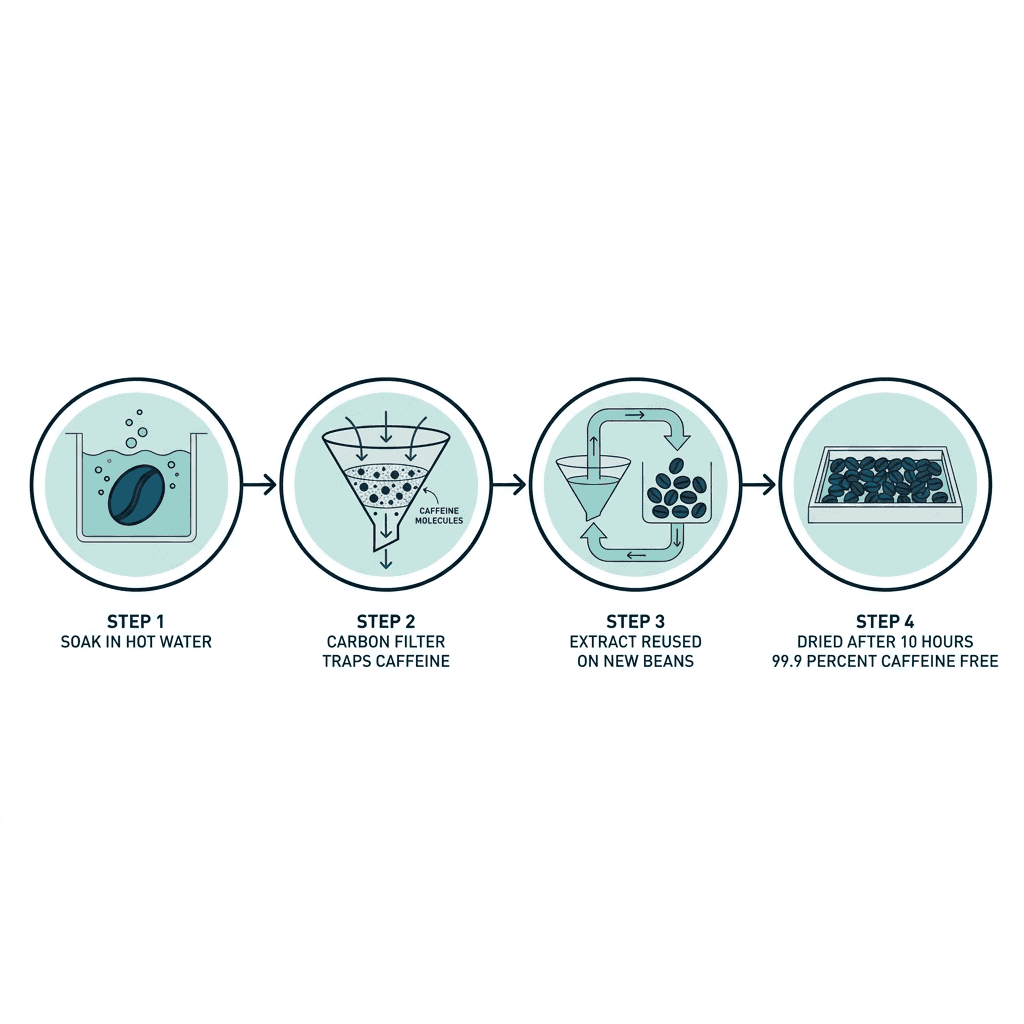
Green, unroasted coffee beans soak in hot water first. The soak opens the beans' pores and starts pulling out caffeine along with flavor compounds.
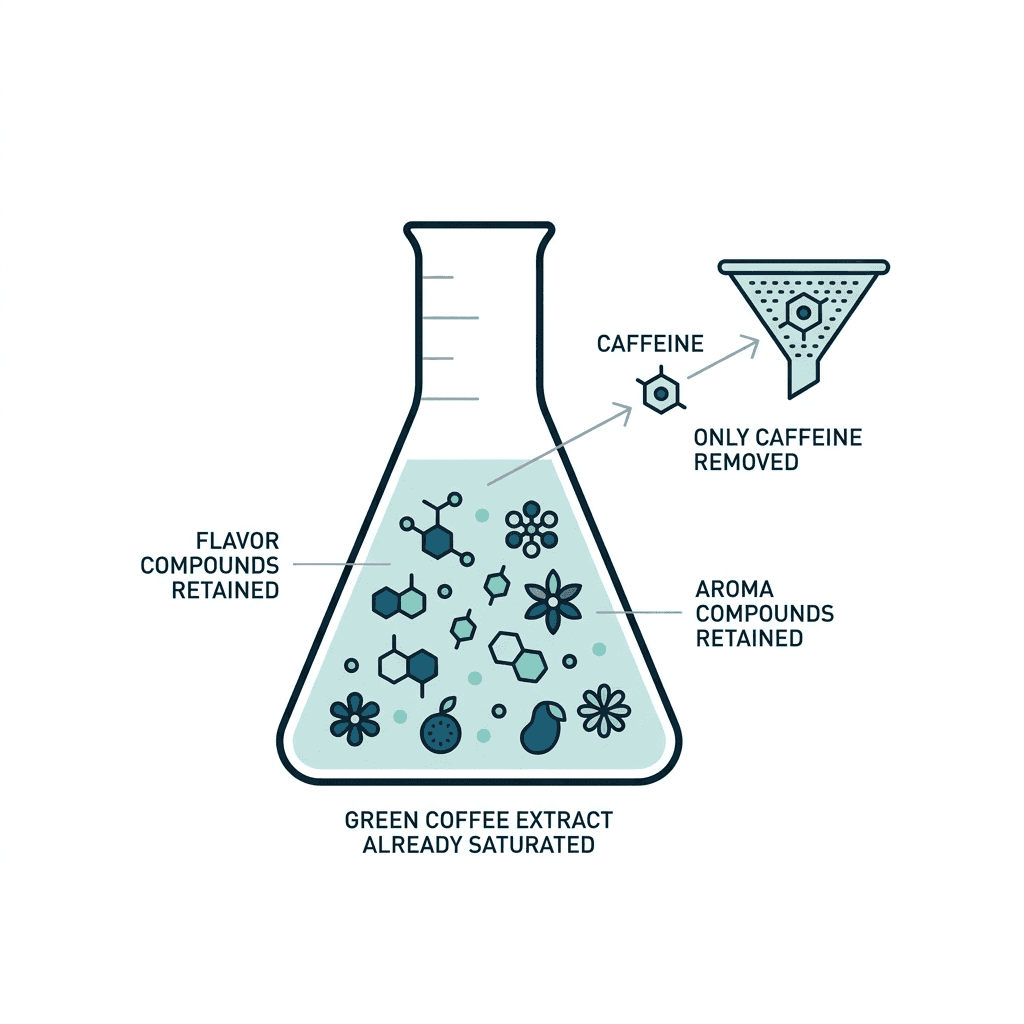
The caffeine-laden water then passes through activated carbon filters that trap only the caffeine molecules, producing what's called Green Coffee Extract (GCE). Roasters reuse that GCE on a fresh batch of beans. Because the GCE is already saturated with every flavor compound except caffeine, only caffeine migrates out of the new beans through osmosis. Their flavor stays intact as a result. The soak-and-filter cycle repeats, sometimes over a monitored 10-hour window, until the beans reach roughly 99.9% caffeine-free. The beans are then dried and prepared for roasting.
Where Can You Buy Swiss Water Decaf Coffee?
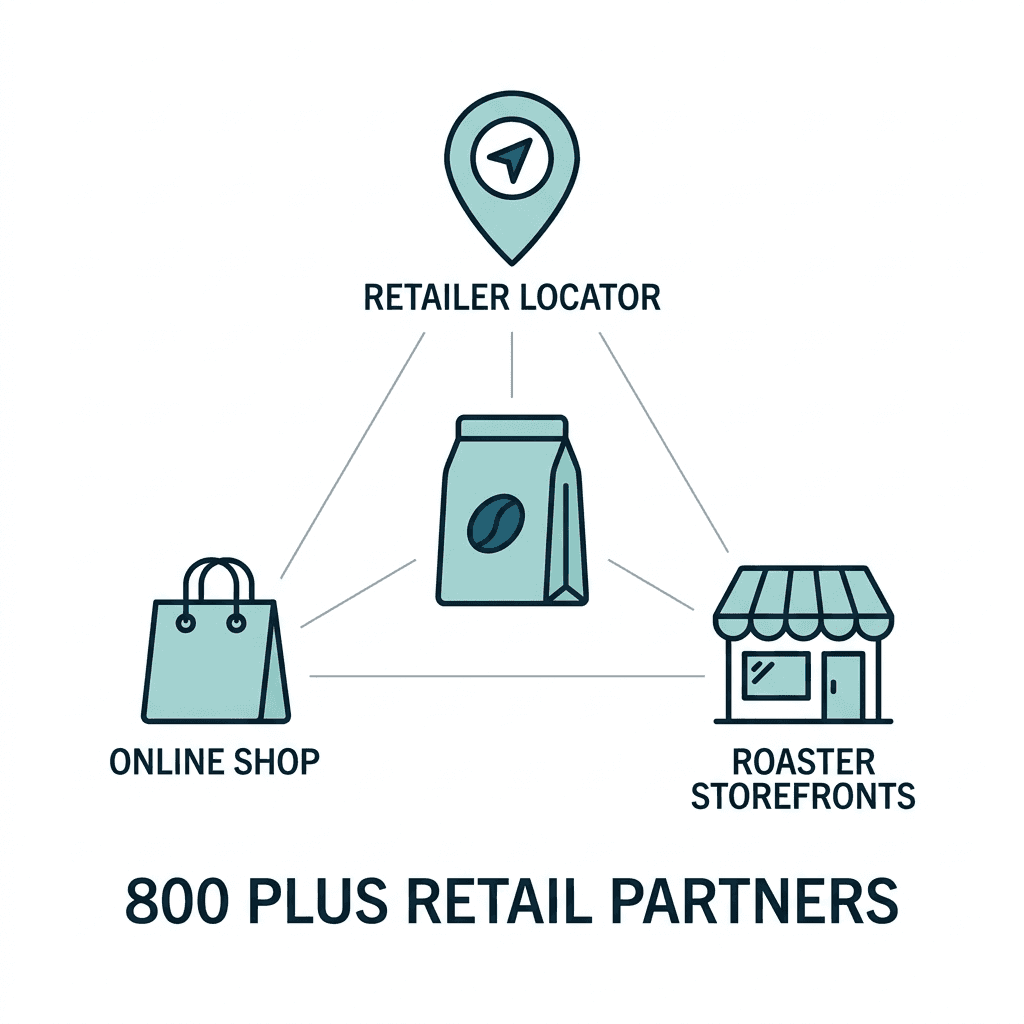
Swiss Water itself runs a retailer locator on its own site, listing partner cafes and shops that sell coffee decaffeinated with its process. The company notes the list isn't exhaustive.
Swiss Water's own online shop carries dozens of decaf coffees from independent roasters processed with its method, along with a rotating decaf subscription and gift cards. Many individual roasters also sell their Swiss Water decaf directly through their own sites and through major retailers. Comparing Swiss Water decaf coffee brands side by side on roast level, certifications, and price helps narrow the search before you buy. When buying anywhere, check the package for the Swiss Water logo or wordmark to confirm the process used.
How Do You Identify Swiss Water Decaf on a Label?
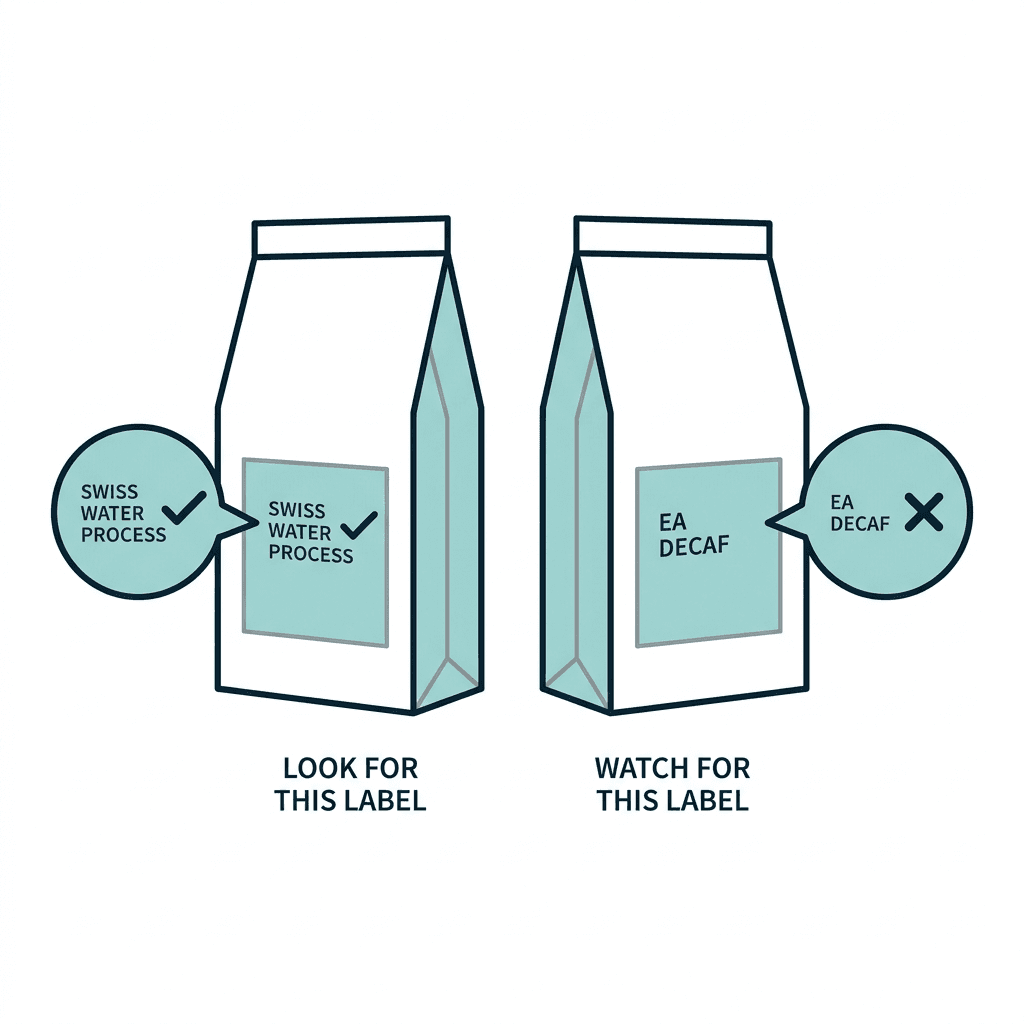
Look for the exact terms "Swiss Water Process" or "solvent-free" printed on the package. Roasters using the method typically display the trademarked Swiss Water badge as well.
Watch for the opposite signal too. Labels reading "EA decaf" or "sugarcane decaf" point to ethyl acetate, a solvent-based method sometimes marketed as natural despite being a different process from Swiss Water.
How Is Swiss Water Decaf Different From Chemical-Processed Decaf?
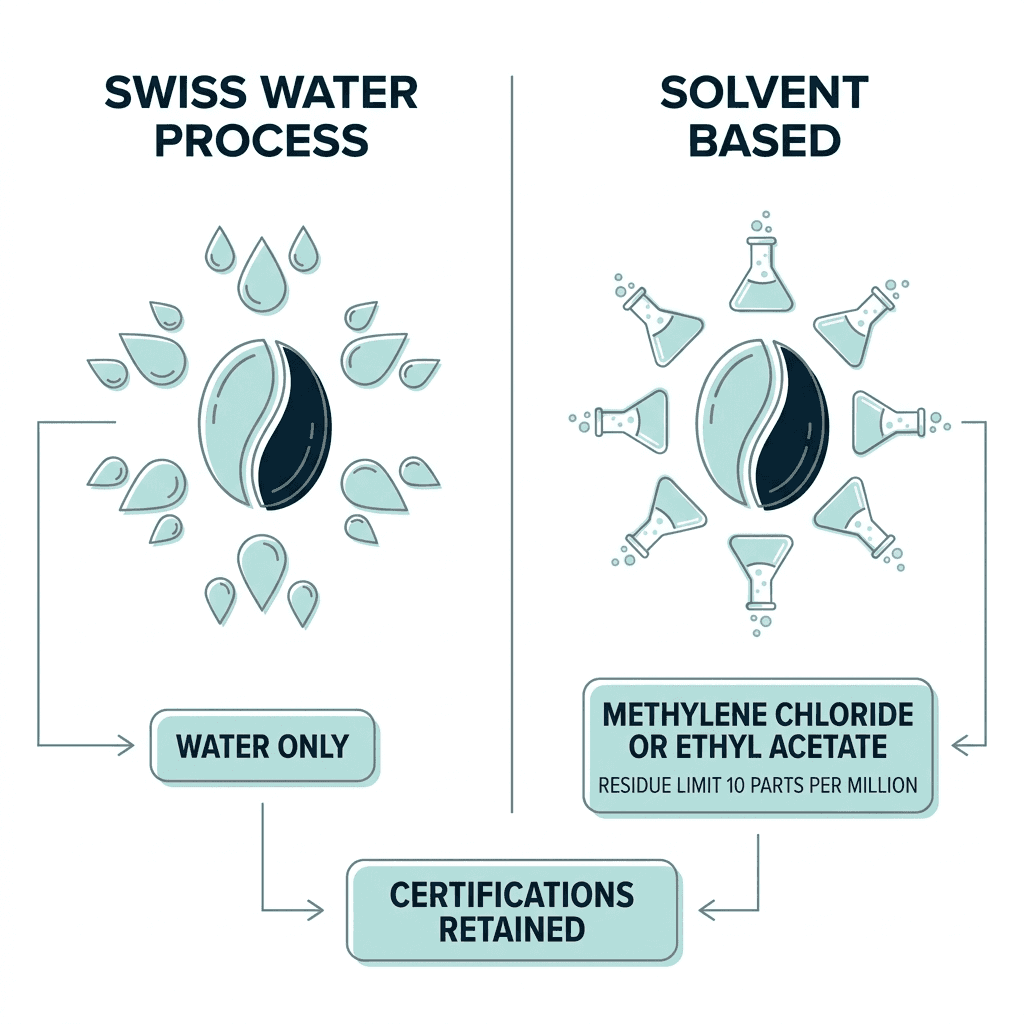
Swiss Water uses only water, temperature, and time. Solvent-based methods instead use a chemical solvent, methylene chloride or ethyl acetate, that extracts caffeine directly from the beans.
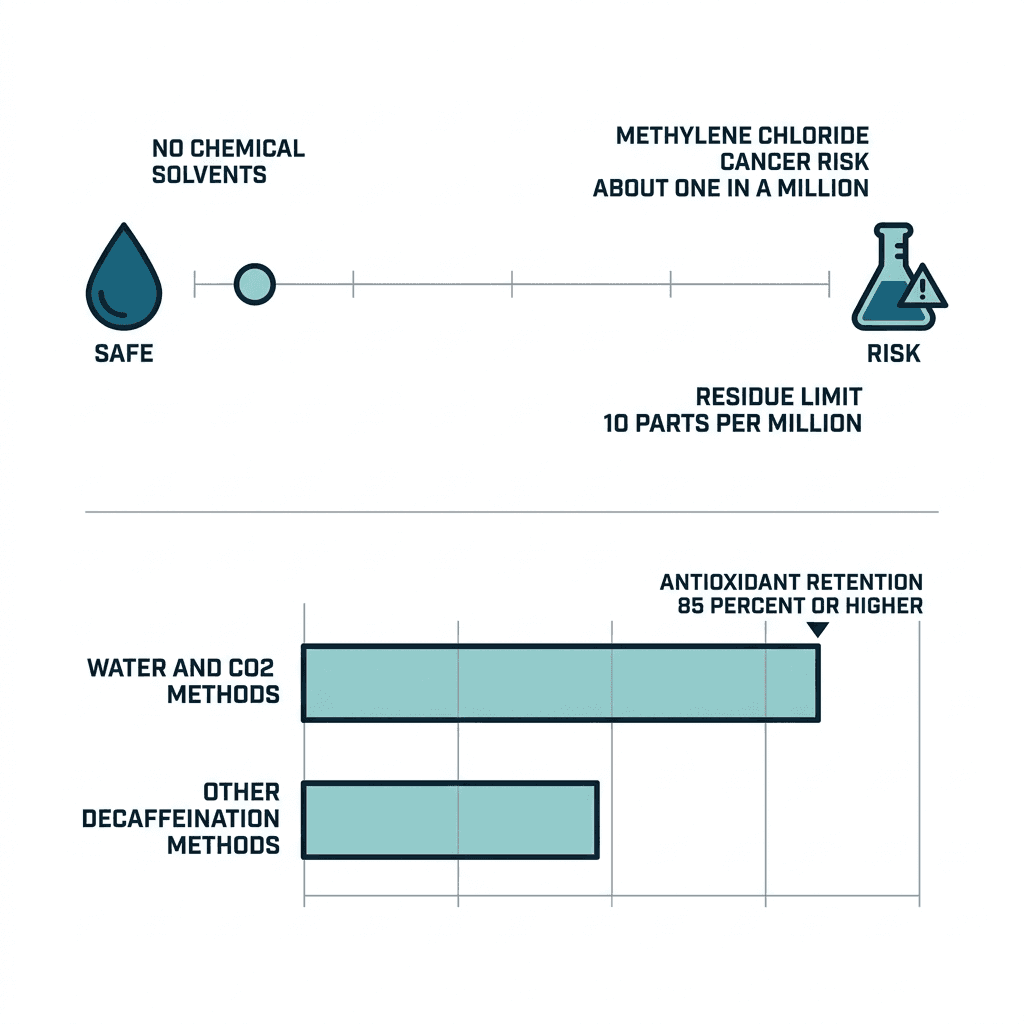
The two methods diverge most in flavor and certification impact. Repeated steaming and solvent exposure in solvent-based decaf can strip volatile aromatic compounds, leaving a flatter cup with less origin clarity. The water-based method is widely described as the most transparent option for preserving a coffee's original cup profile. Because no solvents touch the beans, Swiss Water Process coffee also retains pre-decaffeination certifications, such as Organic, that a chemical-solvent process can't guarantee. On safety, methylene chloride has a carcinogen classification from the National Toxicology Program (NTP), the Environmental Protection Agency (EPA), and the World Health Organization (WHO). The Food and Drug Administration (FDA) estimates the cancer risk from drinking methylene-chloride-processed decaf daily at about one in a million, with residue in the beans capped at 10 parts per million (ppm).
Does Swiss Water Decaf Taste Like Regular Coffee?
Swiss Water decaf tastes close to its caffeinated counterpart, according to consistent claims across roasters and the process's own design. The GCE used in the process is already saturated with every flavor compound except caffeine, so the method is built to remove only caffeine.
Some flavor shift is still unavoidable. Every decaffeination method, including Swiss Water's, involves hydrating and re-drying the bean, which changes it somewhat. Starting from a high-quality green coffee before decaffeination helps the finished decaf taste better, regardless of which process removes the caffeine.
Is Swiss Water Decaf Coffee Safe to Drink?
Swiss Water decaf is considered safe. The process uses only water, temperature, and time, with no chemical solvents touching the beans at any stage.
Its safety case rests on that absence, not on a claim that solvent-based decaf is acutely dangerous. Methylene-chloride-processed decaf does have a carcinogen classification from the NTP, the EPA, and the WHO. The FDA's own estimate puts the added cancer risk from daily consumption at about one in a million. Decaffeination in general, including the Swiss Water method, doesn't meaningfully strip out coffee's antioxidant compounds either. Retention generally stays at 85% or higher compared with regular coffee, with water-based and carbon dioxide (CO2) methods preserving them best among decaffeination routes.
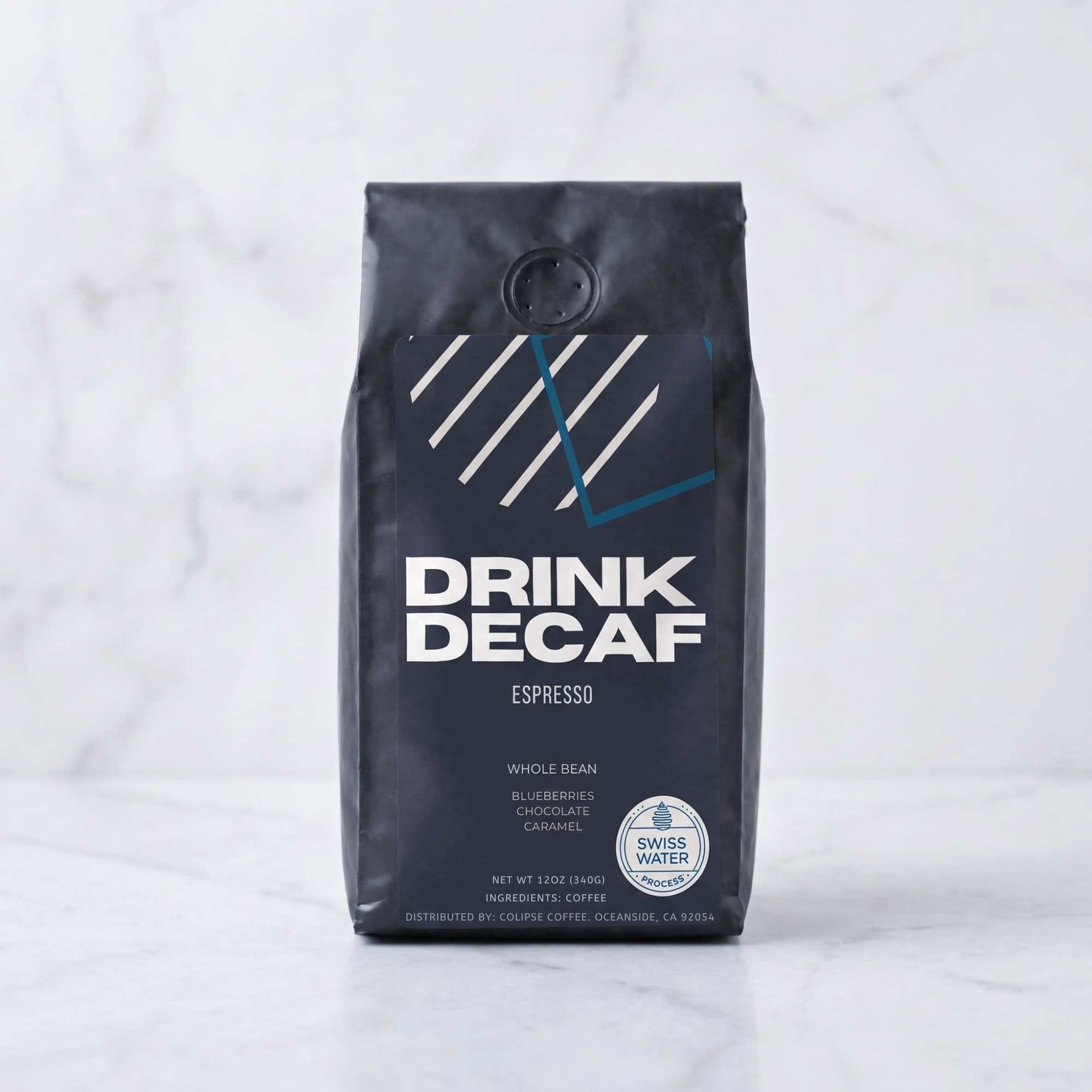
12 oz · Whole bean
Drink Decaf EspressoSpecialty grade. Swiss Water Process® decaffeinated. Roasted to order at our California roastery. Blueberry, chocolate, caramel.
Free shipping in the US