How Does Starbucks Decaffeinate Their Coffee?
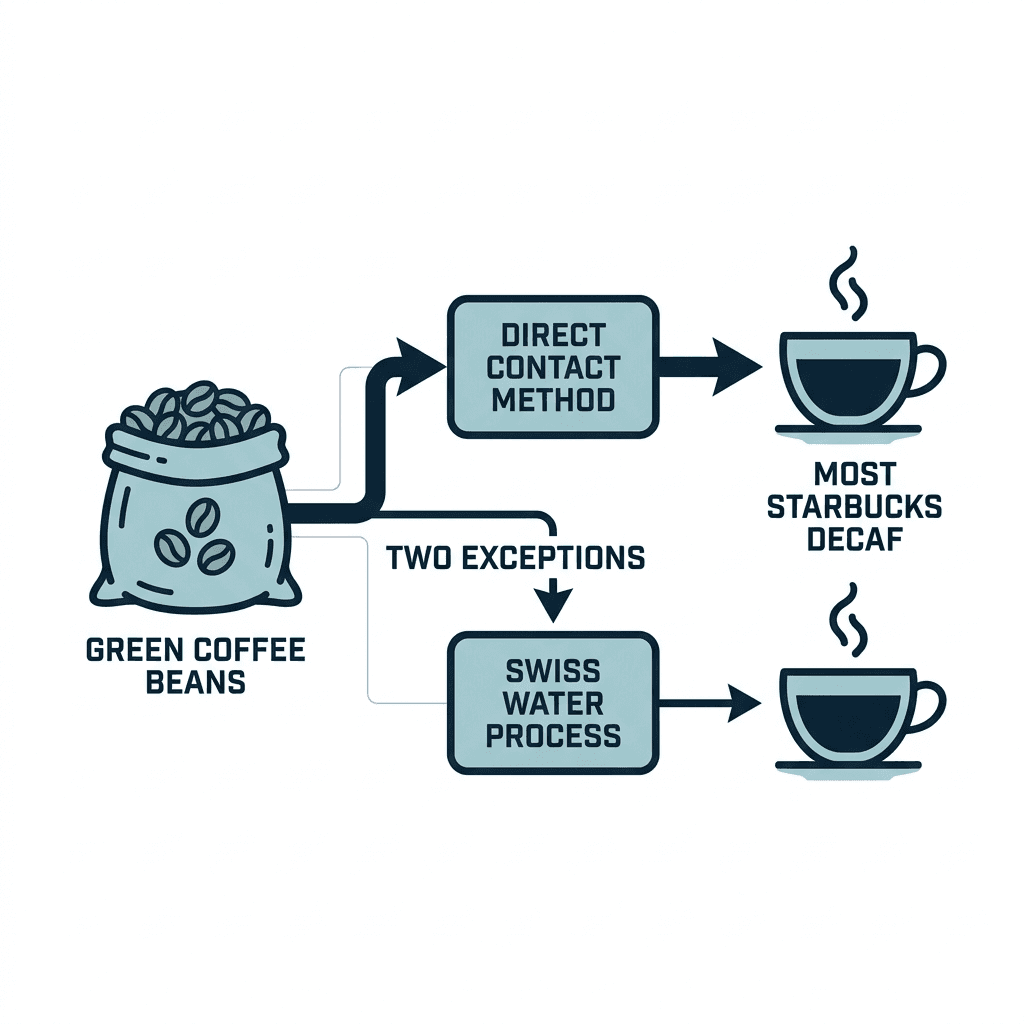
Starbucks decaffeinates most of its decaf coffee using the Direct Contact Method, a solvent-based process it relies on for the majority of its decaf offerings. That method uses methylene chloride, a chemical solvent that binds to caffeine and is removed before roasting. Two products, the decaf Komodo Dragon Blend and the VIA Instant Decaf Italian Roast, skip that process entirely in favor of the chemical-free Swiss Water Process, which strips caffeine using only water and heat. The resulting cup carries only a few mg (milligrams) of caffeine and a milder, less bitter taste than regular coffee, though independent testing has found real caffeine levels vary more than Starbucks' own marketing figure suggests.
What Method Does Starbucks Use to Decaffeinate Coffee?
Starbucks uses the Direct Contact Method to decaffeinate most of its decaf coffee. The company uses this solvent-based process for most of its decaf offerings but does not identify the process on its consumer website.
Nutritionist Monica Reinagel, MS, LD/N, CNS, host of the Nutrition Diva podcast, confirmed the method directly with Starbucks after contacting the company with the question. Two products depart from this default. The exceptions use a separate, chemical-free process instead, described below.
Does Starbucks Use Chemicals to Decaffeinate Coffee?
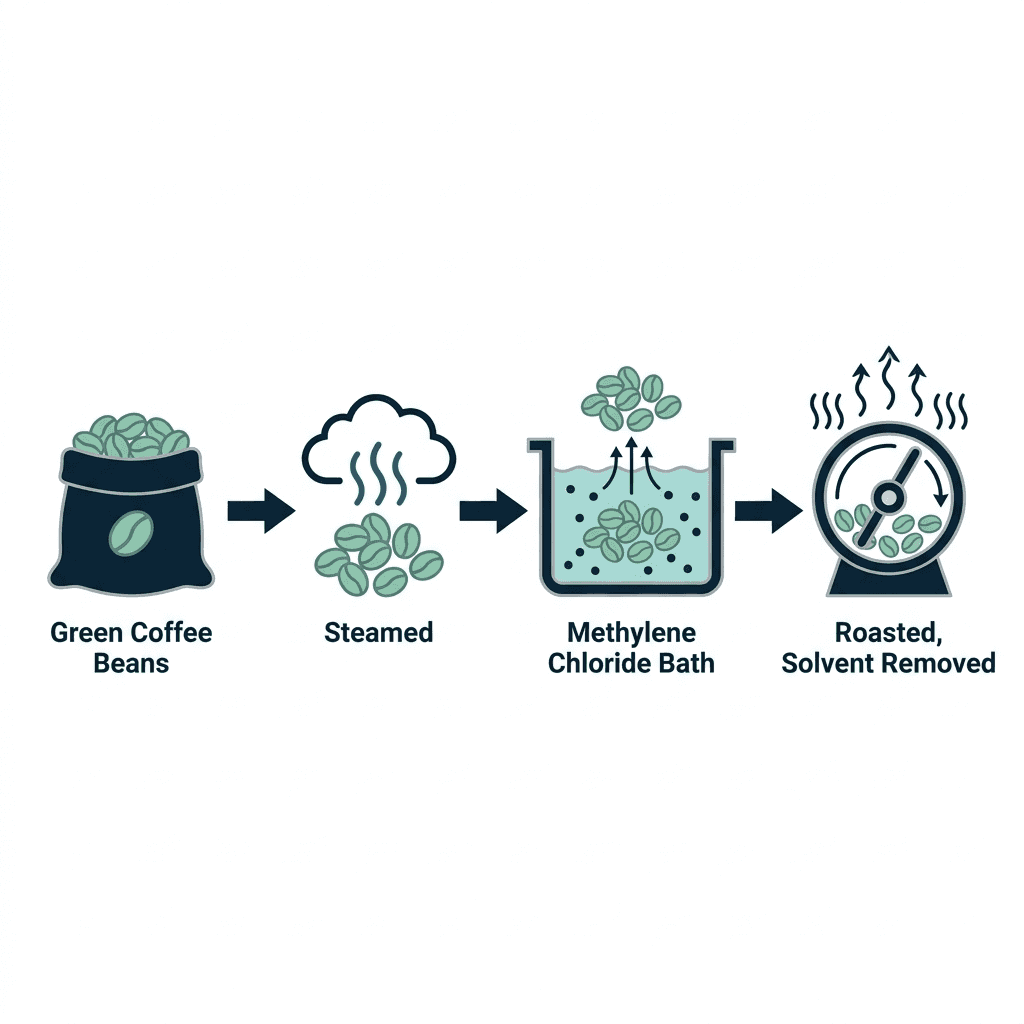
Yes. Starbucks uses methylene chloride as a solvent in the Direct Contact Method to decaffeinate most of its coffee.
Methylene chloride is a colorless industrial solvent used for paint stripping and metal degreasing. The National Toxicology Program, Environmental Protection Agency (EPA), and World Health Organization (WHO) classify methylene chloride as a carcinogen. However, the Food and Drug Administration (FDA) estimates the cancer risk from drinking multiple cups of decaf coffee per day processed this way at about one in a million.
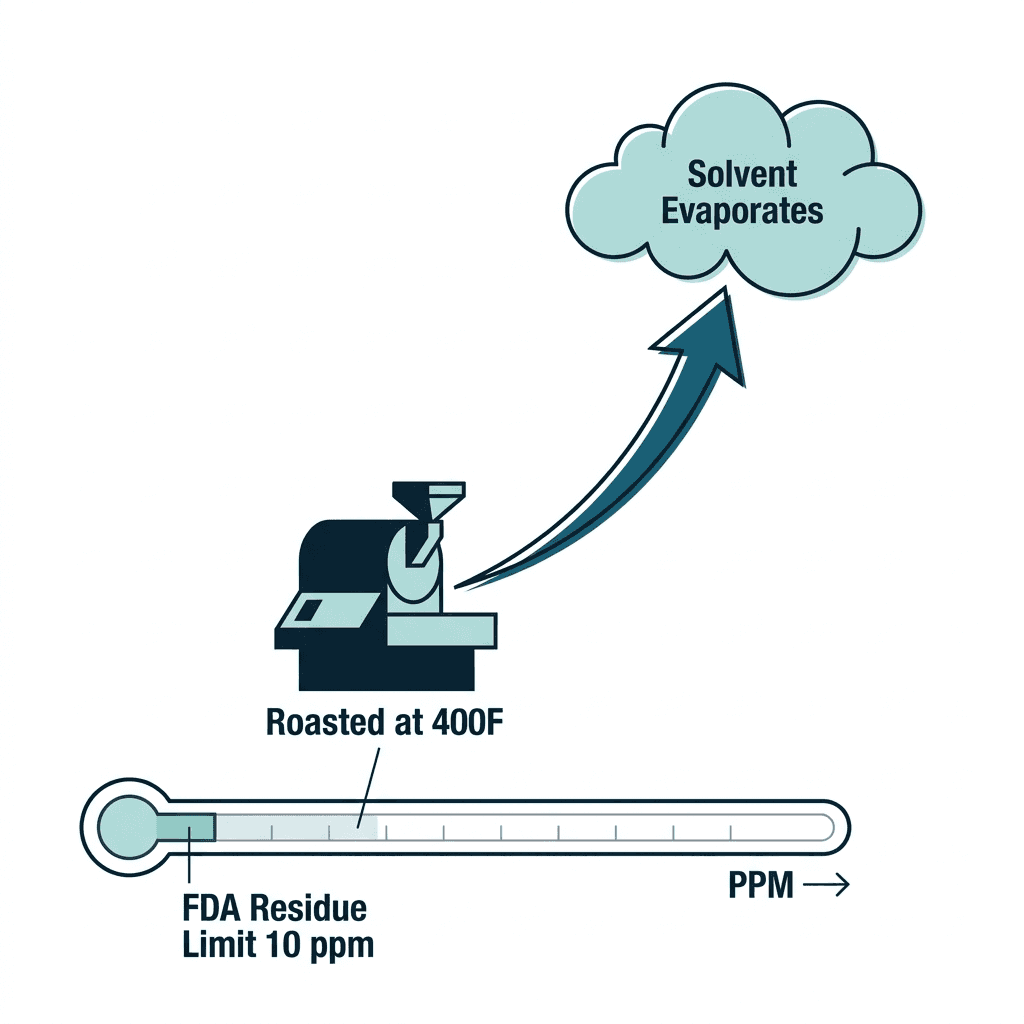
The solvent is added to green coffee beans after they are steamed for about 30 minutes to open their pores. Methylene chloride selectively binds to caffeine molecules and draws them out of the beans over roughly 10 hours of repeated rinsing, while leaving flavor compounds intact. That soak removes about 96% to 97% of the caffeine. The beans are then washed and steamed again before roasting. Methylene chloride boils at just 40 degrees Celsius (104 degrees Fahrenheit), far below coffee's roasting temperature of over 400 degrees Fahrenheit (204 degrees Celsius), so that step removes the solvent before the coffee reaches a cup.
How Does the Swiss Water Process Decaffeinate Coffee?
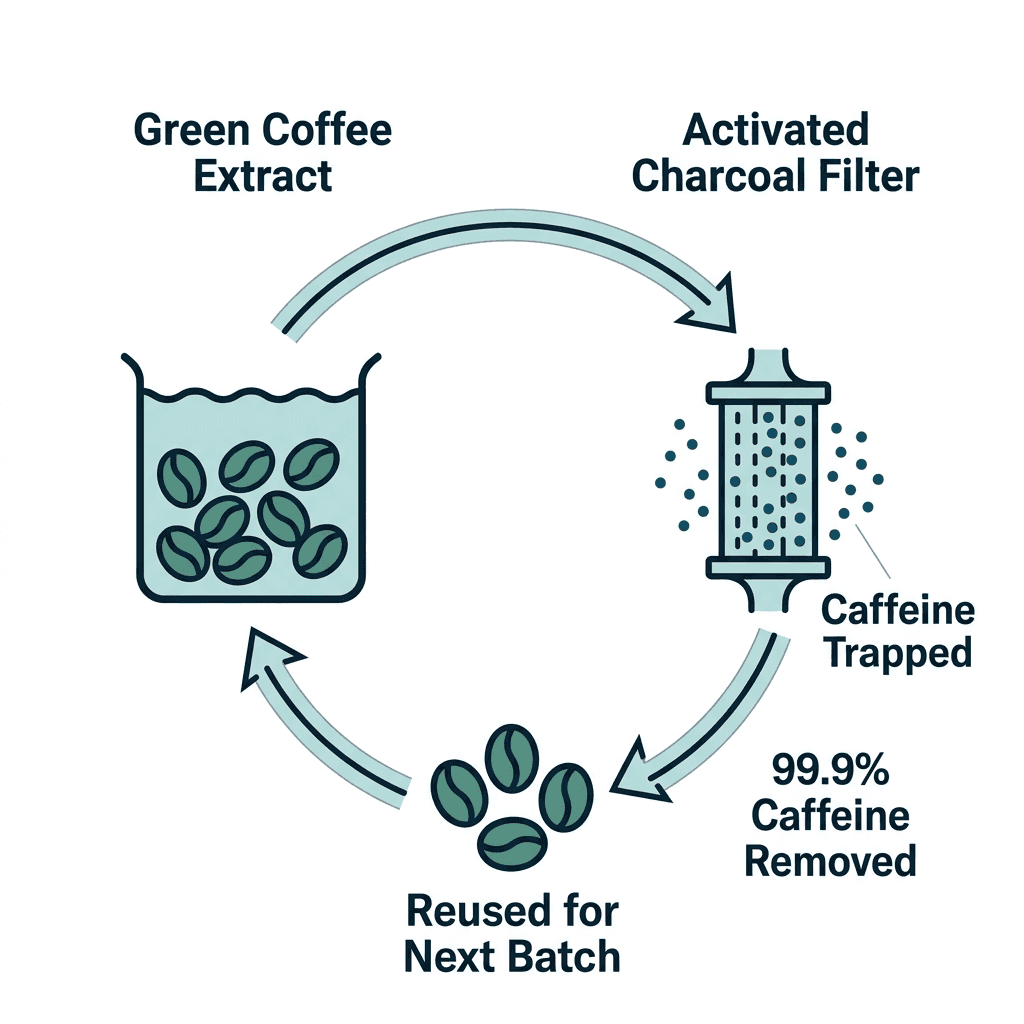
The Swiss Water Process decaffeinates coffee using only hot water, heat, and time, taking about 8 to 10 hours from start to finish. No chemical solvents touch the beans, and the process reaches about 99.9% caffeine removal.
Green coffee beans are soaked in hot water to create a caffeine-rich extract. That extract passes through activated charcoal filters. The filters trap the caffeine molecules, and flavor compounds pass through them unaffected. The caffeine-free extract is then reused to soak the next batch of beans. This process extracts caffeine from the beans without transferring flavor.
Which Starbucks Decaf Coffees Use the Swiss Water Process?
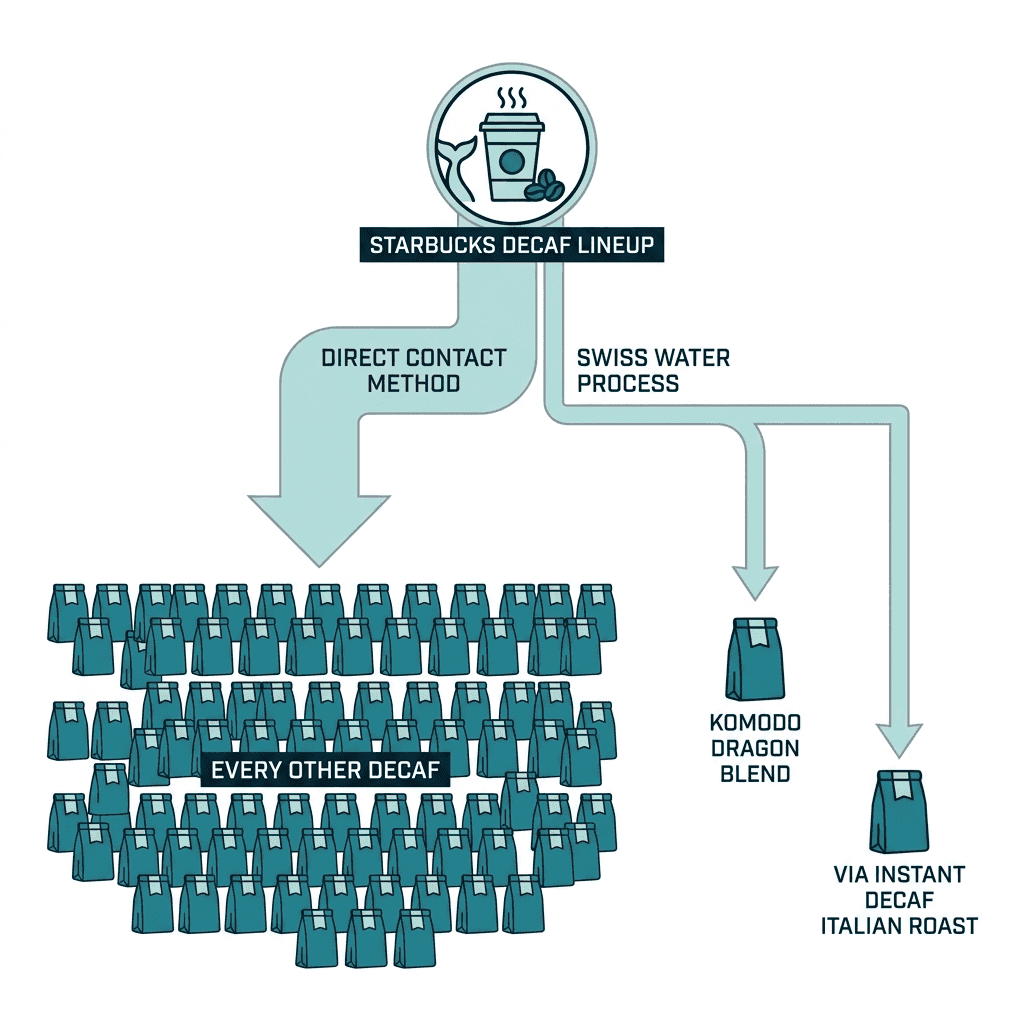
Only two Starbucks decaf coffee products use the Swiss Water Process: the decaf Komodo Dragon Blend and the VIA Instant Decaf Italian Roast. Every other Starbucks decaf coffee uses the Direct Contact Method instead.
Swiss Water labeling has not always appeared consistently on Starbucks packaging in recent reporting. The two-product split can change, so shoppers should confirm it against current packaging. Shoppers who want a chemical-free Starbucks decaf specifically should look for one of these two named products.
Is the Methylene Chloride in Starbucks Decaf Coffee Safe?
Yes, the methylene chloride in Starbucks decaf coffee is safe within the limits U.S. regulators currently allow. The FDA limits methylene chloride residue in decaf coffee to 10 ppm (parts per million).
The FDA has no rule requiring a specific percentage of caffeine removal; the widely repeated 97% figure comes from the National Coffee Association's own description of commercial decaffeination, not from a federal standard.
The EPA banned methylene chloride from most consumer and industrial uses like paint strippers, aerosol degreasers, and commercial adhesives in May 2024, but that ban does not apply to food production, so decaf coffee remains under separate FDA jurisdiction. The Environmental Defense Fund (EDF) and Environmental Working Group (EWG) jointly petitioned the FDA in December 2023 to restrict the chemical's use in decaf coffee specifically, a request the FDA has not yet acted on.
How Much Caffeine Is in Starbucks Decaf Coffee?
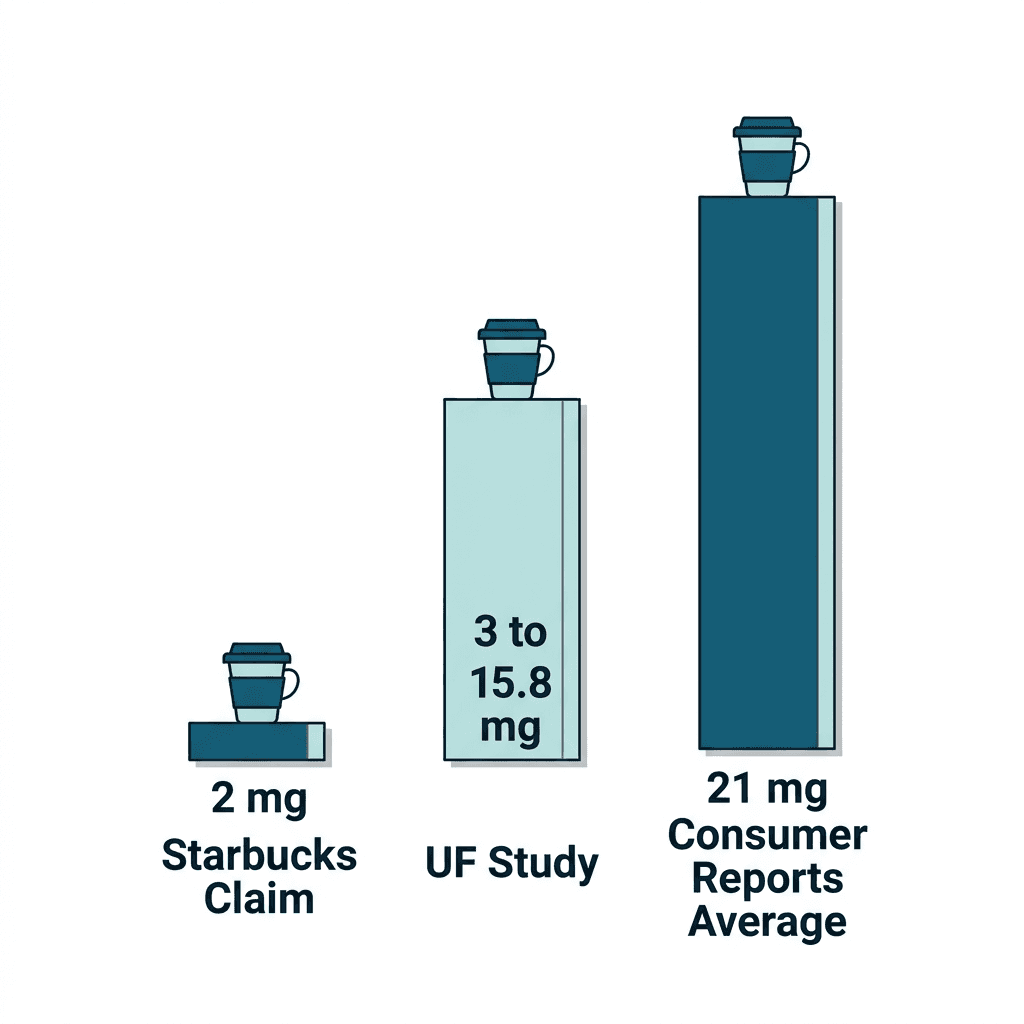
Starbucks states a typical 8 oz (ounce) cup of its decaf coffee carries about 2 milligrams of caffeine, compared with roughly 95 milligrams in a regular 8-ounce cup.
Independent testing has found higher real-world figures. A University of Florida College of Medicine study measured 3.0 to 15.8 milligrams per Starbucks decaf espresso shot and 12.0 to 13.4 milligrams per 16-ounce Starbucks decaf brewed serving. The same gap between marketing figures and measured caffeine content in decaf coffee shows up across other chains like Dunkin' Donuts and Seattle's Best too, not just Starbucks. A 2007 Consumer Reports test of six national coffee chains found Starbucks decaf averaging 21 milligrams. That figure was an outlier; most cups the test measured carried under 5 milligrams of caffeine.
Does Decaffeination Change the Taste of Starbucks Coffee?
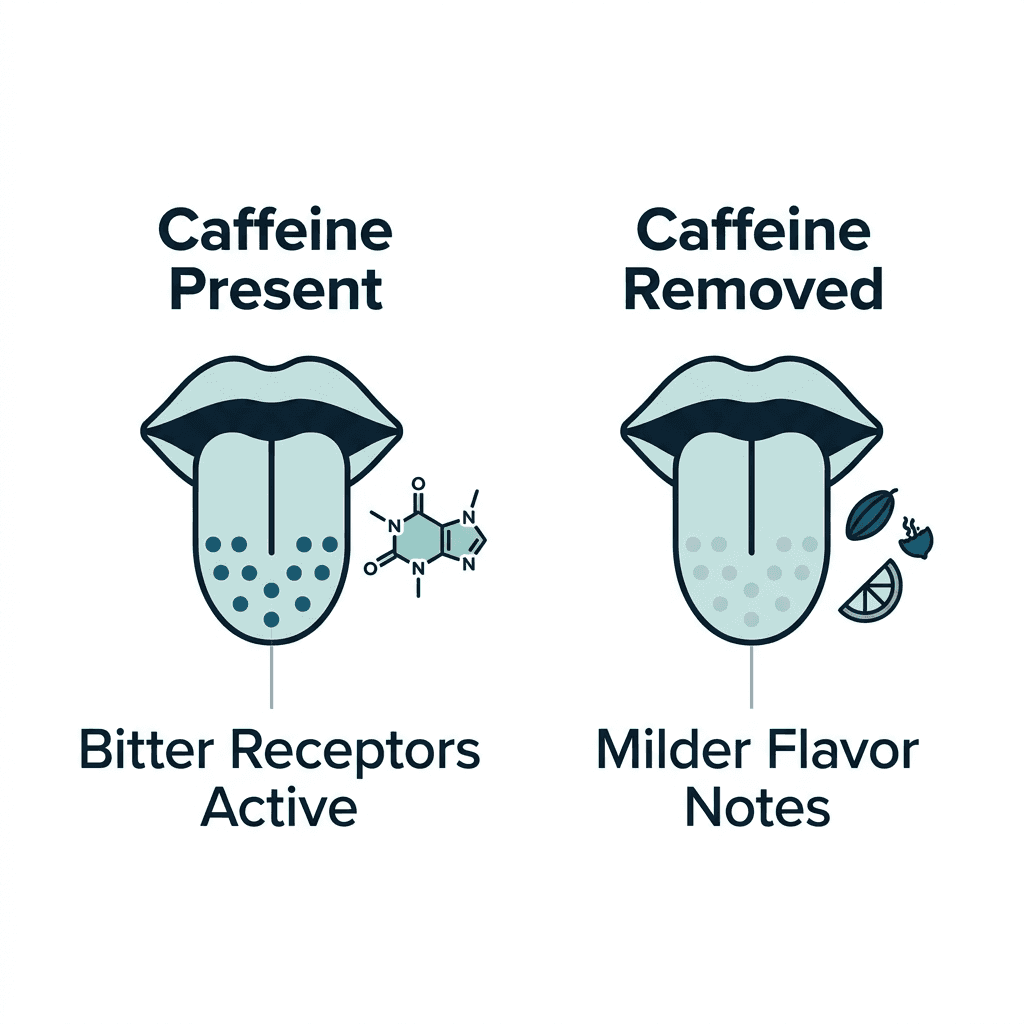
Yes. Decaffeination changes the taste of Starbucks coffee, making it milder and less bitter than regular coffee. Caffeine itself activates bitter taste receptors on the tongue. Removing it lets other flavor notes come through more clearly.
Decaffeination also strips some aroma compounds from Starbucks decaf coffee along with the caffeine. That loss is why some experienced coffee drinkers notice subtle differences, even though most of the flavor is preserved. Starbucks roasts its decaffeinated beans the same way it roasts regular beans. That roast brings out aroma, acidity, and body after the caffeine has been removed.
How Do You Check Which Starbucks Coffees Use Chemicals?
Starbucks names only two of its decaf coffees as Swiss Water Process, and its own packaging rarely states which method the rest use. Drink Decaf's free Check Your Decaf tool searches over 3,000 decaf coffee brands to show which decaffeination method each one actually used. Answer one quick question about how your decaf is made, or look up a specific Starbucks product by name, to see whether it relies on methylene chloride or a chemical-free process. The tool draws on published brand and packaging information, the same sourcing used throughout this article.
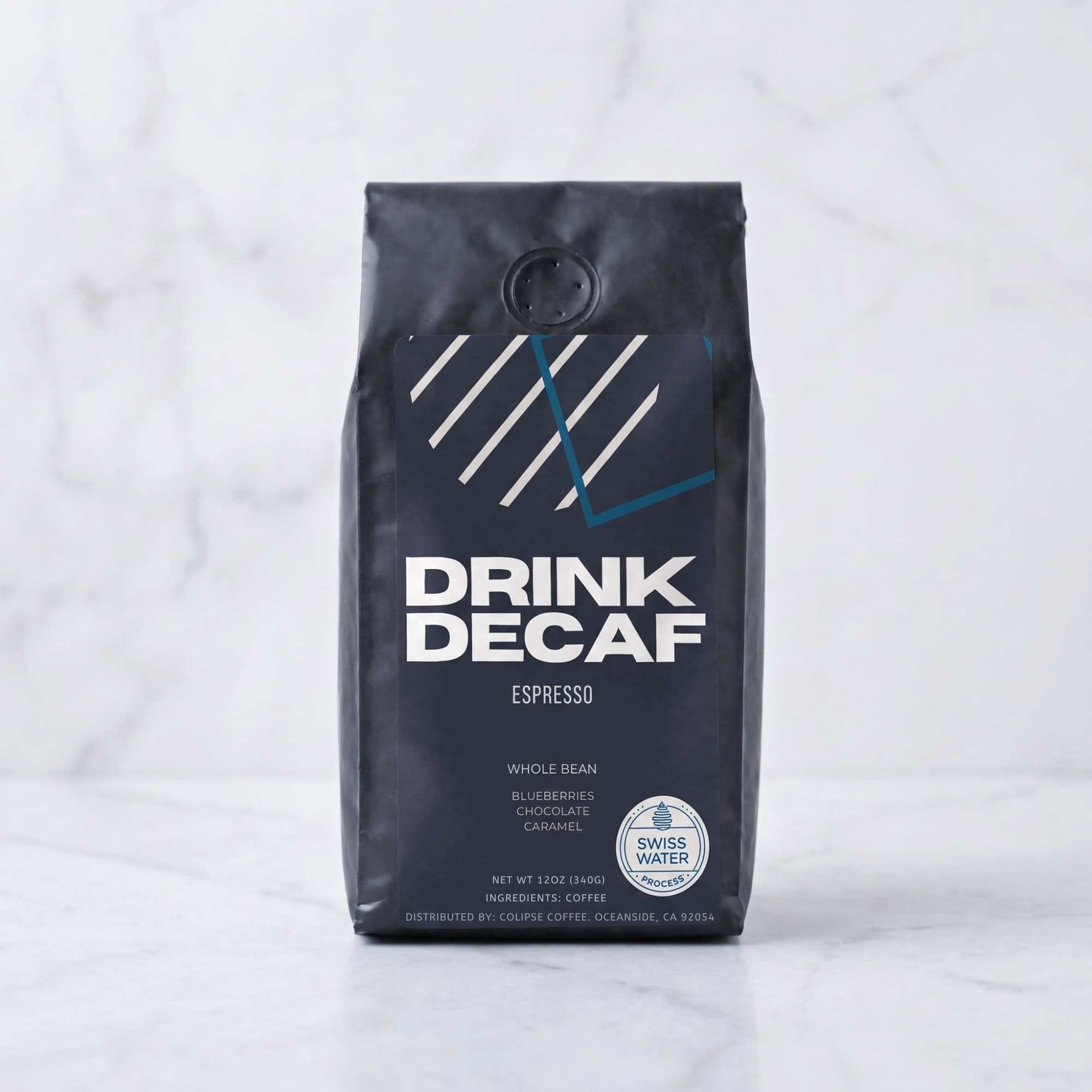
12 oz · Whole bean
Drink Decaf EspressoSpecialty grade. Swiss Water Process® decaffeinated. Roasted to order at our California roastery. Blueberry, chocolate, caramel.
Free shipping in the US