Is Decaf Coffee Acidic?
Decaf coffee is acidic, though slightly less so than regular coffee. That small gap comes from processing, not the bean itself. Decaf also produces meaningfully less acid reflux than regular coffee. Roast level, brewing method, and bean origin all lower a cup's acidity more than decaffeination alone does.
Is Decaf Coffee Acidic?
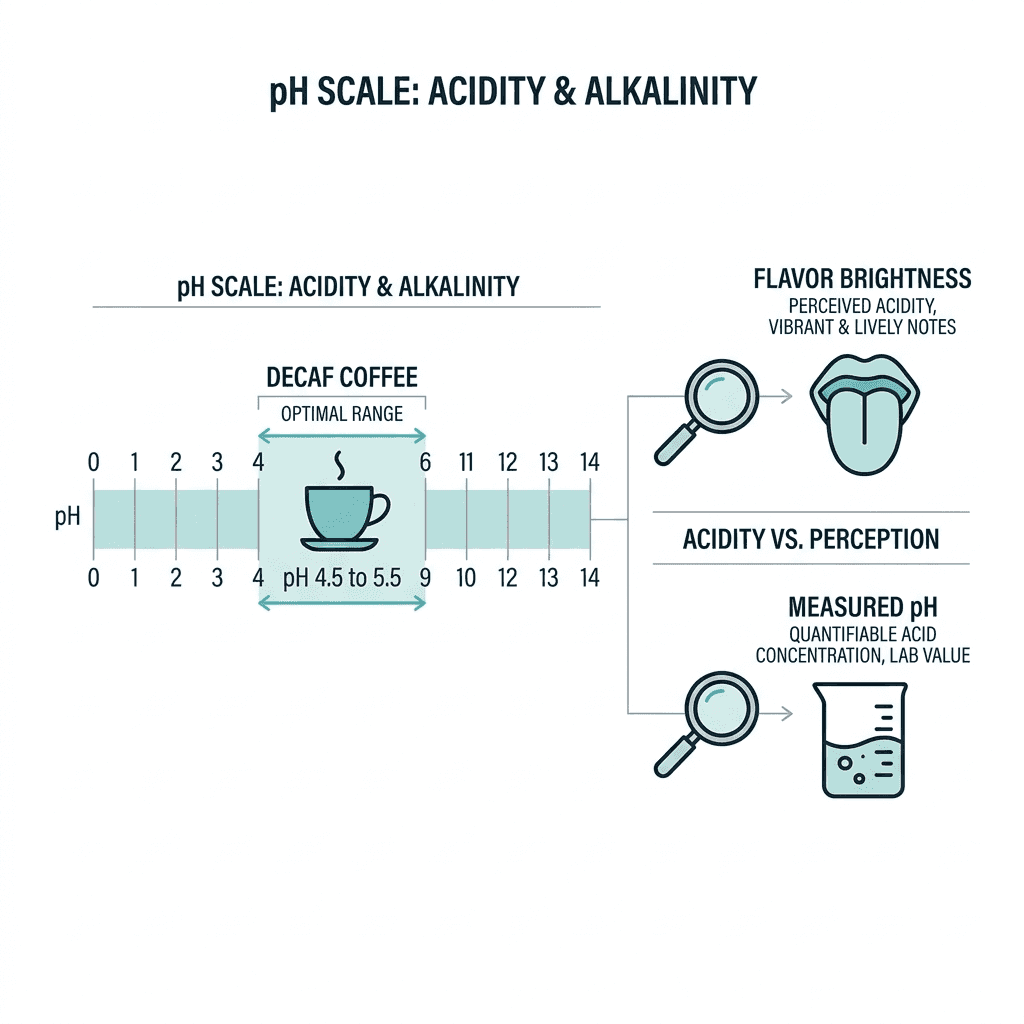
Yes, decaf coffee is acidic, with a typical pH of 4.5 to 5.5. It contains chlorogenic acid, citric acid, and other organic acids from coffee beans. Decaffeination removes most caffeine but does not remove all acids. Decaf remains within the same general pH range as regular coffee.
Coffee acidity describes two distinct qualities: perceived flavor brightness and measured pH. Flavor brightness creates the tangy, fruit-like taste perceived by tasters, while pH measures acidity in the cup. These qualities do not always correlate. Coffee can taste bright without having a correspondingly low pH, and vice versa. Decaf retains the acidic compounds already present in the green bean, including chlorogenic, citric, and quinic acid. That's because decaffeination targets caffeine specifically, not acids in general.
Is Decaf Coffee Less Acidic Than Regular Coffee?
Decaf coffee is somewhat less acidic than regular coffee, but the difference is modest. A 2008 study in Food Chemistry, by K. Fujioka and T. Shibamoto, measured commercial brewed coffees. Regular coffee's pH ranged 4.95 to 5.99. Decaf's pH ranged from 5.14 to 5.80. Decaf trends higher on the pH scale, meaning slightly less acidic, but the two ranges overlap substantially.
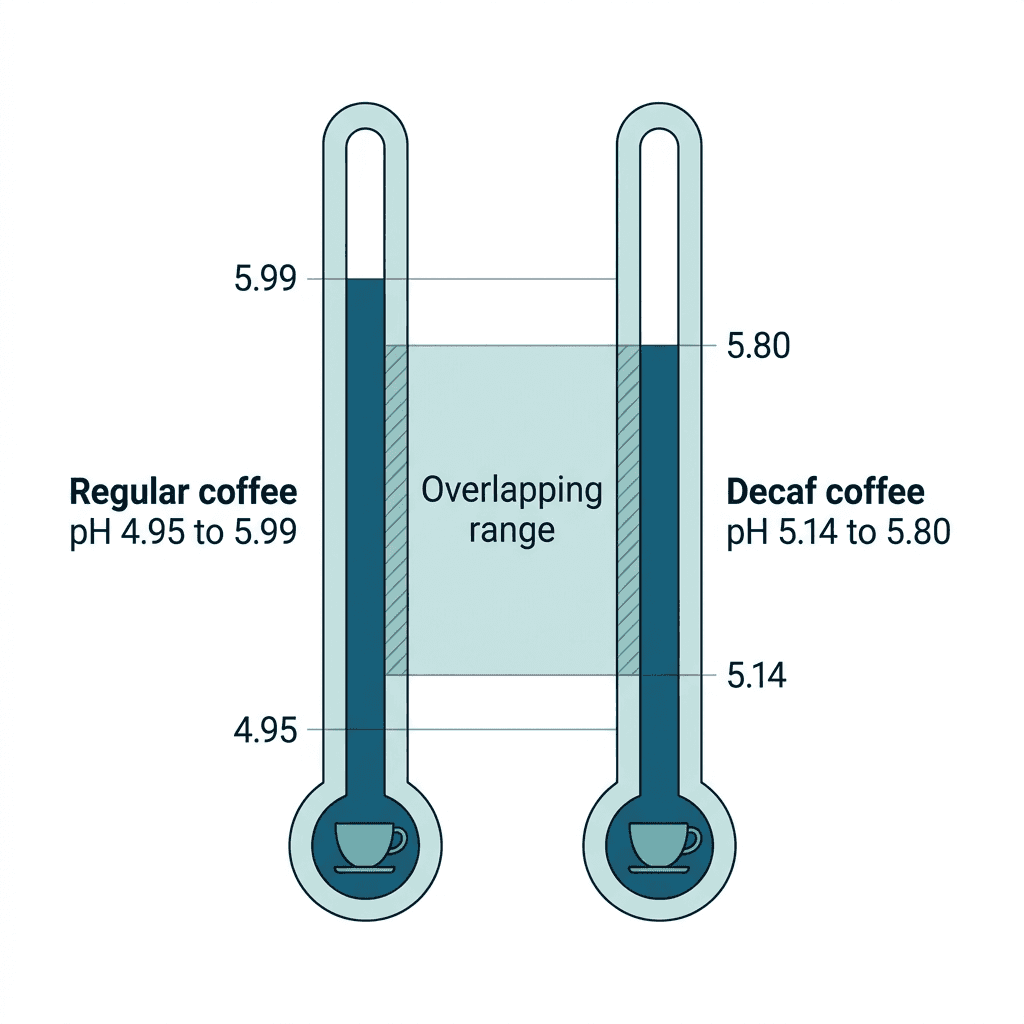
The pH difference between decaf and regular coffee is roughly two or three tenths of a point. It's not large enough to make decaf a reliably "low-acid" choice on its own. The difference does not come from a different bean. It comes from processing. Acidic compounds get partly co-extracted alongside caffeine during decaffeination, the same way flavor compounds do. Reduce coffee acidity by considering decaf alongside roast level and brewing method. Decaf alone does not guarantee a low-acid cup. Roast level and brewing method usually affect acidity more than decaffeination.
How Does Decaffeination Affect Coffee's Acidity?
Decaffeination slightly reduces coffee's acidity by removing caffeine and some organic acids. Commercial methods use solvents, liquid carbon dioxide, or water to extract caffeine from green coffee beans. These processes can also remove acidic compounds, but the resulting change in acidity is generally small.
Most decaffeination methods remove about 97% of a bean's caffeine, the threshold required for coffee to be legally labeled decaffeinated. Water-based methods like Swiss Water and Mountain Water claim higher removal rates, up to 99.9%. Acid removal does not track caffeine removal in the same way.
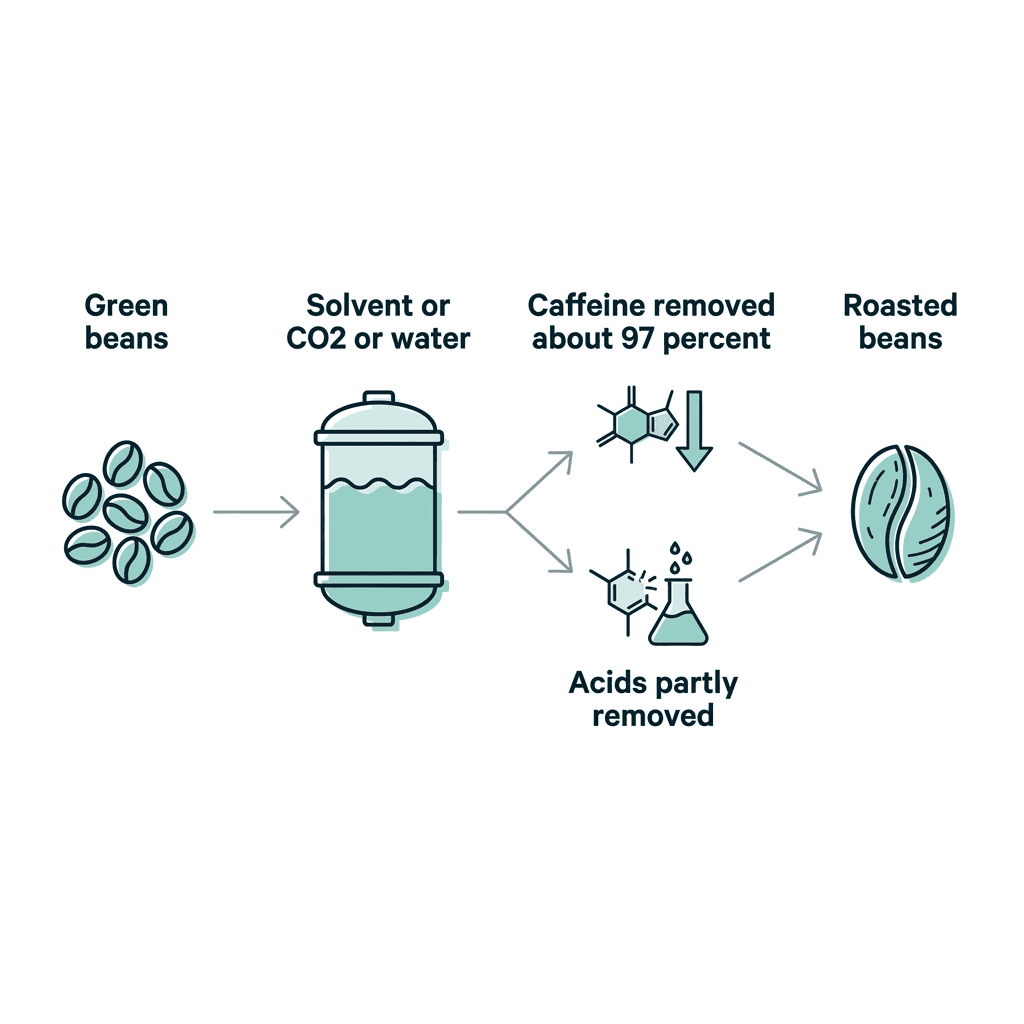
Coffee brands sometimes describe decaffeination as leaving most organic acids largely untouched, with only a minimal pH shift. That claim comes from marketing copy, not research. Two duration-controlled bean studies from Hasanuddin University in Makassar, Indonesia, contradict it. Heppy Love Rida Sinaga's team studied robusta beans in a 2021 paper in IOP Conference Series: Earth and Environmental Science. Rahmawati and colleagues studied arabica beans in a 2023 paper in AIP Conference Proceedings. Both found that pH, total acid, and chlorogenic acid all fall progressively the longer decaffeination continues. The weight of evidence points toward acid loss scaling with processing time and intensity. It's not a fixed, method-independent amount.
Which Decaffeination Method Produces the Lowest Acidity?
Solvent-based methods, methylene chloride and ethyl acetate, strip out the most acid of any common decaffeination process. That technically makes them the lowest-acid result. Both reach about 94% to 97% caffeine removal. They tend to leave a residual processed flavor. They also can't be certified organic, since the process relies on synthetic or semi-synthetic chemicals.
Swiss Water and Mountain Water decaffeination retain more of coffee's natural acids and antioxidants than solvent methods, without chemical solvents. Supercritical carbon dioxide (CO2) extraction is even more selective for caffeine specifically. Siti Machmudah and colleagues at Kumamoto University in Japan studied this directly. They found supercritical CO2 extracted 100% pure caffeine, leaving chlorogenic acid behind in the bean. Plain water extraction, by contrast, pulled out caffeine and chlorogenic acid together.
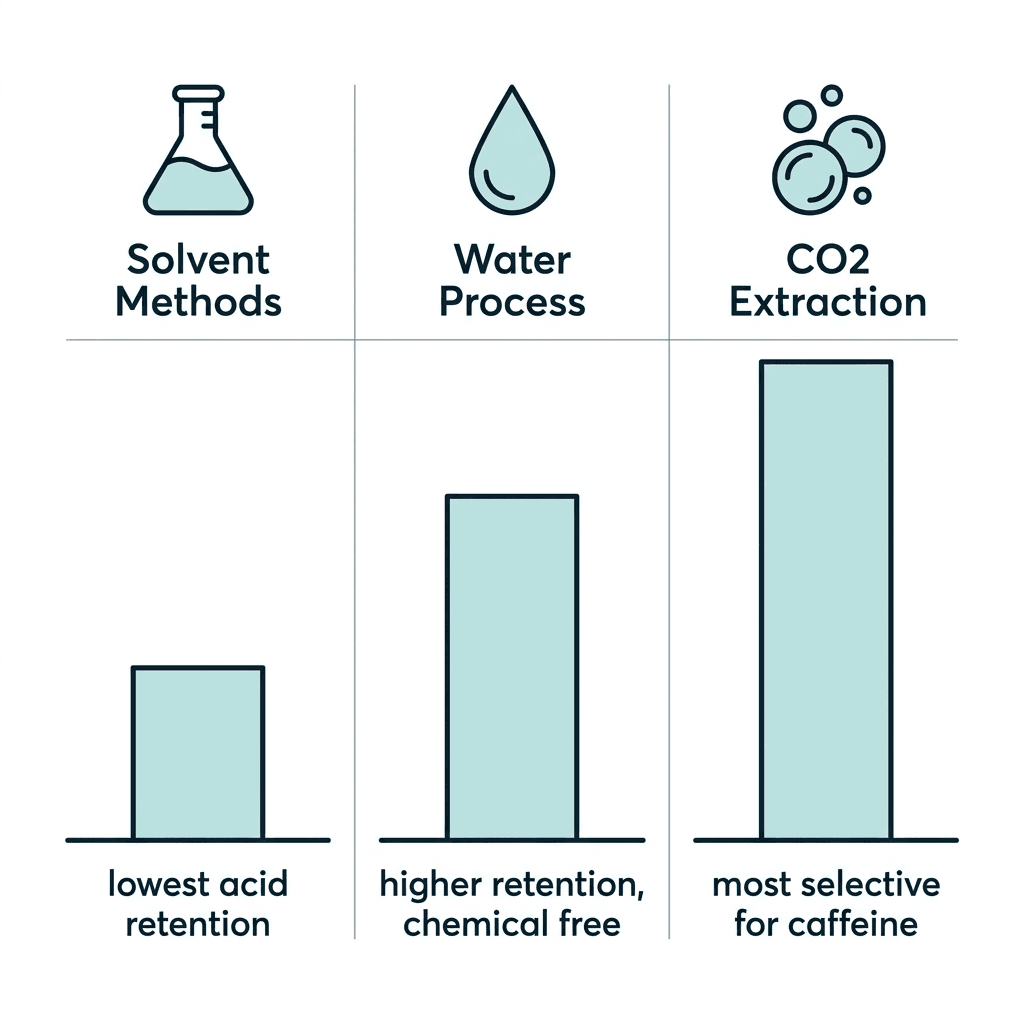
For the lowest possible acidity, a solvent-processed decaf technically delivers that, at the cost of flavor and a non-organic process. For a gentler cup without chemical solvents, water-based or CO2-processed decaf are the better-evidenced, chemical-free choices.
Does Decaffeination Reduce Chlorogenic Acid?
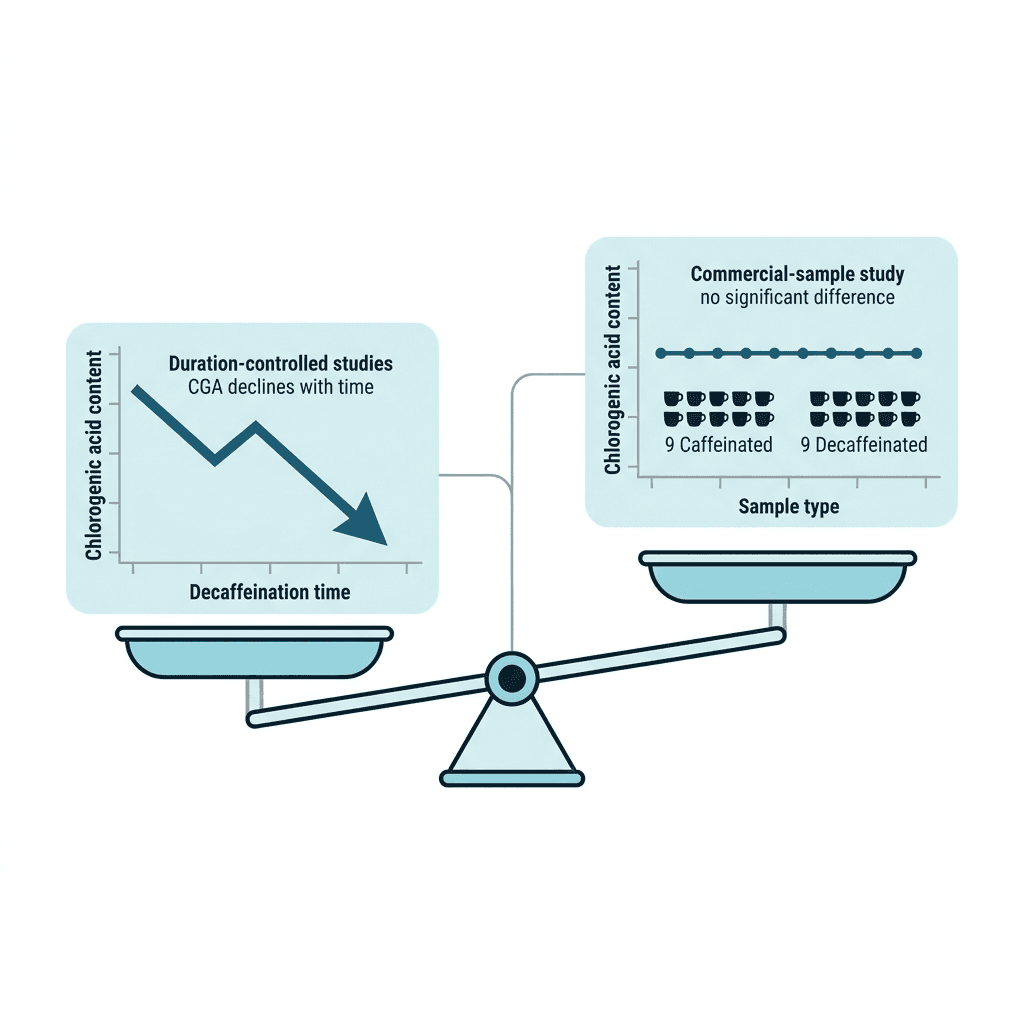
Decaffeination can reduce chlorogenic acid, but results vary by study. Controlled studies of robusta and arabica green beans found that chlorogenic acid, total acid, and pH decreased with longer decaffeination. However, a commercial-sample study found no significant difference in chlorogenic-acid-family compounds between caffeinated and decaffeinated coffee.
The likely explanation is that these two kinds of studies measure different things. The duration studies control decaffeination time directly and track the same beans through the process, isolating decaffeination's own effect. Hall, Yuen, and Grant published the commercial-sample study in Beverages in 2018. The study compared nine caffeinated and nine decaffeinated commercial coffee samples. Roast, origin, and brand varied alongside decaffeination method. Real commercial variation can mask a real underlying effect. The weight of evidence still favors some chlorogenic acid loss during decaffeination. The degree depends heavily on method and duration, not a fixed number that applies to every bag of decaf.
Is Decaf Coffee Better for Acid Reflux Than Regular Coffee?
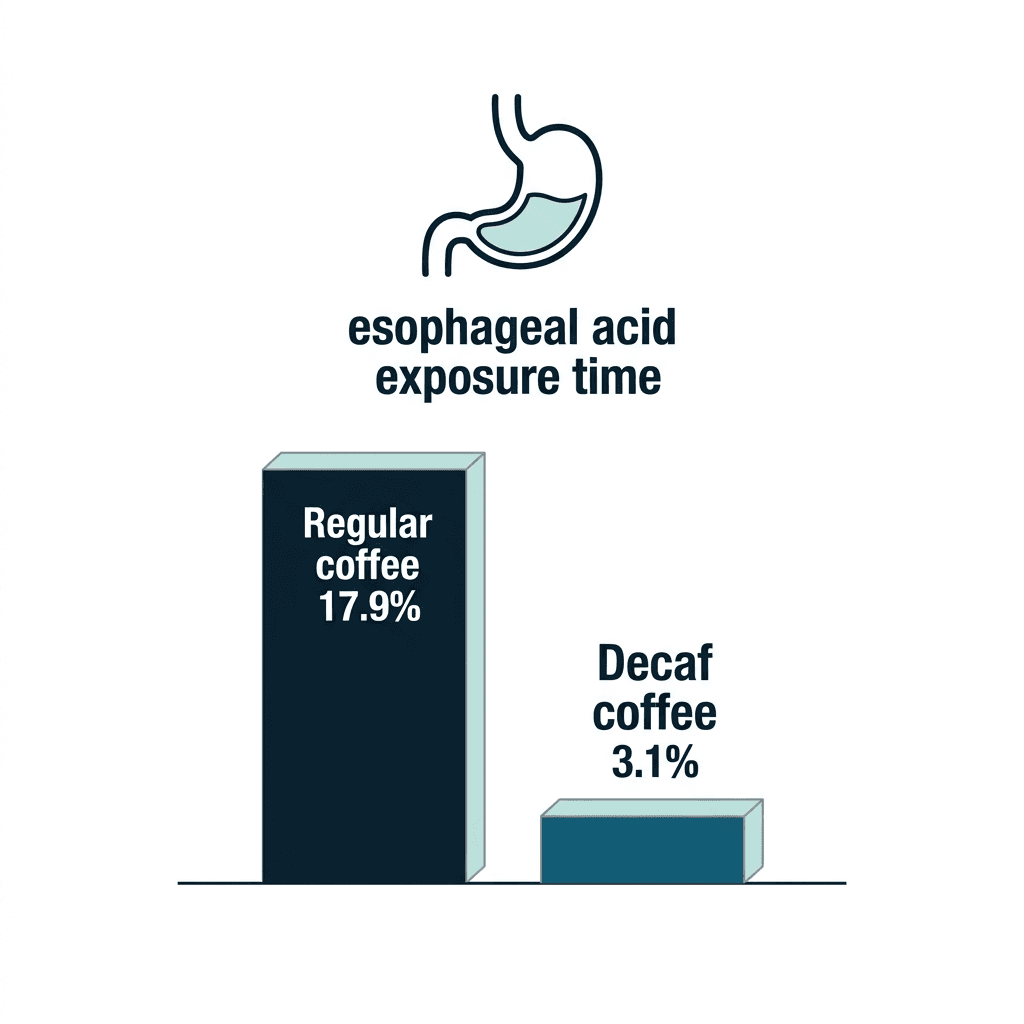
Yes, decaf coffee produces meaningfully less acid reflux than regular coffee. A 1997 study in Alimentary Pharmacology & Therapeutics, by C. Pehl and colleagues, followed 17 patients with reflux disease. Median esophageal acid exposure dropped from 17.9% after regular coffee to 3.1% after decaf, a large, statistically significant reduction.
An earlier 1994 study in healthy volunteers found the same pattern. Regular coffee triggered significant reflux compared to tap water and tea. Decaffeinating the coffee significantly reduced that effect. Decaffeinating tea, by contrast, made no difference, and adding caffeine to plain water didn't trigger reflux either. That combination points to something in coffee itself, beyond caffeine, driving the reflux response. Part of the mechanism appears to be reduced gastrin and bile stimulation with decaf compared to regular coffee. Both relate to acid production rather than caffeine directly. For someone managing reflux who doesn't want to give up coffee, switching to decaf is a real, evidence-backed change.
Can Decaf Coffee Still Cause Heartburn?
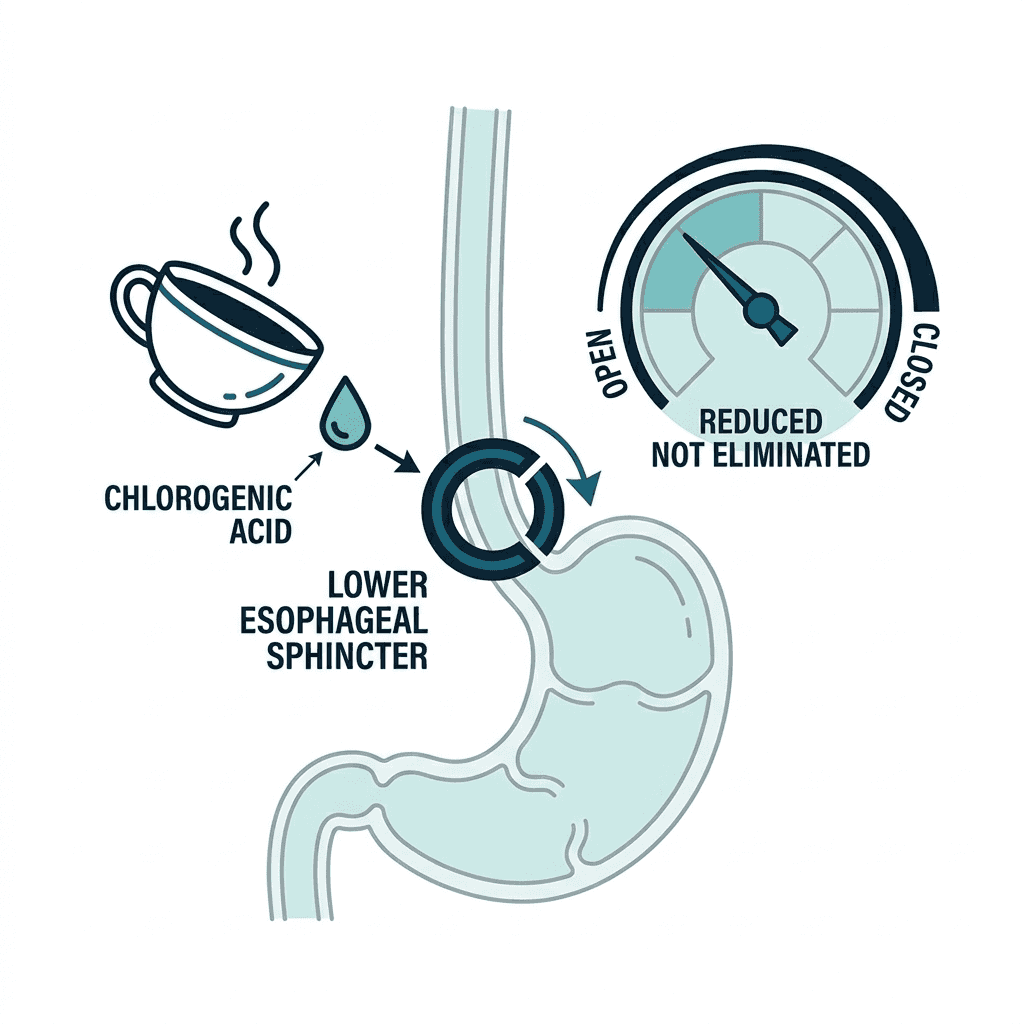
Yes, decaf coffee can still cause heartburn in some people. It triggers reflux far less often than regular coffee, but not never. Reflux dropped substantially in clinical studies after switching to decaf, but it did not disappear completely in every participant.
Chlorogenic acids and other coffee compounds unrelated to caffeine can still relax the lower esophageal sphincter. They can also irritate a sensitive stomach on their own. That means decaf isn't a guaranteed fix for everyone with reflux, only a substantial reduction in risk for most people. Anyone with severe or persistent gastroesophageal reflux disease (GERD) should treat decaf as one part of a broader plan. Roast selection, brewing method, and a doctor's guidance all matter too. No coffee, decaffeinated or not, should be assumed automatically safe.
Does Caffeine or Acid Cause Coffee's Heartburn Effect?
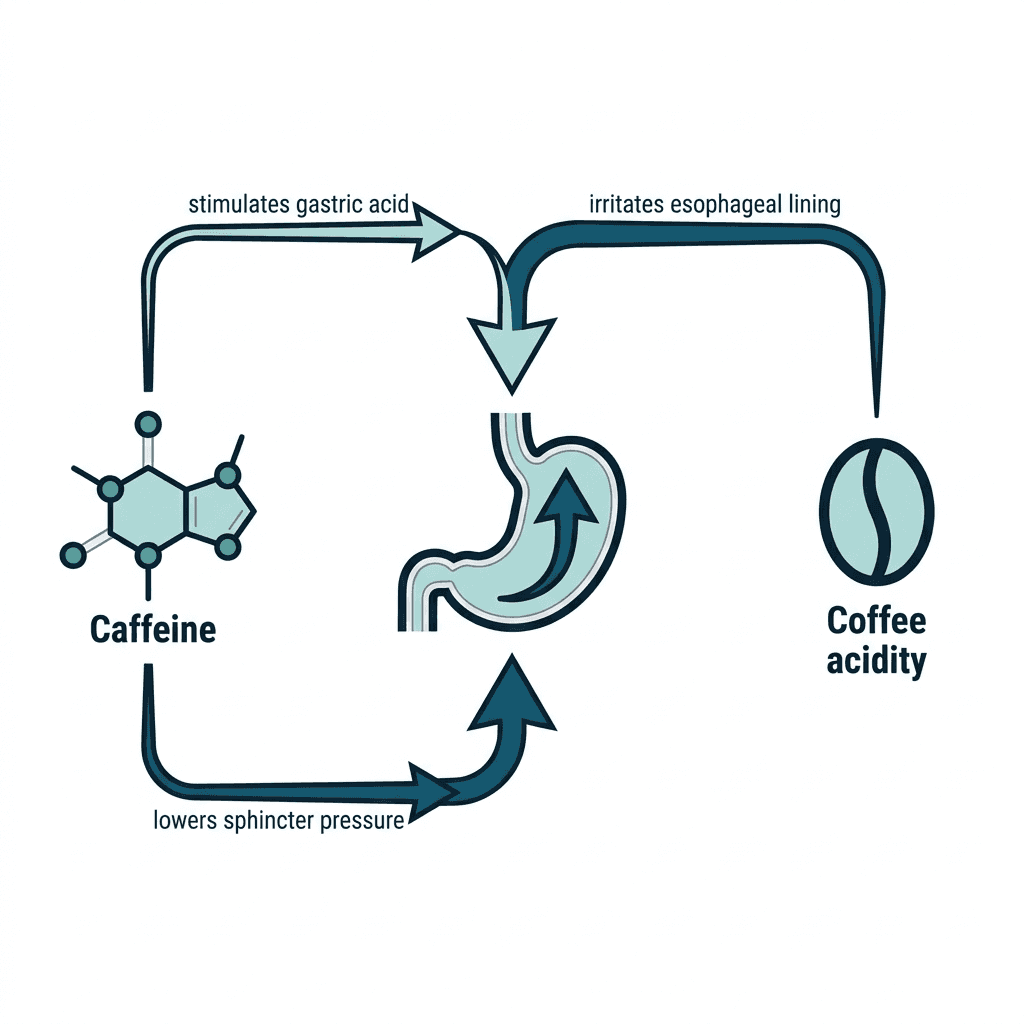
Both caffeine and coffee acidity can contribute to heartburn through different mechanisms. Caffeine may increase gastric acid secretion and reduce lower esophageal sphincter pressure, which can promote reflux. Coffee's acidity may also aggravate heartburn symptoms, although acid content alone does not fully explain coffee-related reflux.
Research shows both decaf and regular coffee increase gastrin release and pressure changes tied to acid reflux. That means caffeine isn't the sole driver. Some low-acid coffee brands argue that acidity, not caffeine, is typically the bigger factor for reflux sufferers. That specific claim comes from industry sources rather than a controlled study. What the clinical research does show clearly: removing caffeine substantially reduces reflux, even though coffee's other acidic compounds remain present. That suggests caffeine is the larger single factor, with acidity contributing an additional, smaller effect on top of it.
How Can You Reduce Acidity in Decaf Coffee?
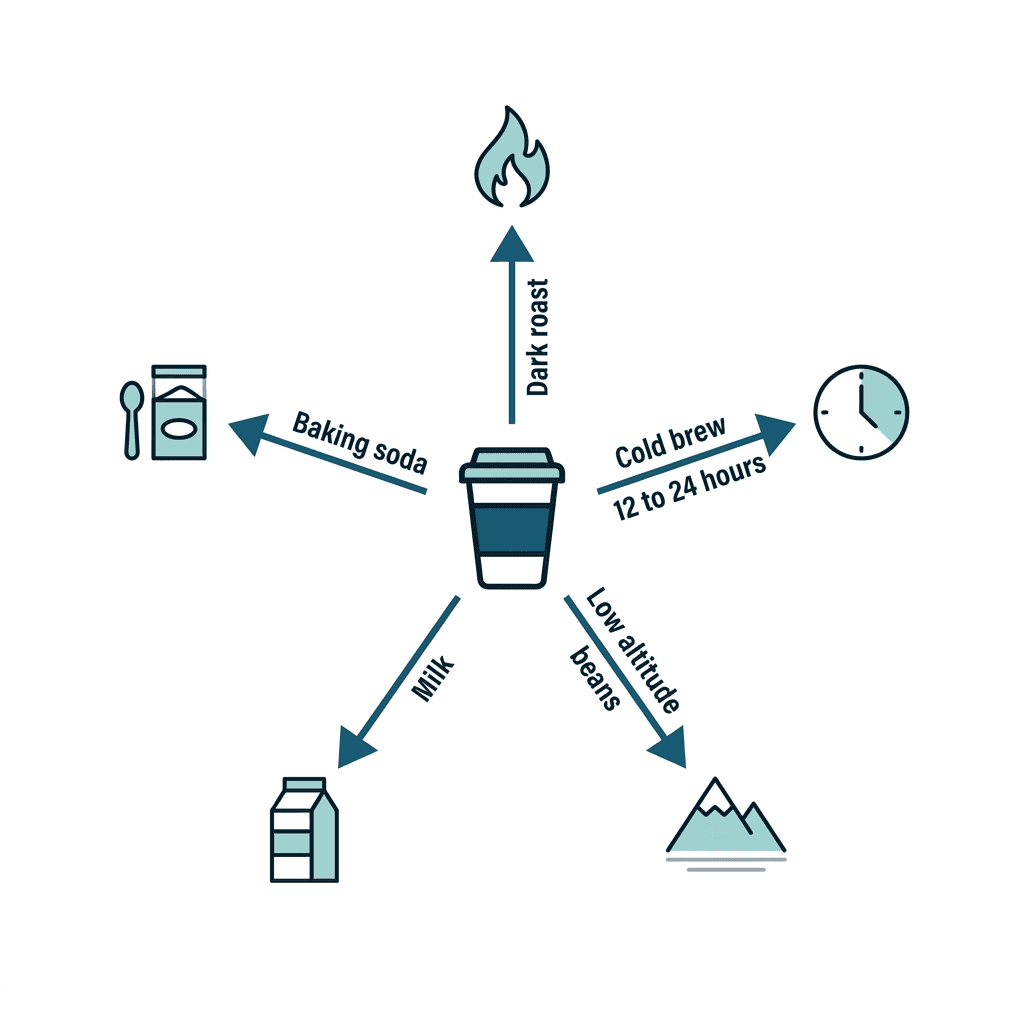
Roast level, brewing method, bean origin, and what you add to the cup all affect decaf's final acidity. Each matters more than the decaffeination step itself. Dark roasts, cold brewing, and low-altitude beans are the three most effective levers.
- Choose a dark or French roast. Prolonged heat breaks down and caramelizes acids, producing a measurably smoother, lower-acid cup than light roasts.
- Brew cold. Steep grounds in cold water for 12 to 24 hours. Heat pulls acids out of the grounds most efficiently. Cold brewing extracts fewer acidic compounds than hot brewing does.
- Pick low-altitude beans. Beans grown at low altitude in warm climates, like Brazil and Sumatra, are naturally lower in acid. High-altitude beans from Ethiopia or Kenya measure higher.
- Add milk. Dairy proteins bind to acidic compounds and reduce both measured and perceived acidity.
- Buffer with baking soda. A small pinch added after brewing buffers excess acid without noticeably changing the flavor.
Combining two or three of these levers produces a meaningfully gentler cup than changing any single factor alone. A dark roast decaf brewed cold is one example.
Is There Such a Thing as Acid-free Decaf Coffee?
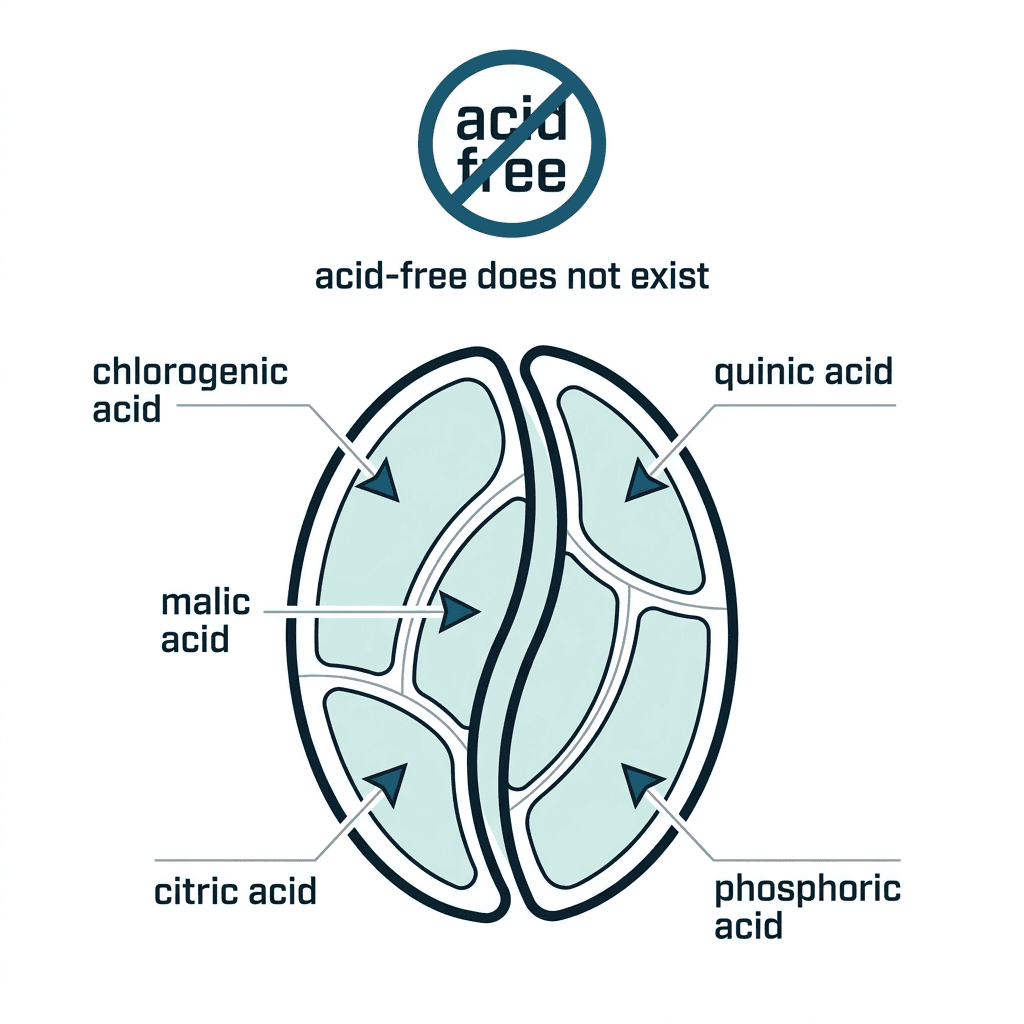
No, acid-free decaf coffee does not exist because all coffee beans contain natural organic acids. Decaffeinated coffee still contains chlorogenic, malic, citric, quinic, and phosphoric acids.
What does exist is low-acid coffee. Its acid content has been meaningfully reduced through bean selection, roast level, and brewing method, not eliminated entirely. Shoppers should treat "low-acid" as the honest, achievable label. Be skeptical of any product marketed as truly acid-free. That claim isn't chemically possible for a beverage made from coffee beans.
If you're ready to try genuinely great decaf, Drink Decaf's single-origin decaf espresso is roasted to order in Oceanside, CA and ships free across the US. Shop the current batch of single-origin decaf espresso beans today.
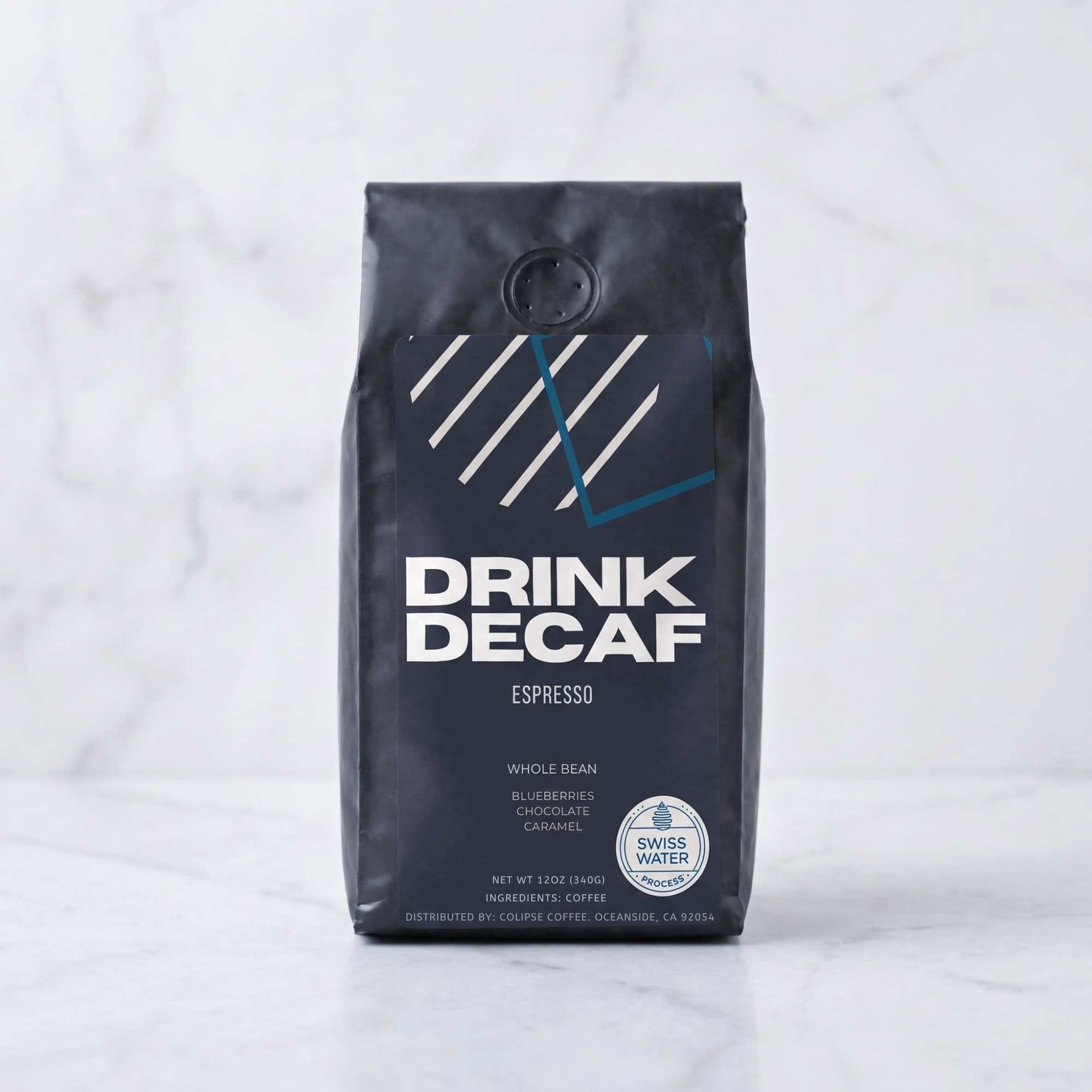
12 oz · Whole bean
Drink Decaf EspressoSpecialty grade. Swiss Water Process® decaffeinated. Roasted to order at our California roastery. Blueberry, chocolate, caramel.
Free shipping in the US